

Remarks by Chairman Ben S. BernankeAt the Fifteenth Congressional District of Texas’ Fifth Regional Issues Conference, Washington, D.C., Washington, D.C.,June 13, 2006 Increasing Economic Opportunity: Challenges and Strategies I am pleased to be here to discuss some strategies for helping families, particularly lower-income families, improve their economic and financial well-being. Families today face a financial marketplace that is increasingly complex, with numerous products and service providers from which to choose. Today I will touch on several approaches for helping people of modest means take advantage of these financial opportunities while managing the risks and avoiding possible pitfalls. Today’s Financial Marketplace Technological advances have dramatically transformed the provision of financial products and services in recent years. To cite just one example, the expanded use of computerized credit-scoring models, by reducing the costs of making loans and by increasing the range of assets that lenders can sell on the secondary market, has made possible the extension of credit to a larger group of borrowers. Indeed, we have seen an increasingly wide array of products being offered to consumers across a range of incomes, leading to what has been called the democratization of credit. Likewise, technological innovation has enhanced financial services, such as banking services, and increased the variety of financial products available to savers.The range of providers in consumer financial markets has also increased, with the number of nonbank entities offering credit and other financial services having risen particularly quickly. For example, a recent study of alternative providers of financial services found the number of nonbank check-cashing establishments doubled in the United States between 1996 and 2001.1 Payday lending outlets, a source of credit that was almost non-existent a decade ago, now number more than 10,000. And data from the Survey of Consumers Finances, a triennial survey sponsored by the Federal Reserve Board, indicate that the share of households with a loan from a finance company increased from 13 percent in 1992 to 25 percent in 2004. Financial Challenges of Lower-Income FamiliesDespite the increased complexity of financial products and the wider availability of credit in many forms, U.S. households overall have been managing their personal finances well. On average, debt burdens appear to be at manageable levels, and delinquency rates on consumer loans and home mortgages have been low. Measured relative to disposable income, household net worth is at a fairly high level, although still below the peak reached earlier this decade. Families with low to moderate incomes, however, face special financial challenges. These families generally have less of a cushion to absorb unanticipated expenses or to deal with adverse circumstances, such as the loss of employment or a serious health problem. Results from the Survey of Consumer Finances show that the median net worth for households in the lowest income quintile--those whose income placed them in the bottom fifth of the population--was only $7,500 in 2004, well below the median for all survey respondents of $93,000.2 The Survey data also indicate that households in the lowest quintile were significantly less likely than the average respondent to maintain a checking or savings account; almost 25 percent of those families were "unbanked," compared to less than 10 percent of families in the other income quintiles. The reasons given for not having an account varied: Some respondents said they would not write enough checks to make having an account worthwhile, but others were dissuaded by minimum balance requirements or said that they did not have enough money to justify opening an account. In some cases, a lack of knowledge about the services that banks offer or even a distrust of banks is likely a factor. The Survey also found that lower-income households are less able than others to manage their debts. A greater fraction of these households had debt-to-income ratios of 40 percent or more or had a payment past due at least sixty days. The data also reveal that only 40 percent of families in the lowest quintile own a home, compared with a homeownership rate of 69 percent among all families surveyed. Finally, the data on retirement account ownership show an even larger gap, with only 10 percent of lowest-quintile families holding a retirement account, whereas 50 percent of all families responding to the survey reported participation in some type of retirement savings plan. How can these disparities be addressed? Some general approaches to helping families of modest means build assets and improve their economic well-being include community economic development, financial education, and programs that encourage saving and investment. In the remainder of my remarks, I will discuss each of these approaches briefly and offer some insights into their effectiveness based on research and experience.Community Economic Development In my time with the Federal Reserve, I have had a number of opportunities to meet with community economic development leaders--representatives of groups working to assist lower-income families become homeowners, start small businesses, better manage their finances, and save for the future. In fact, my first trip as a Federal Reserve Board member was to Brownsville, Texas, where I saw how a grassroots nonprofit organization is helping to build communities and to provide residents with the chance to build wealth through homeownership. The Community Development Corporation (CDC) of Brownsville works with multiple funding partners--governments at all levels, financial institutions, foundations, and corporations--to construct housing and to design innovative loan products that enable low-income families to qualify for mortgage credit. For example, because of the mix of funding sources, mortgage loans can be offered with features such as down‑payment assistance or a below-market interest rate. The CDC of Brownsville also offers a program that allows prospective homeowners to acquire "sweat equity" in a property by working on construction teams to help build their own new home and those of other participating families. As in the case of many community development organizations, the Brownsville CDC has also made financial education a critical element of its efforts to help lower-income residents improve their financial status. For example, participation in financial counseling or in an education program is typically required for a borrower to obtain a loan through the CDC or through one of its lending partners. However, the broader aim of these programs is to improve borrowers’ prospects for longer-term success in maintaining their credit and handling their overall finances. Since 1994, through this combination of leveraged financing arrangements and borrower education, the CDC of Brownsville has helped make homeownership possible for more than 2,500 low-income families. I cite the Brownsville example because of the opportunity that I had to learn about their work (and I recently had a similar opportunity to see some impressive community development efforts in the Anacostia neighborhood of the District of Columbia). But this localized approach to community development and wealth-building is playing out in neighborhoods throughout the country, in most cases through strategies tailored to the distinct needs of the particular community.Financial Education and Financial LiteracyFinancial education has not only been integral to community development but has also begun to play a larger role in the broader consumer market. Clearly, to choose wisely from the wide variety of financial products and providers available, consumers must have at least basic financial knowledge. People who understand the financial aspects of purchasing a home or starting a business, or who appreciate the importance of saving for children’s education or retirement, will almost certainly be economically better off than those without that vital information. Financial literacy can be acquired through many channels: in school, on the job, through community programs and counseling, or through self-education and experience.Studies generally find that people receiving financial education or counseling have better financial outcomes. For example, research that analyzed data on nearly 40,000 mortgage loans targeted to lower-income borrowers found that families that received individual financial counseling were less likely later to become delinquent on their mortgage payments.3 Similarly, another study found that borrowers who sought and received assistance from a credit counseling agency improved their credit management, in particular, by reducing the number of credit accounts on which they carried positive balances, cutting overall debt, and reducing delinquency rates.4 More broadly, the research shows that financial knowledge is correlated with good financial outcomes; for example, individuals familiar with basic financial concepts and products have been found to be more likely to balance their checkbook every month, budget for savings, and hold investment accounts.5 Studies that establish an association between financial knowledge and good financial outcomes are encouraging, but they do not necessarily prove that financial training and counseling are the causes of the better outcomes. It could be, for example, that counseling is associated with better financial outcomes because the consumers who choose to seek counseling are the ones who are already better informed or more motivated to make good financial decisions. In medicine and other fields, researchers gain a better understanding of what causes what by doing controlled studies, in which some subjects are randomly assigned a particular treatment while others do not receive it. To translate this idea to the analysis of the effects of financial counseling, the Federal Reserve Board’s Division of Consumer and Community Affairs is collaborating with the Department of Defense to conduct a three-year study of the effects of financial education. This study will evaluate the impact of various educational programs on the financial decisions of soldiers and their families. It includes a treatment group of those receiving financial education, with the programs each family receives and when they receive it being determined randomly, and a control group of similar soldiers and their families who have not received this formal financial education. Because assignments of individuals to programs will be random, any observed changes in behavior can be more reliably attributed to the type and amount of counseling received. Among other things, the results of this study should help us better understand whether financial education leads to changes in behavior for participants in general or only for those at critical teaching moments, such as the period before making a major financial decision such as choosing a mortgage.I would like to say just a few words about the Federal Reserve’s broader role in promoting consumers’ understanding of financial products and services. Beyond conducting surveys of consumers and doing research, we work in a number of ways to support consumers in their financial decisionmaking. For example, through our consumer protection rule-writing authority, the Federal Reserve sets requirements that specify the information that must be disclosed to consumers about the terms and fees associated with credit and deposit accounts. These disclosures provide consumers with the essential information they need to assess the costs and benefits of financial services and compare products among different providers. We are currently reviewing many of our disclosures and plan to use focus groups and other methods to try to make these disclosures as clear and as user-friendly as possible. The Federal Reserve System also works to promote financial education and financial literacy through various outreach and educational activities. We provide a great deal of substantive financial information, including interactive tools for economic education, on our education website www.federalreserveeducation.org. The website links to a wide variety of financial education resources at the local, regional, and national levels.Additionally, the Federal Reserved Board collaborates with educational and community development organizations to support their efforts. Our national partners include the Jump$tart Coalition for Personal Financial Literacy, the Conference of Mayors’ DollarWi$e Campaign, Operation HOPE, the American Savings Education Council, and America Saves, among others. At the regional level, the twelve Federal Reserve Banks work with organizations to support financial education and financial literacy. For example, the Federal Reserve Bank of Cleveland has worked with community financial educators to form regional networks that combine resources and share best practices. The Federal Reserve Bank of Chicago sponsors "MoneySmart Week," partnering with banks, businesses, government agencies, schools, community organizations, and libraries to host activities designed to help consumers learn how to manage money. The Federal Reserve Banks of San Francisco and Minneapolis have worked with leaders in the Native American community to develop financial education materials. My recent testimony to Congress on financial literacy provided information on many other projects and programs. 6 The Federal Reserve will continue to make financial education a priority.Strategies to Encourage SavingEven if people know that they would be better off if they saved more or budgeted more wisely, we all know from personal experience that translating good intentions into action can be difficult. (Think about how hard it is to keep New Year’s resolutions.) The field of behavioral economics, which studies economic and financial decisions from a psychological perspective, has cast new light on consumer behavior and led to recommendations about how to improve people’s financial management. For example, studies of individual choices in 401(k) savings plans strongly suggest that workers do not pay adequate attention to their saving and investment decisions. Notably, despite the tax advantages of 401(k) contributions and, in some cases, a generous employer match, one-quarter of workers eligible for 401(k) plans do not participate. Studies have found, however, that if firms change the presentation of the plan from an "opt-in" choice to an "opt-out" choice, in which workers are automatically enrolled unless they actively choose to remain out of the plan, participation rates increase substantially.7 The impact of changing from "opt-in" to "opt-out" is particularly evident for younger and lower-income workers, who may have less financial expertise.In addition, participants in savings plans evidently do not understand the various investment options that are offered. A survey by the investment management firm, The Vanguard Group, found that many plan participants cannot assess the risk inherent in different types of financial assets; for example, many did not appreciate that a diversified equity mutual fund is generally less risky than keeping most of one’s wealth in the form of the employer’s stock.8 Indeed, employees appear to invest heavily in their company’s stock despite the fact that their income is already tied to the fortunes of their employer. More than one-quarter of 401(k) balances are held in company stock, and this high share arises not only from an employer match but from voluntary purchases as well.9These insights into consumer behavior have prompted some changes in the design of retirement plans and in education programs focused on saving for retirement. More employers now feature automatic enrollment in their 401(k) plans in an effort to boost participation. Also, some have set the default investment option to a diversified portfolio that is rebalanced automatically as the worker ages or have set contribution rates to rise automatically over time in line with salary increases.However, although these changes in program design may boost saving and improve investment choices, they are not a substitute for continued financial education. Employers, including the Federal Reserve Board, offer financial education at the workplace to help their workers gain a better understanding of retirement savings options. Helping people appreciate the importance of saving and giving them the tools they need to translate that knowledge into action remain major challenges.ConclusionLet me close by observing that many factors influence consumer financial behavior. Financial education is clearly central to helping consumers make better decisions for themselves and their families, but policymakers, regulators, nonprofit organizations, and financial service providers must all help ensure that consumers have the tools and the information they need to make better decisions. Success can only come through collaborative efforts. I see much interest today in increased collaboration toward these objectives, both in Washington and around the country.Thank you for the opportunity to speak with you today. I encourage you to continue working together to help provide increased economic opportunity in your communities, and I wish you the best of luck in your efforts. --------------------------------------------------------------------------------Footnotes1. Kenneth Temkin and Noah Sawyer (2004), "Analysis of Alternative Financial Service Providers (781 KB PDF)," report prepared for the Fannie Mae Foundation by the Urban Institute Metropolitan Housing and Communities Policy Center. 2. Brian K. Bucks, Arthur B. Kennickell, and Kevin B. Moore (2006), "Recent Changes in U.S. Family Finances: Evidence from the 2001 and 2004 Survey of Consumer Finances (448 KB PDF)," Federal Reserve Bulletin. 3. Abdighani Hirad and Peter M. Zorn (2001), "A Little Knowledge Is a Good Thing: Empirical Evidence of the Effectiveness of Pre-Purchase Homeownership Counseling (466 KB PDF)," paper presented at "Seeds of Growth - Sustainable CommunityDevelopment: What Works, What Doesn’t and Why?" 4. Gregory Elliehausen, E. Christopher Lundquist, and Michael E. Staten (2003), "The Impact of Credit Counseling on Subsequent Borrower Credit Usage and Payment Behavior (305 KB PDF" (January), paper presented at "Seeds of Growth - Sustainable Community Development: What Works, What Doesn’t and Why?" 5. Jeanne M. Hogarth and Marianne A. Hilgert (2003), "Patterns of Financial Behaviors: Implications for Community Educators and Policymakers (1.7 MB PDF)," paper presented at "Seeds of Growth - Sustainable Community Development: What Works, What Doesn’t and Why?" 6. Chairman Ben S. Bernanke, Financial Literacy, Testimony Before the Committee on Banking, Housing, and Urban Affairs, U.S. Senate, May 23, 2006. 7. Brigitte Madrian and Dennis Shea (2001), "The Power of Suggestion: Inertia in 401(k) Participation and Savings Behavior," Quarterly Journal of Economics, vol. 116 (November), pp. 1149-87. 8. The Vanguard Group (2002), "Expecting Lower Market Returns in the Near Term," Vanguard Participant Monitor. 9. Jeffrey R. Brown, Nellie Liang, and Scott Weisbenner (2006), "401(k) Matching Contributions in Company Stock: Costs and Benefits for Firms and Workers," Journal of Public Economics, vol. 90 (August), pp. 1315-46.

[관련키워드]



[뉴스핌 베스트 기사]
 사진
사진
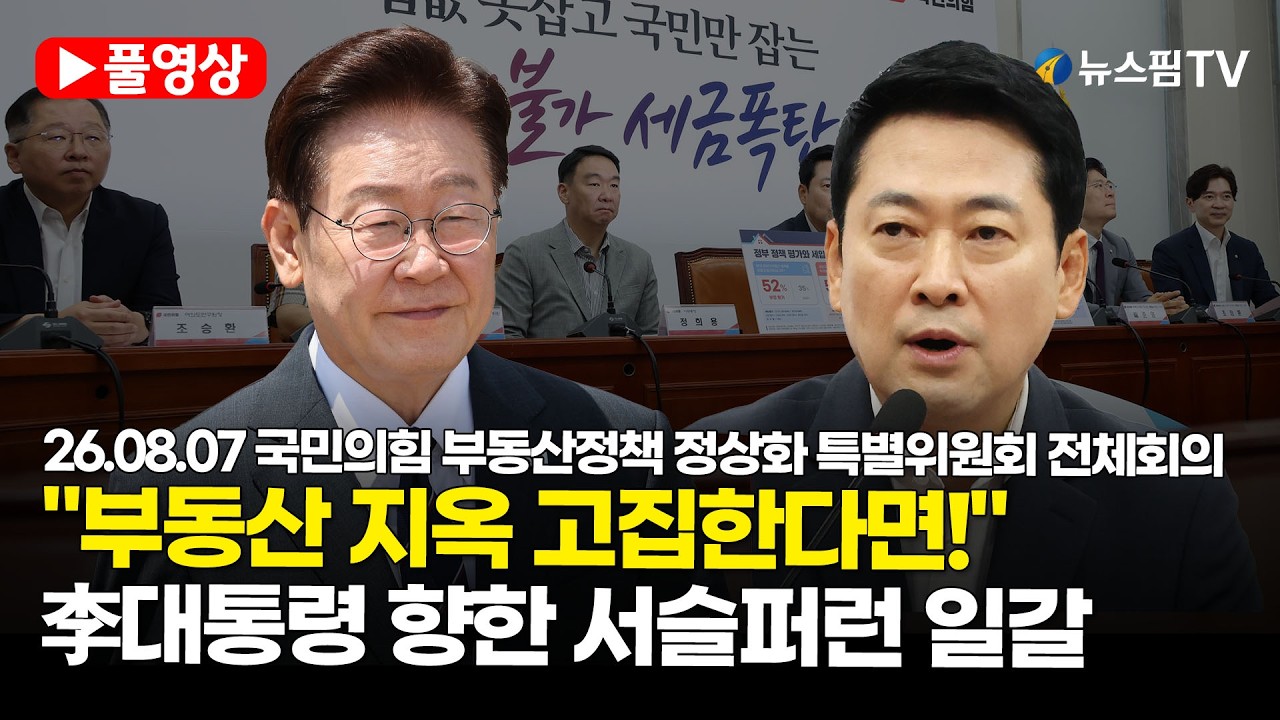
정동영 업무보고 논란
[서울=뉴스핌] 유신모 외교전문기자 = 청와대 영빈관에서 5일 열린 외교·안보 분야 정부 부처의 대통령 업무보고에서 정동영 통일부 장관의 '한반도 평화공존 발전 구상'과 업무보고 발언이 논란을 빚고 있다.
이날 정 장관의 발언 중에는 정부 내 조율을 거치지 않은 사안을 정책으로 추진하겠다고 공언한 것이 있는가 하면 사실 관계에 맞지 않은 설명도 있었다. 이재명 대통령은 공개적으로 신중을 기해 달라고 경고했고, 조현 외교부 장관은 '이상주의적 희망에 근거한 비현실적 구상'이라는 비판을 내놨다.
그동안 정 장관의 대북 정책 관련 발언이 물의를 빚은 적은 여러 번 있지만 대통령과 유관 부처 장관이 공개적으로 부정적 입장을 표명한 것은 이례적이다. 정 장관의 무리한 대북 접근법과 월권을 제어해야 한다는 목소리도 높아지고 있다.
[정동영 통일부 장관이 지난달 23일 오후 서울 종로구 정부서울청사에서 취임 1주년 기자간담회를 하고 있다. [사진=통일부] 2026.07.23
◆통일부 장관 권한 넘어선 주장
정 장관은 이날 업무보고에서 '한반도 평화공존 발전 구상'을 설명하면서 이재명 정부 2년차 핵심 과제로 상호 존중·평화적 갈등 해결·핵 없는 한반도 등 3대 기본 방향을 제시했다.
정 장관은 "대결과 혐오의 언어는 멈춰야 한다"면서 주적 용어 대체를 주장했다. 지난 25년간의 CVID(완전하고 검증가능하며 되돌릴 수 없는 비핵화) 구도는 이미 무너졌다고도 했다. 또 "현 시점에서 흘러간 선(先)비핵화만 되뇌는 것은 현실을 바꾸는 데 힘이 되지 않는다"고 주장했다. 정 장관은 또 "정전 체제를 평화 체제로 바꾸는 논의에 착수하겠다"면서 "북·미 정상회담 견인과 함께 4자 대화의 동력을 확보하기 위해 최선을 다할 것"이라고 말했다.
하지만 이 대통령은 정 장관의 구상에 대부분 제동을 걸었다. 이 대통령은 "평화공존 정책이 정치적으로 악용되는 측면이 있다"며 "많이 조심하셔야 한다"고 지적했다.
북한을 다른 이름으로 불러야 한다는 주장에는 "표현에 꼬투리가 잡혀 정쟁으로 휘몰아 들어가면 원래 하고자 했던 데에서 오히려 나쁜 상황이 초래될 수 있다"고 경고했다.
이 대통령은 남북 신뢰 구축을 위해 9·19 군사합의를 선제적으로 복원해야 한다는 정 장관의 주장에 대해서도 "우리의 선의대로 하는 게 과연 한반도의 평화와 안정에 플러스냐, 결론적으로 약간의 의문이 들 때도 있다"며 부정적으로 반응했다.
조현 외교부 장관은 업무보고 사후 브리핑에서 정 장관이 언급한 '4자 회담'에 대해 "이상주의에 근거한 어떤 희망이라 하더라도 그건 아직 조율되지 않은 방법"이라며 "여러분들께서 디스카운트해 주시면 좋겠다"고 선을 그었다.
정 장관이 9월 러시아 블라디보스토크에서 열리는 '동방경제포럼(EEF)'을 언급하며 "정부 차원에서 (참석을) 검토하고 있다"고 발언한 데 대해서도 조 장관은 "그것은 외교부의 몫"이라며 "아직 거기까지 진도가 나가지 않았다"고 잘랐다.
정 장관이 이날 소개한 대북 구상과 설명은 정부 내 조율을 거치지 않았다는 점에서 문제가 있다. 특히 주적 표현 대체와 국호 사용, 9·19 군사합의 복원, 4자회담 추진 등은 통일부 장관이 결정할 사안이 아니어서 월권이라는 지적이 나오고 있다. 이 대통령은 정 장관의 업무보고를 듣고 난 뒤 "여기 업무보고에 발표했다고 승인난 건 아니다"라고 재차 확인했다.
정부의 한 소식통은 "정 장관의 발언 내용은 대부분 국가안전보장회의(NSC)를 거쳐 결정된 사안이 아닌 정 장관의 개인적 생각에 가깝다"며 "안보 관련 부처 장관이 정부의 공식 정책이 아닌 사안을 추진하겠다고 업무보고를 하고 대통령의 면전에서 '국군통수권자가 나서야 한다'고 주장한 것은 심각한 문제"라고 지적했다.
이재명 대통령이 5일 청와대 영빈관에서 열린 통일 외교 국방 등 외교 안보 부처 업무보고에서 발언하고 있다. [사진=청와대] 2026.08.05
◆시대착오적 접근, 대북 인식 오류
더욱 문제인 것은 정 장관의 이같은 주장이 현 시점에서 이미 참고가 될 수 없는 과거의 경험 또는 사실과 다른 인식에 기반하고 있다는 것이다. 정 장관이 주장하는 구상은 급격히 변화하고 있는 북한의 전략과 한반도 및 국제 정세를 전혀 반영하지 못하고 있다는 비판이 제기되고 있다.
정 장관이 "흘러간 선(先)비핵화만 되뇌는 것은 현실을 바꾸지 못한다"고 언급한 것은 지금까지의 대북 접근법을 호도하고 있다. 북핵 위기 발발 이후 지금까지 모든 핵 협상에서 한국이나 미국은 북한에 선비핵화를 공식적으로 요구한 적이 없기 때문이다.
지금까지의 북핵 협상은 북한의 비핵화 조치에 한·미가 상응하는 대가를 제공하는 방식으로 이뤄졌다. 1994년 북·미 제네바 기본합의는 핵시설 동결과 중유 제공의 교환이었다. 2005년 9.19 공동성명도 북한의 비핵화 조치의 모든 단계에 상응조치를 제공하는 '행동 대 행동' 원칙이 적용됐다.
대북 협상에 관여했던 한 전직 관료는 "모든 북핵 협상은 북한의 비핵화 조치와 한·미가 제공하는 상응조치를 어떻게 정교하게 배열하느냐가 관건이었다"면서 "정 장관의 발언은 지금까지 한·미가 북한에 먼저 핵을 포기해야 대화할 수 있다는 정책을 고수해 현 상황에 이르게 됐다는 잘못된 인식에서 비롯된 것으로 보인다"고 말했다.
정 장관이 "지난 25년간의 CVID 구도가 무너졌다"고 말한 것도 비핵화의 개념에 대한 이해 부족이라는 비판이 제기되고 있다. 북핵 문제에 정통한 외교 소식통은 "어떤 명칭을 붙이든 핵을 제거한 뒤 이를 검증하고 재발 방지 조치를 하는 것은 비핵화에 반드시 포함되어야 하는 기본적 절차"라며 "CVID는 안 된다고 말하는 것은 북한의 비핵화 조치를 검증도 하지 않고 언제든 되돌릴 수 있도록 합의하자는 말과 같다"고 지적했다.
[서울=뉴스핌] 이길동 기자 = 조현 외교부 장관이 5일 오후 서울 종로구 정부서울청사 별관에서 2026년 하반기 업무보고 사후브리핑을 하고 있다. 2026.08.05 gdlee@newspim.com
◆안보 리스크 키우는 통일부 장관
정 장관은 지난해 취임 직후부터 청와대와 외교부를 제치고 통일부가 북한과 관련된 모든 정책을 주도해야 한다는 주장을 펴면서 단독 질주를 거듭해왔다.
북한의 '적대적 두 국가' 주장을 변형한 '평화적 두 국가'를 지향해야 한다고 주장하면서 이에 문제점을 지적하는 목소리를 무시했다. 외교부가 미국과 북한 문제를 논의하는 것에 대해 "한반도 정책과 남북관계는 주권의 영역이며 동맹국과 협의의 주체는 통일부"라고 주장해 물의를 빚었다. 문재인 정부 시절 한·미 워킹그룹이 남북관계 파탄 원인이었다고 사실과 다른 주장을 폈다.
지난해 업무보고에서는 국제정세를 감안하지 않고 남북대화 재개에만 초점을 맞춘 비현실적 내용으로 논란을 빚었다. 정부 내 조율도 거치지 않고 독자 대북제재인 5·24 조치를 해제하고 9·19 군사합의 비행금지구역 복원을 추진하겠다는 방침도 밝혔다.
지난 4월에는 평안북도 구성시에 우라늄 농축 시설이 있다고 말해 파장을 일으켰다. 미국은 이 발언을 계기로 한국과 대북정보 공유를 제한했다. 이 조치는 지금도 계속되고 있는 것으로 알려졌다.
정 장관이 이처럼 정부의 공식 결정을 거치지 않은 사안을 정부 정책인 것처럼 주장하며 좌충우돌하는 배경에 대해 여러가지 해석이 나온다. 북한 문제에서 조기에 성과를 거둬야 한다는 조급증과 자신의 존재감 과시 욕구가 작용하고 있다는 평가가 많다.
일각에서는 정 장관이 2007년 민주당 대선후보였을 때 이재명 대통령이 캠프에서 비서실 부실장으로 활동한 전력이 있다는 것을 들어 "정 장관이 아직도 이 대통령을 아랫사람으로 생각하고 있는 것 아니냐"는 비판을 내놓기도 한다.
한·미 관계와 북한 문제를 오래 다뤘던 전직 관료 출신의 한 전문가는 "정 장관 취임 후 지금까지의 언행은 잘못된 현실 인식에 따른 독단과 앞서 가기, 월권 등으로 점철돼 있다"면서 "통일부 장관이라는 중요한 직책에 있으면서 스스로 안보 리스크를 키우는 역할만 했다"고 비판했다.
opento@newspim.com
2026-08-06 06:10
 사진
사진
6월 경상수지 최대 흑자
[서울=뉴스핌] 박가연 기자 = 지난 6월 우리나라의 경상수지가 전월에 이어 역대 최대 흑자를 기록했다. 반도체를 중심으로 한 정보기술(IT) 품목 수출 호조로 월간 상품수출이 처음으로 1000억달러를 넘어선 영향이다.
[자료=한국은행]
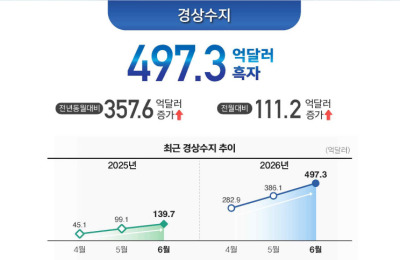
한국은행이 6일 발표한 '2026년 6월 국제수지(잠정)'에 따르면 지난 6월 경상수지는 497억3000만달러 흑자로 집계됐다. 전월(386억1000만달러)에 이어 두 달 연속 월간 기준 역대 최대 기록을 갈아치웠다. 이에 따라 올해 상반기 누적 경상수지 흑자는 1910억1000만달러를 기록했다.
경상수지 흑자를 견인한 것은 상품수지다. 6월 상품수지는 478억9000만달러 흑자를 기록하며 전월에 이어 역대 최대를 다시 썼다. 국제수지 기준 상품수출은 1123억7000만달러로 전년 동월 대비 84.5% 증가하며 월간 기준 처음으로 1000억달러를 넘어섰다. 상품수입은 644억8000만달러로 38.6% 늘었다.
통관 기준으로는 반도체 수출이 전년 동월 대비 196.9% 급증했고 컴퓨터·주변기기(SSD)는 282.7% 증가했다. IT 품목 수출은 160.4% 늘었으며 비IT 품목도 ▲석유제품(47.5%) ▲화공품(18.6%) ▲철강제품(17.9%) ▲승용차(6.1%) 등을 중심으로 18.6% 증가했다. 통관 기준 수입은 ▲원자재(30.5%) ▲자본재(35.3%) ▲소비재(16.4%)가 모두 늘었다.
서비스수지는 12억9000만달러 적자를 기록해 전월(-10억9000만달러)보다 적자 폭이 확대됐다. 여행수지는 외국인 입국자 증가와 유류할증료 인상 등에 따른 출국자 감소로 4억4000만달러 흑자를 기록했지만 지식재산권사용료수지는 전월 흑자에서 4억4000만달러 적자로 전환됐다.
본원소득수지는 배당소득을 중심으로 32억7000만달러 흑자를 기록해 전월(21억7000만달러)보다 흑자 폭이 확대됐다. 배당소득수지는 배당수입이 늘어난 데다 전월 분기배당에 따른 기저효과로 배당지급이 줄면서 25억6000만달러 흑자를 나타냈다.
금융계정 순자산은 6월 중 467억1000만달러 증가해 월간 기준 역대 최대 증가 폭을 기록했다. 종전 최대였던 올해 3월(369억9000만달러)을 넘어선 것이다. 직접투자에서는 내국인의 해외투자가 80억1000만달러, 외국인의 국내투자가 46억3000만달러 각각 증가했다.
증권투자에서는 외국인의 국내 주식 매도세가 이어졌다. 외국인의 국내 주식 투자는 차익실현 매도 등의 영향으로 316억1000만달러 감소하며 전월(-310억5000만달러)에 이어 역대 최대 순매도 기록을 다시 경신했다.
외국인의 국내 채권투자는 세계국채지수(WGBI) 자금 유입에도 분기 말 만기도래 영향으로 증가 폭이 줄어든 52억9000만달러를 기록했다. 내국인의 해외 증권투자는 주식을 중심으로 35억6000만달러 증가했다.
eoyn2@newspim.com
2026-08-06 08:00