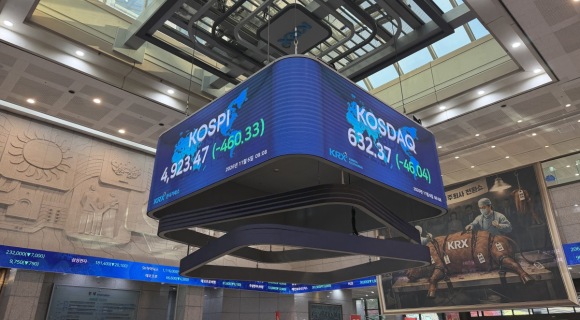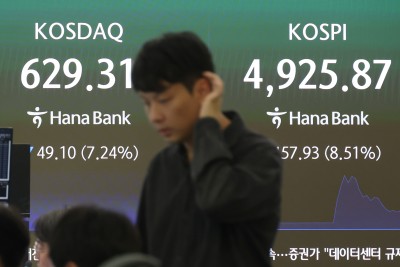

20일 미국 신용평가사 무디스(Moody's)는 국내 12개 은행들에 대해 재무건전성등급(BFSR) 및 기초신용평가등급(BCA) 혹은 발행자 신용등급 등의 몇몇 등급을 조정했다고 발표했다.
아래는 무디스의 발표 전문이다.
Moody's takes multiple rating actions on 12 Korean banks
Singapore, May 20, 2009 -- Moody's Investors Service has taken multiple rating actions on 12 Korean financial institutions to reflect stresses arising from the current crisis and the increasing convergence between the government's ability to support the banks and its own debt capacity.
The financial institutions are: Citibank Korea Inc, Hana Bank, Industrial Bank of Korea (IBK), Kookmin Bank, Korea Development Bank (KDB), Korea Exchange Bank (KEB), National Agricultural Cooperative Federation (NACF), Shinhan Bank, Suhyup Bank, Woori Bank, Woori Finance Holdings and Woori Investment & Securities (WIS).
Specifically, the following rating actions were taken, as announced by Beatrice Woo, a Moody's Vice President and Senior Credit Officer:
Bank Financial Strength Rating (BFSR)
[1] The BFSRs of three banks -- Kookmin Bank, Shinhan Bank and Hana Bank -- were lowered to C- from C, which map to baseline credit assessments (BCA) of Baa1 from A3. The revised ratings carry stable outlooks.
[2] Woori Bank's BFSR was lowered to C- from C, which maps to a BCA of Baa2 from A3. The revised rating carries a stable outlook.
[3] KEB's C- BFSR was affirmed, but now maps to a BCA of Baa2 from Baa1. The rating carries a stable outlook.
[4] Citibank Korea Inc's C- BFSR was confirmed, but now maps to a BCA of Baa2 from Baa1. The rating carries a negative outlook.
[5] The outlooks on the BFSRs of three banks -- IBK D+, NACF D+ and Suhyup Bank D- -- were changed to negative from stable.
Deposit & Debt Ratings
[6] KDB's global local currency (GLC) deposit rating was lowered to A1 from Aa1. The revised rating carries a negative outlook.
[7] Kookmin Bank's GLC deposit rating was lowered to A1 from Aa3. The revised rating carries a stable outlook.
[8] Hana Bank's A1 GLC deposit rating was confirmed with a stable outlook.
[9] The A2 GLC deposit ratings of two banks -- Citibank Korea Inc and KEB -- were affirmed with stable outlooks.
[10] The A2 foreign currency subordinated debt ratings of four banks -- Kookmin Bank, Woori Bank, Shinhan Bank and Hana Bank -- were confirmed with stable outlooks.
[11] The outlook on NACF's A2 foreign currency subordinated debt rating was changed to negative from stable.
[12] The A3 foreign currency Hybrid Tier 1 ratings of two banks -- Woori Bank and Shinhan Bank -- were confirmed with stable outlooks.
[13] The outlooks on Suhyup Bank's long-term ratings -- GLC and foreign deposit of A2 and foreign currency senior/subordinated debt of A2/A3 -- were changed to negative from stable.
[14] The A2 foreign currency issuer rating for Woori Finance Holding was confirmed with a stable outlook.
[15] WIS' long-term foreign currency issuer rating was lowered to Baa2 from Baa1. The revised rating carries a stable outlook. Its Prime-2 short-term foreign currency issuer rating was confirmed.
The above rating actions on Kookmin Bank, Woori Bank, Shinhan Bank and Hana Bank concluded the reviews initiated on February 9, 2009. In addition, the actions on Woori Finance Holdings and WIS concluded the reviews of the companies (initiated on February 11, 2009 for WIS) triggered by the review of Woori Bank, the principal operating subsidiary in the group.
The above rating actions on Citibank Korea Inc concluded the review initiated on January 20, 2009, which was prompted by Moody's rating actions taken on January 16, 2009 on its parent Citigroup and related entities.
The above rating actions on KDB concluded the review initiated on January 15, 2009 to examine the probability of systemic support assumption used in the Joint-Default Analysis (JDA) application in view of its proposed privatization plan and other factors.
The complete list of ratings is at the end of the press release.
Woo provides further details of Moody's rating actions below:
RATING ACTIONS ON BFSRs
The lower BFSRs and outlooks on the Korean banks reflect an anticipated deterioration in their creditworthiness due to the intense stresses from the current crisis, both globally and domestically. On balance, the banks have had to contend with more numerous and severe strains on their operating performances compared to other Asian banking systems.
Therefore, Moody's believes that this situation has weakened the financial positions of Korean banks, making them more vulnerable to the effects of a protracted recession. This view considers their capital raisings from the government recapitalization program in 1Q09, which augmented the 8.84% system Tier 1 capital ratio at end-2008.
Specifically, the Korean banks have come under successive pressures since end-2007, and which have had a negative impact on their core recurring earnings. System net interest margin narrowed over the past 1.5 years to 1.91% in 1Q09 from 2.44% in 2007.
Factors responsible include: (i) tightness in foreign currency funding since end-2007 and exacerbated by Lehman Brothers' collapse. This funding source accounted for 14% of system funding at end-2008 (12% at end-2007 with the increase largely due to KRW depreciation against the USD). Improved investor sentiment this year has allowed the banks to raise substantial foreign currency liquidity but in Moody's view, market conditions remain volatile and unpredictable; (ii) generally wider spreads, even in the area of KRW-denominated funding, in a more risk averse environment. The resulting higher cost of funds was not compensated for by wider lending spreads; and (iii) the current structure of balance sheets which has caused margins to contract in a falling interest rate setting.
In Moody's opinion, the contraction in net interest margin is unlikely to reverse until 2H09.
Furthermore, credit costs are expected to continue rising, based on Moody's forecasts of a 3-4% economic contraction in 2009. Moreover, the momentum in asset quality deterioration has accelerated with the system non-performing loans (NPL) ratio rising from 0.82% in September 2008 to 1.14% at end-2008, and then to 1.47% in March 2009.
While part of the NPL increase may be attributable to two rounds of government-led credit risk assessments, trends in credit quality -- as is typically the case -- will lag an economic downturn.
In particular, the financial difficulties of small and medium sized enterprises (SME) represent a threat to the banks. Delinquencies in this segment -- which account for between 25% and as much as 45% of loan books -- are rising. The NPL ratio rose almost 2.5 fold to 2.46% in March 2009 from 0.99% at end-2007. Moreover, in Moody's opinion, potential losses may be greater for those banks which experienced significant growth in the last few years.
In determining the BFSRs, Moody's assessed each bank's capital level after incorporating expected losses in their risk assets using scenario analysis. This approach is consistent with the Moody's special comment titled "Calibrating Bank Ratings in the Context of the Global Financial Crisis," February 2009.
In this report, the recalibration of some weights and the relative importance of rating factors within Moody's current bank rating methodologies have resulted in capital adequacy being an important BFSR consideration.
CHANGE IN SYSTEMIC SUPPORT INDICATOR FOR JOINT-DEFAULT ANALYSIS (JDA)
Earlier this month, Moody's commented on its global review of the support capacity of a government and a central bank for its banking system in the special comment titled "Financial Crisis More Closely Aligns Bank Credit Risk and Government Ratings in Non-Aaa Countries."
Consistent with the analytical criteria specified in that report and in light of Korea's current situation and future prospects, Moody's has concluded that the systemic support input for Korean bank ratings be changed to Aa3 from Aa1, the former being two notches above Korea's local currency government debt rating of A2. Accordingly, Korean bank ratings are affected.
In Moody's view, Korea has a highly supportive banking framework, evidenced by government behaviour towards the banks during the 1997 Asian financial crisis as well as during this current downturn. As early as October 2008, the government had been proactive in establishing support measures to counteract the crisis.
Among its programs are the supply of USD55 billion in foreign currency liquidity to the market via the swap market and the provision of a government guarantee for external debt issued by local banks. The total amount of the guarantee was limited to USD100 billion. Since its announcement, the plan has been extended to end-2009 from June 30, 2009, while the maximum tenor of guaranteed debt has been lengthened to five years from three.
Other government measures include a KRW31.1 trillion, or 5.7% of GDP, fiscal stimulus package, liquidity support to the SME segment through KRW160 trillion in loan extensions and KRW18 trillion in credit guarantees, and lastly backing for the banks in the forms of KRW23.2 trillion in Korean-won liquidity, KRW55.5 trillion in foreign currency liquidity, and KRW20.0 trillion in bank recapitalization funds.
In the Special Comment, Moody's points out that the appropriate reference rating for the capacity of a national government to provide support to banks in a prolonged and widespread crisis would be aligned with or constrained by the government's own debt rating. However, Moody's also believes that this rating could be adjusted, usually positively, to reflect the non-fiscally dependent measures that many central banks and governments can deploy to support banks.
In deciding whether the local currency-denominated deposits of a bank can be rated higher than the local currency-denominated debt issued by the national government due to systemic support, Moody's considers a number of factors for each banking system. These are the size of the banking sector relative to the government's resources, the level of stress in the banking system and in the economy, the foreign currency obligations of the banking system relative to the government's own foreign currency resources, political and historical patterns, and the possibility of any drastic shift in government priorities.
With regard to Korea, the banking system is large as shown by the ratio of banking assets equalling 170% of GDP although it is broadly stronger with a weighted average BFSR of C- versus D pre-1997. On the other hand, as discussed earlier, the level of stress in the banking system has increased following the worldwide recession. Moreover, while foreign currency obligations of the banking system -- relative to the economy -- are not stretched, the banks have been heavily dependent on their government for foreign currency liquidity.
Finally, the political and historical patterns for assessing Korea as a highly supportive banking framework are compelling. In the past two decades, no nationwide or regional bank has been liquidated. Small mutual savings banks and credit unions have been allowed to fail, but they are insufficiently significant to cause a systemic stress. Furthermore, the banking landscape is concentrated with the seven nationwide banks -- out of a total of 18 players -- controlling close to two thirds of system deposits. In Moody's opinion, this structure provides huge incentives for the government to support the banks.
In conclusion, the Aa3 systemic support input for Korean banks is two notches above the A2 local currency government debt rating. The uplift is predicated on Moody's view that the risk of a system-wide banking crisis is medium and that the likelihood of the government "ring-fencing" its own fiscal position from the banking system is low.
DOWNGRADES OF BIG FOUR NATIONWIDE BANKS -- Kookmin Bank, Woori Bank, Shinhan Bank and Hana Bank
The BFSRs for Kookmin Bank, Woori Bank, Shinhan Bank and Hana Bank were lowered to C- from C. The revised ratings carry stable outlooks. Due to the stresses explained earlier, Moody's believes that the stand-alone risks of the banks -- as measured by the abilities of their capital buffers to withstand a protracted economic downturn -- have increased and are therefore, best captured by the lower rating ranges.
For Kookmin Bank, Shinhan Bank and Hana Bank, their revised C- BFSRs now map to a BCA of Baa1 from A3. The revised ratings carry stable outlooks.
In the case of Woori Bank, however, its C- BFSR now maps to a BCA of Baa2 from A3. The differentiation in its BCA -- vis-à-vis the other three banks -- incorporates its relatively lower capital level which raises its vulnerability to prolonged stress, as well as its rapid loan growth over the past four years.
Consequently, all four banks' GLC deposit ratings were reviewed to take into account their lower stand-alone ratings, or BCAs which are the starting points for JDA application, as well as the change in systemic support indicator for Korea to Aa3 from Aa1 as detailed above.
Hana Bank's GLC rating -- unaffected by the lower BCA and reduced systemic support indicator in the JDA application -- was confirmed at A1 with a stable outlook. These factors were off-set by Moody's opinion that systemically important institutions should continue to benefit from increasing government support in a crisis. In other words, the GLC deposit rating is less sensitive currently than otherwise to changes in the bank's stand-alone strength.
As for Kookmin Bank, its GLC deposit rating was lowered to A1 from Aa3. The revised rating carries a stable outlook. This rating move places Kookmin Bank's GLC deposit rating on par with that of Hana Bank. The repositioning of Kookmin Bank's GLC deposit rating is premised on Moody's observation that there is no evidence of greater support from the government towards Kookmin as compared to Hana Bank.
Meanwhile, Kookmin's size advantage -- it is Korea's largest bank with KRW266.5 trillion in assets -- is declining and is insufficiently distinguishable to warrant higher expected government support. Instead, Moody's believes that all four nationwide banks are systemically important institutions for preserving stability in the financial system.
The A2 foreign currency subordinated debt ratings of all four banks were confirmed with stable outlooks. In addition, the A3 foreign currency Hybrid Tier 1 ratings for Woori Bank and Shinhan Bank were confirmed with stable outlooks. These rating actions are in line with Moody's practice of notching down the junior obligations of the banks from their respective GLC deposit ratings, subject to the A2 foreign currency government bond rating constraint.
The above rating actions on Kookmin Bank, Woori Bank, Shinhan Bank and Hana Bank concluded the reviews initiated on February 9, 2009 to consider the impact and additional pressures of the worsening operating environment on their financial fundamentals.
DOWNGRADE OF KEB
KEB's C- BFSR was affirmed but was mapped to a lower BCA of Baa2 from Baa1. However, its A2 GLC deposit rating was affirmed with a stable outlook as the lower BCA and change in the systemic support indicator for Korea to Aa3 from Aa1 had no impact in the JDA application.
RATING ACTIONS ON FOUR POLICY BANKS -- IBK, KDB, NACF and Suhyup Bank
The outlooks on three policy banks' BFSRs -- IBK D+, NACF D+ and Suhyup Bank D- -- were revised to negative from stable due to the global and domestic downturn. As a result of this revision and the lower systemic support indicator, the outlooks on their relevant long-term ratings -- NACF's A2 foreign currency subordinate debt, Suhyup Bank's A2 GLC and foreign currency deposit and A2/A3 foreign currency senior/subordinate debt -- were also revised to negative from stable.
KDB's GLC deposit rating was lowered to A1 from Aa1 due to the lower systemic support indicator. This rating action on KDB concluded the review initiated on January 15, 2009 to examine the probability of systemic support assumption used in the JDA application in view of its proposed privatization plan and other factors.
KDB's revised GLC deposit rating carries a negative outlook due to its privatization plan, which may reduce Moody's probability of systemic support assumption which has been incorporated into the bank's rating.
The revised KDB Act, passed by the National Assembly on April 29, 2009, requires the government to start selling its ownership within five years after the implementations of the revised Act. At the same time, the Korea Policy Banking Corporation -- to be created by spinning off some assets and liabilities of KDB in mid-2009 -- plans to gradually take over the public policy function of KDB. Moody's will monitor the timing of the government's ownership disposal and continue to assess its systemic support assumption, as well as the bank's financial strength, to determine the possible impact on its credit ratings.
DOWNGRADE OF CITIBANK KOREA INC
Citibank Korea's BFSR was aligned with that of its parent, Citibank N.A. (A1/C-). In Moody's opinion, the bank is likely to suffer from potential fall-out from its parent's diminished stand-alone financial health, which would affect its own franchise and operating performance. Furthermore, the parent's C- BFSR carries a negative outlook, suggesting possible further deterioration in creditworthiness. Additionally, the bank remains heavily reliant on the group for financial support, such as in the areas of funding and capital.
As the bank's A2 GLC deposit rating was unaffected by its lower BCA and the change in the systemic support indicator, the rating was affirmed with a stable outlook.
The above rating actions on Citibank Korea Inc concluded the review initiated on January 20, 2009, which was prompted by Moody's rating actions on January 16, 2009 on its parent Citigroup and related entities.
CONFIRMATION OF WOORI FINANCE HOLDINGS
Woori Finance Holdings' A2 foreign currency issuer rating was confirmed with a stable outlook, concluding the review triggered by the review of Woori Bank, the principal operating subsidiary in the group.
DOWNGRADE OF WIS
WIS' issuer rating -- which incorporates very high support from its parent, Woori Finance Holdings -- was lowered to Baa2 from Baa1 to reflect the holding company's reduced capacity to provide support. This capability is in turn ultimately determined by lead subsidiary Woori Bank's stand-alone creditworthiness as measured by its BCA. Therefore, the lower BCA at Woori Bank causes a corresponding downgrade in WIS' rating.
The above rating action on WIS concluded the review initiated on February 11, 2009 which was triggered by the review of Woori Bank, the principal operating subsidiary in the group.
PREVIOUS RATING ACTIONS & PRINCIPAL METHODOLOGIES
The last rating action on Citibank Korea Inc was taken on March 3, 2009, when its GLC deposit rating was lowered to A2 from A1. The revised rating carried a stable outlook.
The last rating action on KEB was taken on November 7, 2008, when the outlook on its C- BFSR was changed to negative from stable.
The last rating actions on the other eight financial institutions -- Hana Bank, IBK, Kookmin Bank, KDB, NACF, Shinhan Bank, Woori Bank and Woori Finance Holdings -- were taken on February 9, 2009, when their foreign currency long-term senior debt ratings were aligned with the Korean government's A2 foreign currency bond rating. At the same time, the big four nationwide banks' C BFSRs were placed on review for possible downgrade. This review triggered the reviews of several other debt and deposit ratings, as well as of associated entities.
The last rating action on Suhyup Bank was taken on July 25, 2007, when its foreign currency long-term/short-term deposit ratings were raised to A2/Prime-1 from A3/Prime-2.
The last rating action on WIS was taken on February 11, 2009 when its foreign currency issuer ratings were placed on review for possible downgrade.
The principal methodologies used in rating these issuers are the "Bank Financial Strength Ratings: Global Methodology", and "Incorporation of Joint-Default Analysis into Moody's Bank Ratings: A Refined Methodology". These can be found at www.moodys.com in the Credit Policy & Methodologies directory, in the Ratings Methodologies subdirectory.
Other methodologies and factors that may have been considered in the process of rating this issuer can also be found in the Credit Policy & Methodologies directory.
Citibank Korea Inc, headquartered in Seoul, had assets of KRW63.1 trillion as of end-2008.
Hana Bank, headquartered in Seoul, had assets of KRW149.1 trillion as of end-2008.
Industrial Bank of Korea, headquartered in Seoul, had assets of KRW144.4 trillion as of end-2008.
Kookmin Bank, headquartered in Seoul, had assets of KRW266.5 trillion as of end-2008.
Korea Development Bank, headquartered in Seoul, had assets of KRW189.9 trillion as of end-2008.
Korea Exchange Bank, headquartered in Seoul, had assets of KRW107.3 trillion as of end-2008.
NACF, headquartered in Seoul, had assets of KRW183.1 trillion as of end-2008.
Shinhan Bank, headquartered in Seoul, had assets of KRW219.3 trillion as of end-2008.
Suhyup Bank, headquartered in Seoul, had assets of KRW19.9 trillion as of end-2008.
Woori Bank, headquartered in Seoul, had assets of KRW232.5 trillion as of end-2008.
Woori Finance Holdings, headquartered in Seoul, had assets of KRW291.0 trillion as of end-2008.
Woori Investment & Securities, headquartered in Seoul, had assets of KRW17.0 trillion as of end-2008.
The detailed ratings and actions are listed below:
Citibank Korea Inc -- BFSR of C- was confirmed with a negative outlook. BCA was lowered to Baa2 from Baa1. GLC deposit of A2 with a stable outlook was affirmed. These ratings were unaffected and carry stable outlooks: foreign currency long-term/short-term deposit of A2/Prime-1;
Hana Bank -- BFSR was lowered to C- from C. The revised rating carries a stable outlook. BCA was lowered to Baa1 from A3. GLC deposit of A1 and foreign currency subordinated debt of A2 were confirmed with stable outlooks. These ratings were unaffected and carry stable outlooks: foreign currency long-term senior debt of A2 and foreign currency long-term/short-term deposit of A2/Prime-1;
IBK -- The outlook on its D+ BFSR was changed to negative from stable. BCA remains at Baa3. These ratings were unaffected and carry stable outlooks: foreign currency long-term senior/subordinated debt of A2/A2 and foreign currency long-term/short-term deposit of A2/Prime-1;
Kookmin Bank -- BFSR was lowered to C- from C. The revised rating carries a stable outlook. BCA was lowered to Baa1 from A3. GLC deposit was lowered to A1 from Aa3. Foreign currency subordinated debt of A2 was confirmed with a stable outlook. These ratings were unaffected and carry stable outlooks: foreign currency long-term senior debt of A2 and foreign currency long-term/short-term deposit of A2/Prime-1;
KDB -- GLC deposit was lowered to A1 from Aa1. The revised rating carries a negative outlook. These ratings were unaffected and carry negative outlooks except for the BFSR which carries a stable outlook: BFSR of D; BCA of Ba2; foreign currency long-term senior debt of A2; and foreign currency long-term/short-term deposit of A2/Prime-1;
KEB -- BFSR of C- was confirmed with a stable outlook. BCA was lowered to Baa2 from Baa1. GLC deposit of A2 was affirmed with a stable outlook. These ratings were unaffected and carry stable outlooks: foreign currency long-term senior debt/subordinated debt of A2/A3 and foreign currency long-term/short-term deposit of A2/Prime-1;
NACF -- The outlooks on the D+ BFSR and A2 foreign currency subordinated debt rating were changed to negative from stable. BCA remains at Ba1. These ratings were unaffected and carry stable outlooks: foreign currency long-term senior debt of A2 and foreign currency long-term/short-term deposit of A2/Prime-1;
Shinhan Bank -- BFSR was lowered to C- from C. The revised rating carries a stable outlook. BCA was lowered to Baa1 from A3. Foreign currency subordinated and Hybrid Tier 1 debt of A2/A3 were confirmed with stable outlooks. These ratings were unaffected and carry stable outlooks: foreign currency long-term senior debt of A2 and foreign currency long-term/short-term deposit of A2/Prime-1;
Suhyup Bank -- The outlook on the D- BFSR was changed to negative from stable. BCA remains at Ba3. The outlooks on the long-term ratings -- GLC and foreign currency deposit of A2 and foreign currency senior/subordinated debt of A2/A3 -- were changed to negative from stable. This rating was unaffected and carried a stable outlook: short-term deposit of Prime-1;
Woori Bank -- BFSR was lowered to C- from C. The revised rating carries a stable outlook. BCA was lowered to Baa2 from A3. Foreign currency subordinated and Hybrid Tier 1 debt of A2/A3 were confirmed with stable outlooks. These ratings were unaffected and carry stable outlooks: foreign currency long-term senior debt of A2 and foreign currency long-term/short-term deposit of A2/Prime-1;
Woori Finance Holdings -- Issuer rating of A2 was confirmed with a stable outlook; and
Woori Investment & Securities -- Long-term foreign currency issuer was lowered to Baa2 from Baa1. The revised rating carries a stable outlook. Short-term foreign currency issuer of Prime-2 was confirmed.
아래는 무디스의 발표 전문이다.
Moody's takes multiple rating actions on 12 Korean banks
Singapore, May 20, 2009 -- Moody's Investors Service has taken multiple rating actions on 12 Korean financial institutions to reflect stresses arising from the current crisis and the increasing convergence between the government's ability to support the banks and its own debt capacity.
The financial institutions are: Citibank Korea Inc, Hana Bank, Industrial Bank of Korea (IBK), Kookmin Bank, Korea Development Bank (KDB), Korea Exchange Bank (KEB), National Agricultural Cooperative Federation (NACF), Shinhan Bank, Suhyup Bank, Woori Bank, Woori Finance Holdings and Woori Investment & Securities (WIS).
Specifically, the following rating actions were taken, as announced by Beatrice Woo, a Moody's Vice President and Senior Credit Officer:
Bank Financial Strength Rating (BFSR)
[1] The BFSRs of three banks -- Kookmin Bank, Shinhan Bank and Hana Bank -- were lowered to C- from C, which map to baseline credit assessments (BCA) of Baa1 from A3. The revised ratings carry stable outlooks.
[2] Woori Bank's BFSR was lowered to C- from C, which maps to a BCA of Baa2 from A3. The revised rating carries a stable outlook.
[3] KEB's C- BFSR was affirmed, but now maps to a BCA of Baa2 from Baa1. The rating carries a stable outlook.
[4] Citibank Korea Inc's C- BFSR was confirmed, but now maps to a BCA of Baa2 from Baa1. The rating carries a negative outlook.
[5] The outlooks on the BFSRs of three banks -- IBK D+, NACF D+ and Suhyup Bank D- -- were changed to negative from stable.
Deposit & Debt Ratings
[6] KDB's global local currency (GLC) deposit rating was lowered to A1 from Aa1. The revised rating carries a negative outlook.
[7] Kookmin Bank's GLC deposit rating was lowered to A1 from Aa3. The revised rating carries a stable outlook.
[8] Hana Bank's A1 GLC deposit rating was confirmed with a stable outlook.
[9] The A2 GLC deposit ratings of two banks -- Citibank Korea Inc and KEB -- were affirmed with stable outlooks.
[10] The A2 foreign currency subordinated debt ratings of four banks -- Kookmin Bank, Woori Bank, Shinhan Bank and Hana Bank -- were confirmed with stable outlooks.
[11] The outlook on NACF's A2 foreign currency subordinated debt rating was changed to negative from stable.
[12] The A3 foreign currency Hybrid Tier 1 ratings of two banks -- Woori Bank and Shinhan Bank -- were confirmed with stable outlooks.
[13] The outlooks on Suhyup Bank's long-term ratings -- GLC and foreign deposit of A2 and foreign currency senior/subordinated debt of A2/A3 -- were changed to negative from stable.
[14] The A2 foreign currency issuer rating for Woori Finance Holding was confirmed with a stable outlook.
[15] WIS' long-term foreign currency issuer rating was lowered to Baa2 from Baa1. The revised rating carries a stable outlook. Its Prime-2 short-term foreign currency issuer rating was confirmed.
The above rating actions on Kookmin Bank, Woori Bank, Shinhan Bank and Hana Bank concluded the reviews initiated on February 9, 2009. In addition, the actions on Woori Finance Holdings and WIS concluded the reviews of the companies (initiated on February 11, 2009 for WIS) triggered by the review of Woori Bank, the principal operating subsidiary in the group.
The above rating actions on Citibank Korea Inc concluded the review initiated on January 20, 2009, which was prompted by Moody's rating actions taken on January 16, 2009 on its parent Citigroup and related entities.
The above rating actions on KDB concluded the review initiated on January 15, 2009 to examine the probability of systemic support assumption used in the Joint-Default Analysis (JDA) application in view of its proposed privatization plan and other factors.
The complete list of ratings is at the end of the press release.
Woo provides further details of Moody's rating actions below:
RATING ACTIONS ON BFSRs
The lower BFSRs and outlooks on the Korean banks reflect an anticipated deterioration in their creditworthiness due to the intense stresses from the current crisis, both globally and domestically. On balance, the banks have had to contend with more numerous and severe strains on their operating performances compared to other Asian banking systems.
Therefore, Moody's believes that this situation has weakened the financial positions of Korean banks, making them more vulnerable to the effects of a protracted recession. This view considers their capital raisings from the government recapitalization program in 1Q09, which augmented the 8.84% system Tier 1 capital ratio at end-2008.
Specifically, the Korean banks have come under successive pressures since end-2007, and which have had a negative impact on their core recurring earnings. System net interest margin narrowed over the past 1.5 years to 1.91% in 1Q09 from 2.44% in 2007.
Factors responsible include: (i) tightness in foreign currency funding since end-2007 and exacerbated by Lehman Brothers' collapse. This funding source accounted for 14% of system funding at end-2008 (12% at end-2007 with the increase largely due to KRW depreciation against the USD). Improved investor sentiment this year has allowed the banks to raise substantial foreign currency liquidity but in Moody's view, market conditions remain volatile and unpredictable; (ii) generally wider spreads, even in the area of KRW-denominated funding, in a more risk averse environment. The resulting higher cost of funds was not compensated for by wider lending spreads; and (iii) the current structure of balance sheets which has caused margins to contract in a falling interest rate setting.
In Moody's opinion, the contraction in net interest margin is unlikely to reverse until 2H09.
Furthermore, credit costs are expected to continue rising, based on Moody's forecasts of a 3-4% economic contraction in 2009. Moreover, the momentum in asset quality deterioration has accelerated with the system non-performing loans (NPL) ratio rising from 0.82% in September 2008 to 1.14% at end-2008, and then to 1.47% in March 2009.
While part of the NPL increase may be attributable to two rounds of government-led credit risk assessments, trends in credit quality -- as is typically the case -- will lag an economic downturn.
In particular, the financial difficulties of small and medium sized enterprises (SME) represent a threat to the banks. Delinquencies in this segment -- which account for between 25% and as much as 45% of loan books -- are rising. The NPL ratio rose almost 2.5 fold to 2.46% in March 2009 from 0.99% at end-2007. Moreover, in Moody's opinion, potential losses may be greater for those banks which experienced significant growth in the last few years.
In determining the BFSRs, Moody's assessed each bank's capital level after incorporating expected losses in their risk assets using scenario analysis. This approach is consistent with the Moody's special comment titled "Calibrating Bank Ratings in the Context of the Global Financial Crisis," February 2009.
In this report, the recalibration of some weights and the relative importance of rating factors within Moody's current bank rating methodologies have resulted in capital adequacy being an important BFSR consideration.
CHANGE IN SYSTEMIC SUPPORT INDICATOR FOR JOINT-DEFAULT ANALYSIS (JDA)
Earlier this month, Moody's commented on its global review of the support capacity of a government and a central bank for its banking system in the special comment titled "Financial Crisis More Closely Aligns Bank Credit Risk and Government Ratings in Non-Aaa Countries."
Consistent with the analytical criteria specified in that report and in light of Korea's current situation and future prospects, Moody's has concluded that the systemic support input for Korean bank ratings be changed to Aa3 from Aa1, the former being two notches above Korea's local currency government debt rating of A2. Accordingly, Korean bank ratings are affected.
In Moody's view, Korea has a highly supportive banking framework, evidenced by government behaviour towards the banks during the 1997 Asian financial crisis as well as during this current downturn. As early as October 2008, the government had been proactive in establishing support measures to counteract the crisis.
Among its programs are the supply of USD55 billion in foreign currency liquidity to the market via the swap market and the provision of a government guarantee for external debt issued by local banks. The total amount of the guarantee was limited to USD100 billion. Since its announcement, the plan has been extended to end-2009 from June 30, 2009, while the maximum tenor of guaranteed debt has been lengthened to five years from three.
Other government measures include a KRW31.1 trillion, or 5.7% of GDP, fiscal stimulus package, liquidity support to the SME segment through KRW160 trillion in loan extensions and KRW18 trillion in credit guarantees, and lastly backing for the banks in the forms of KRW23.2 trillion in Korean-won liquidity, KRW55.5 trillion in foreign currency liquidity, and KRW20.0 trillion in bank recapitalization funds.
In the Special Comment, Moody's points out that the appropriate reference rating for the capacity of a national government to provide support to banks in a prolonged and widespread crisis would be aligned with or constrained by the government's own debt rating. However, Moody's also believes that this rating could be adjusted, usually positively, to reflect the non-fiscally dependent measures that many central banks and governments can deploy to support banks.
In deciding whether the local currency-denominated deposits of a bank can be rated higher than the local currency-denominated debt issued by the national government due to systemic support, Moody's considers a number of factors for each banking system. These are the size of the banking sector relative to the government's resources, the level of stress in the banking system and in the economy, the foreign currency obligations of the banking system relative to the government's own foreign currency resources, political and historical patterns, and the possibility of any drastic shift in government priorities.
With regard to Korea, the banking system is large as shown by the ratio of banking assets equalling 170% of GDP although it is broadly stronger with a weighted average BFSR of C- versus D pre-1997. On the other hand, as discussed earlier, the level of stress in the banking system has increased following the worldwide recession. Moreover, while foreign currency obligations of the banking system -- relative to the economy -- are not stretched, the banks have been heavily dependent on their government for foreign currency liquidity.
Finally, the political and historical patterns for assessing Korea as a highly supportive banking framework are compelling. In the past two decades, no nationwide or regional bank has been liquidated. Small mutual savings banks and credit unions have been allowed to fail, but they are insufficiently significant to cause a systemic stress. Furthermore, the banking landscape is concentrated with the seven nationwide banks -- out of a total of 18 players -- controlling close to two thirds of system deposits. In Moody's opinion, this structure provides huge incentives for the government to support the banks.
In conclusion, the Aa3 systemic support input for Korean banks is two notches above the A2 local currency government debt rating. The uplift is predicated on Moody's view that the risk of a system-wide banking crisis is medium and that the likelihood of the government "ring-fencing" its own fiscal position from the banking system is low.
DOWNGRADES OF BIG FOUR NATIONWIDE BANKS -- Kookmin Bank, Woori Bank, Shinhan Bank and Hana Bank
The BFSRs for Kookmin Bank, Woori Bank, Shinhan Bank and Hana Bank were lowered to C- from C. The revised ratings carry stable outlooks. Due to the stresses explained earlier, Moody's believes that the stand-alone risks of the banks -- as measured by the abilities of their capital buffers to withstand a protracted economic downturn -- have increased and are therefore, best captured by the lower rating ranges.
For Kookmin Bank, Shinhan Bank and Hana Bank, their revised C- BFSRs now map to a BCA of Baa1 from A3. The revised ratings carry stable outlooks.
In the case of Woori Bank, however, its C- BFSR now maps to a BCA of Baa2 from A3. The differentiation in its BCA -- vis-à-vis the other three banks -- incorporates its relatively lower capital level which raises its vulnerability to prolonged stress, as well as its rapid loan growth over the past four years.
Consequently, all four banks' GLC deposit ratings were reviewed to take into account their lower stand-alone ratings, or BCAs which are the starting points for JDA application, as well as the change in systemic support indicator for Korea to Aa3 from Aa1 as detailed above.
Hana Bank's GLC rating -- unaffected by the lower BCA and reduced systemic support indicator in the JDA application -- was confirmed at A1 with a stable outlook. These factors were off-set by Moody's opinion that systemically important institutions should continue to benefit from increasing government support in a crisis. In other words, the GLC deposit rating is less sensitive currently than otherwise to changes in the bank's stand-alone strength.
As for Kookmin Bank, its GLC deposit rating was lowered to A1 from Aa3. The revised rating carries a stable outlook. This rating move places Kookmin Bank's GLC deposit rating on par with that of Hana Bank. The repositioning of Kookmin Bank's GLC deposit rating is premised on Moody's observation that there is no evidence of greater support from the government towards Kookmin as compared to Hana Bank.
Meanwhile, Kookmin's size advantage -- it is Korea's largest bank with KRW266.5 trillion in assets -- is declining and is insufficiently distinguishable to warrant higher expected government support. Instead, Moody's believes that all four nationwide banks are systemically important institutions for preserving stability in the financial system.
The A2 foreign currency subordinated debt ratings of all four banks were confirmed with stable outlooks. In addition, the A3 foreign currency Hybrid Tier 1 ratings for Woori Bank and Shinhan Bank were confirmed with stable outlooks. These rating actions are in line with Moody's practice of notching down the junior obligations of the banks from their respective GLC deposit ratings, subject to the A2 foreign currency government bond rating constraint.
The above rating actions on Kookmin Bank, Woori Bank, Shinhan Bank and Hana Bank concluded the reviews initiated on February 9, 2009 to consider the impact and additional pressures of the worsening operating environment on their financial fundamentals.
DOWNGRADE OF KEB
KEB's C- BFSR was affirmed but was mapped to a lower BCA of Baa2 from Baa1. However, its A2 GLC deposit rating was affirmed with a stable outlook as the lower BCA and change in the systemic support indicator for Korea to Aa3 from Aa1 had no impact in the JDA application.
RATING ACTIONS ON FOUR POLICY BANKS -- IBK, KDB, NACF and Suhyup Bank
The outlooks on three policy banks' BFSRs -- IBK D+, NACF D+ and Suhyup Bank D- -- were revised to negative from stable due to the global and domestic downturn. As a result of this revision and the lower systemic support indicator, the outlooks on their relevant long-term ratings -- NACF's A2 foreign currency subordinate debt, Suhyup Bank's A2 GLC and foreign currency deposit and A2/A3 foreign currency senior/subordinate debt -- were also revised to negative from stable.
KDB's GLC deposit rating was lowered to A1 from Aa1 due to the lower systemic support indicator. This rating action on KDB concluded the review initiated on January 15, 2009 to examine the probability of systemic support assumption used in the JDA application in view of its proposed privatization plan and other factors.
KDB's revised GLC deposit rating carries a negative outlook due to its privatization plan, which may reduce Moody's probability of systemic support assumption which has been incorporated into the bank's rating.
The revised KDB Act, passed by the National Assembly on April 29, 2009, requires the government to start selling its ownership within five years after the implementations of the revised Act. At the same time, the Korea Policy Banking Corporation -- to be created by spinning off some assets and liabilities of KDB in mid-2009 -- plans to gradually take over the public policy function of KDB. Moody's will monitor the timing of the government's ownership disposal and continue to assess its systemic support assumption, as well as the bank's financial strength, to determine the possible impact on its credit ratings.
DOWNGRADE OF CITIBANK KOREA INC
Citibank Korea's BFSR was aligned with that of its parent, Citibank N.A. (A1/C-). In Moody's opinion, the bank is likely to suffer from potential fall-out from its parent's diminished stand-alone financial health, which would affect its own franchise and operating performance. Furthermore, the parent's C- BFSR carries a negative outlook, suggesting possible further deterioration in creditworthiness. Additionally, the bank remains heavily reliant on the group for financial support, such as in the areas of funding and capital.
As the bank's A2 GLC deposit rating was unaffected by its lower BCA and the change in the systemic support indicator, the rating was affirmed with a stable outlook.
The above rating actions on Citibank Korea Inc concluded the review initiated on January 20, 2009, which was prompted by Moody's rating actions on January 16, 2009 on its parent Citigroup and related entities.
CONFIRMATION OF WOORI FINANCE HOLDINGS
Woori Finance Holdings' A2 foreign currency issuer rating was confirmed with a stable outlook, concluding the review triggered by the review of Woori Bank, the principal operating subsidiary in the group.
DOWNGRADE OF WIS
WIS' issuer rating -- which incorporates very high support from its parent, Woori Finance Holdings -- was lowered to Baa2 from Baa1 to reflect the holding company's reduced capacity to provide support. This capability is in turn ultimately determined by lead subsidiary Woori Bank's stand-alone creditworthiness as measured by its BCA. Therefore, the lower BCA at Woori Bank causes a corresponding downgrade in WIS' rating.
The above rating action on WIS concluded the review initiated on February 11, 2009 which was triggered by the review of Woori Bank, the principal operating subsidiary in the group.
PREVIOUS RATING ACTIONS & PRINCIPAL METHODOLOGIES
The last rating action on Citibank Korea Inc was taken on March 3, 2009, when its GLC deposit rating was lowered to A2 from A1. The revised rating carried a stable outlook.
The last rating action on KEB was taken on November 7, 2008, when the outlook on its C- BFSR was changed to negative from stable.
The last rating actions on the other eight financial institutions -- Hana Bank, IBK, Kookmin Bank, KDB, NACF, Shinhan Bank, Woori Bank and Woori Finance Holdings -- were taken on February 9, 2009, when their foreign currency long-term senior debt ratings were aligned with the Korean government's A2 foreign currency bond rating. At the same time, the big four nationwide banks' C BFSRs were placed on review for possible downgrade. This review triggered the reviews of several other debt and deposit ratings, as well as of associated entities.
The last rating action on Suhyup Bank was taken on July 25, 2007, when its foreign currency long-term/short-term deposit ratings were raised to A2/Prime-1 from A3/Prime-2.
The last rating action on WIS was taken on February 11, 2009 when its foreign currency issuer ratings were placed on review for possible downgrade.
The principal methodologies used in rating these issuers are the "Bank Financial Strength Ratings: Global Methodology", and "Incorporation of Joint-Default Analysis into Moody's Bank Ratings: A Refined Methodology". These can be found at www.moodys.com in the Credit Policy & Methodologies directory, in the Ratings Methodologies subdirectory.
Other methodologies and factors that may have been considered in the process of rating this issuer can also be found in the Credit Policy & Methodologies directory.
Citibank Korea Inc, headquartered in Seoul, had assets of KRW63.1 trillion as of end-2008.
Hana Bank, headquartered in Seoul, had assets of KRW149.1 trillion as of end-2008.
Industrial Bank of Korea, headquartered in Seoul, had assets of KRW144.4 trillion as of end-2008.
Kookmin Bank, headquartered in Seoul, had assets of KRW266.5 trillion as of end-2008.
Korea Development Bank, headquartered in Seoul, had assets of KRW189.9 trillion as of end-2008.
Korea Exchange Bank, headquartered in Seoul, had assets of KRW107.3 trillion as of end-2008.
NACF, headquartered in Seoul, had assets of KRW183.1 trillion as of end-2008.
Shinhan Bank, headquartered in Seoul, had assets of KRW219.3 trillion as of end-2008.
Suhyup Bank, headquartered in Seoul, had assets of KRW19.9 trillion as of end-2008.
Woori Bank, headquartered in Seoul, had assets of KRW232.5 trillion as of end-2008.
Woori Finance Holdings, headquartered in Seoul, had assets of KRW291.0 trillion as of end-2008.
Woori Investment & Securities, headquartered in Seoul, had assets of KRW17.0 trillion as of end-2008.
The detailed ratings and actions are listed below:
Citibank Korea Inc -- BFSR of C- was confirmed with a negative outlook. BCA was lowered to Baa2 from Baa1. GLC deposit of A2 with a stable outlook was affirmed. These ratings were unaffected and carry stable outlooks: foreign currency long-term/short-term deposit of A2/Prime-1;
Hana Bank -- BFSR was lowered to C- from C. The revised rating carries a stable outlook. BCA was lowered to Baa1 from A3. GLC deposit of A1 and foreign currency subordinated debt of A2 were confirmed with stable outlooks. These ratings were unaffected and carry stable outlooks: foreign currency long-term senior debt of A2 and foreign currency long-term/short-term deposit of A2/Prime-1;
IBK -- The outlook on its D+ BFSR was changed to negative from stable. BCA remains at Baa3. These ratings were unaffected and carry stable outlooks: foreign currency long-term senior/subordinated debt of A2/A2 and foreign currency long-term/short-term deposit of A2/Prime-1;
Kookmin Bank -- BFSR was lowered to C- from C. The revised rating carries a stable outlook. BCA was lowered to Baa1 from A3. GLC deposit was lowered to A1 from Aa3. Foreign currency subordinated debt of A2 was confirmed with a stable outlook. These ratings were unaffected and carry stable outlooks: foreign currency long-term senior debt of A2 and foreign currency long-term/short-term deposit of A2/Prime-1;
KDB -- GLC deposit was lowered to A1 from Aa1. The revised rating carries a negative outlook. These ratings were unaffected and carry negative outlooks except for the BFSR which carries a stable outlook: BFSR of D; BCA of Ba2; foreign currency long-term senior debt of A2; and foreign currency long-term/short-term deposit of A2/Prime-1;
KEB -- BFSR of C- was confirmed with a stable outlook. BCA was lowered to Baa2 from Baa1. GLC deposit of A2 was affirmed with a stable outlook. These ratings were unaffected and carry stable outlooks: foreign currency long-term senior debt/subordinated debt of A2/A3 and foreign currency long-term/short-term deposit of A2/Prime-1;
NACF -- The outlooks on the D+ BFSR and A2 foreign currency subordinated debt rating were changed to negative from stable. BCA remains at Ba1. These ratings were unaffected and carry stable outlooks: foreign currency long-term senior debt of A2 and foreign currency long-term/short-term deposit of A2/Prime-1;
Shinhan Bank -- BFSR was lowered to C- from C. The revised rating carries a stable outlook. BCA was lowered to Baa1 from A3. Foreign currency subordinated and Hybrid Tier 1 debt of A2/A3 were confirmed with stable outlooks. These ratings were unaffected and carry stable outlooks: foreign currency long-term senior debt of A2 and foreign currency long-term/short-term deposit of A2/Prime-1;
Suhyup Bank -- The outlook on the D- BFSR was changed to negative from stable. BCA remains at Ba3. The outlooks on the long-term ratings -- GLC and foreign currency deposit of A2 and foreign currency senior/subordinated debt of A2/A3 -- were changed to negative from stable. This rating was unaffected and carried a stable outlook: short-term deposit of Prime-1;
Woori Bank -- BFSR was lowered to C- from C. The revised rating carries a stable outlook. BCA was lowered to Baa2 from A3. Foreign currency subordinated and Hybrid Tier 1 debt of A2/A3 were confirmed with stable outlooks. These ratings were unaffected and carry stable outlooks: foreign currency long-term senior debt of A2 and foreign currency long-term/short-term deposit of A2/Prime-1;
Woori Finance Holdings -- Issuer rating of A2 was confirmed with a stable outlook; and
Woori Investment & Securities -- Long-term foreign currency issuer was lowered to Baa2 from Baa1. The revised rating carries a stable outlook. Short-term foreign currency issuer of Prime-2 was confirmed.