
Minutes of the Federal Open Market CommitteeAugust 8, 2006A meeting of the Federal Open Market Committee was held in the offices of the Board of Governors of the Federal Reserve System in Washington, D.C., on Tuesday, August 8, 2006 at 8:30 a.m.* * *The Manager of the System Open Market Account reported on recent developments in foreign exchange markets. There were no open market operations in foreign currencies for the System's account in the period since the previous meeting. The Manager also reported on developments in domestic financial markets and on System open market transactions in government securities and federal agency obligations during the period since the previous meeting. By unanimous vote, the Committee ratified these transactions.The information reviewed at the meeting suggested that the growth of economic activity in the second quarter slowed from its rapid pace in the first quarter. Residential investment contracted as activity in the housing market continued to cool. Consumer spending and business investment decelerated after posting substantial increases in the first quarter. The demand for labor moderated, with hiring in recent months below the pace of earlier this year. Consumer price inflation remained elevated in July, reflecting further increases in energy prices and shelter costs.Nonfarm payrolls increased in June and July, but more slowly than in the first quarter. The moderation in hiring was most pronounced in retail trade but was also evident in construction and non-business services. Establishments in professional and business services continued to add jobs at roughly the same pace as that of earlier in the year. Average hours of production or nonsupervisory workers on private nonfarm payrolls edged up. The unemployment rate rose to 4.8 percent in July, above its average over the first half of the year.Industrial production picked up in June. For the second quarter as a whole, it grew at a robust rate that was faster than its first-quarter pace. Gains in manufacturing production were widespread across industries. The mining sector, which includes oil and natural gas extraction, expanded solidly in June, although average growth in the second quarter was below that of the first quarter, in part because the recovery from the disruptions caused by last year's hurricanes neared completion. Utilities output grew strongly in the second quarter. The rate of capacity utilization in the manufacturing sector stepped up in June and remained above its long-run average.The growth of consumer spending slowed considerably in the second quarter after the surge in purchases around the turn of the year. Spending on goods excluding motor vehicles posted a modest increase in June after remaining flat, on average, over the previous four months. Although nominal wages and salaries rose briskly in the first half of the year, gains in real disposable income were held down by rising consumer prices. While past gains in household wealth, particularly from home prices, supported consumer spending, higher interest rates and energy prices were likely a restraining influence. Indicators of consumer sentiment for July were mixed.Residential construction activity contracted in the second quarter. Single-family starts declined in June to a level well below the average of the previous twelve months. Construction in the multifamily sector remained steady, with starts in June well within the typical range seen since 1995. Sales of both new and existing single-family homes slowed in June and were significantly below their peaks of the summer of 2005. Available measures of house prices indicated that price increases had moderated over the past four quarters.After surging in the first quarter, real spending on equipment and software edged down in the second quarter. The decline was accounted for primarily by a drop in expenditures on communications and transportation equipment. Spending on high-tech equipment and software declined as well. The construction of nonresidential buildings moved up at a solid pace over the first half of the year, although activity remained well short of its previous peak in mid-2000. Outlays on drilling and mining structures continued to climb in response to high energy prices, and spending on office construction edged up as vacancy rates continued to trend down. Overall, economic fundamentals and business sentiment continued to support increased investment.The book value of manufacturing and trade inventories excluding motor vehicles rose in May, and real nonfarm inventories excluding motor vehicles appeared to be slightly higher in the second quarter than earlier in the year. The ratio of book-value inventories to sales edged down in May in both the trade and manufacturing sectors after having remained relatively steady over the previous three months. In the manufacturing sector, however, inventories ticked up again in June. In general, inventories appeared to be well aligned with demand, and business surveys suggested that firms were comfortable with the level of inventories.The U.S. international trade deficit widened in May, reflecting a sharp increase in imports that more than offset a sizable gain in exports. Import growth was heavily concentrated in oil, reflecting both higher prices and quantities; other categories of imports fell on balance. Exports rose across almost all major product categories; the largest gains were in consumer goods and capital goods, especially aircraft. Expansion of economic activity in the advanced foreign economies appeared to continue in the second quarter at a pace roughly comparable to that of the first quarter, on net. Incoming data for the second quarter pointed to a pickup in economic growth in the euro area and Japan but indicated that growth slowed somewhat in Canada. Recent economic indicators from the developing economies were mixed but, in general, suggested some moderation in growth from the rapid first-quarter pace.Headline inflation continued to move up, on balance, in recent months, and consumer prices increased at a faster pace in the second quarter than over the previous twelve months. Consumer energy prices, while declining slightly in June, surged during the second quarter, on net. Core consumer prices also continued to rise, boosted by an acceleration in shelter costs, particularly those for owner-occupied residences, and some pass-through of energy cost increases. Higher oil prices showed through in producer prices for a variety of energy-intensive intermediate goods. Rising import prices, higher domestic rates of capacity utilization, and strong global demand for materials were factors underlying an acceleration in core prices for intermediate materials. The price of crude oil increased further over the intermeeting period, and strong weather-related demand caused the price of natural gas to rise considerably. The employment cost index rose somewhat faster in the second quarter than over the preceding three months, but the twelve-month change was less than that of a year ago. Survey measures of households' inflation expectations in June and July reversed their increases in April and May.At its June meeting, the Federal Open Market Committee (FOMC) decided to raise its target for the federal funds rate 25 basis points, to 5¼ percent. The Committee's accompanying statement indicated that economic growth had been moderating from its quite strong pace earlier in the year, partly reflecting a gradual cooling of the housing market and the lagged effects of increases in interest rates and energy prices. Readings on core inflation had been elevated in recent months, but ongoing productivity gains had held down the rise in unit labor costs, and inflation expectations remained contained. However, high levels of resource utilization and the high prices for energy and other commodities had the potential to sustain inflation pressures. Although the moderation in the growth of aggregate demand would help limit inflation pressures over time, the Committee judged that some inflation risks remained. The extent and timing of any additional firming would depend on the evolution of the economic outlook as implied by incoming information.Investors anticipated the FOMC's decision at its June meeting to raise the federal funds rate 25 basis points, but near-term policy expectations edged lower, apparently in response to the accompanying statement. Subsequently, data releases on real activity that were weaker than expected, the Chairman's testimony on the semiannual Monetary Policy Report, and the release of the June FOMC minutes all led investors to revise down their expectations for the future path of the federal funds rate. Yields on nominal Treasury securities fell in line with policy expectations over the intermeeting period. Yields on inflation-indexed Treasury securities declined a bit more than those on comparable nominal Treasury securities, leaving inflation compensation up slightly, albeit within recent ranges. Spreads of yields on corporate bonds over those on comparable-maturity Treasury securities were about unchanged, while those on speculative-grade bonds widened. Major stock price indexes rose modestly. The foreign exchange value of the dollar against other major currencies fell, on net, over the intermeeting period.Debt of the domestic nonfinancial sectors was estimated to have decelerated in the second quarter after a robust first-quarter increase. Business-sector debt increased briskly, as the expansion of business loans remained robust. In the household sector, mortgage debt decelerated from the first quarter's rapid pace in response to higher mortgage rates and slower house-price appreciation. M2 growth dropped in the second quarter and remained modest in July, consistent with moderating growth of nominal income and rising opportunity cost.The staff forecast prepared for this meeting indicated that real GDP growth would slow in the second half of 2006 and 2007, and to a lower rate than had been anticipated in the prior forecast. The marking down of the outlook was largely attributable to the annual revision of the national income and product accounts, which involved downward revisions to actual GDP growth in prior years and prompted reductions in the staff's estimate of potential output. The slowdown in the housing market, the effects of higher energy prices on household purchasing power, the waning impetus of household wealth effects on consumer spending, and the effects of past policy tightening were expected to hold economic growth below potential over the next six quarters. Core consumer price inflation was projected to drop back somewhat later this year and next, mainly as the effects of higher energy and import prices abated.In their discussion of the economic situation and outlook, meeting participants noted that the slowing of GDP growth in the second quarter was generally in line with expectations, reflecting the continued cooling of the housing market, the restraining influence on demand of higher energy prices, and the lagged effects of past increases in interest rates. Going forward, output was expected to advance at a pace at or slightly below the economy's potential rate of growth, but several participants noted that the annual revision to the national income and product accounts suggested this growth rate likely was lower than previously believed. Incoming information with regard to inflation had not been encouraging. Still, most participants thought that, with energy prices possibly leveling out, aggregate demand moderating, and long-term inflation expectations contained, core PCE inflation likely would decline gradually from its recent elevated level, though the upside risks to inflation were significant.In their discussion of the major sectors of the economy, participants noted that residential construction activity had continued to recede over the past few months and cited the housing sector as a downside risk to the outlook for growth. The rate of new home sale cancellations, which was identified as an important leading indicator by some contacts in the construction industry, had spiked higher. Single-family housing starts and permits continued to fall, and inventories of unsold housing appeared to have risen significantly, pointing to continued slowing in this sector. Some participants observed that the slowing seemed to be orderly thus far, but it was also noted that in some areas of the country housing construction had experienced a relatively sharp fall. In general, participants expressed considerable uncertainty regarding prospects for the housing sector.Meeting participants noted that the continued increases in energy prices and borrowing costs appeared to have restrained consumer spending growth in recent months. Contacts in the retail sector generally reported a continued slowing of growth in sales, although the situation differed somewhat by region and type of good or service. Reliable, comprehensive data were not yet available on recent house price movements, but the rate of appreciation appeared to be moderating and was likely to slow further in coming months. The slower pace of increase in housing wealth would restrain consumption growth, though by how much was uncertain. However, the financial condition of households, as judged by indicators such as bankruptcy filings and loan delinquencies, appeared to remain solid. Overall, consumption spending seemed likely to expand at a moderate pace in coming quarters.Although business fixed investment in the second quarter was a little lower than had been expected, participants noted that this development appeared mainly to reflect the timing of purchases, particularly of transportation equipment, and not weakness in the underlying trend. Some participants noted that nonresidential construction had continued to strengthen, offsetting some of the contraction in residential construction. Looking forward, strong business balance sheets and high profitability were seen as supporting continued growth in expenditures on software and equipment. However, it was noted that if the reported slowing of increases in retail sales continued, businesses might trim capital spending plans.With regard to the federal sector, spending related to last year's hurricanes appeared likely to abate, and federal expenditures overall would probably be providing less impetus to aggregate demand going forward. Federal receipts had been increasing rapidly, a development that reflected continued strong growth in labor and non-labor income.Some participants noted that global demand remained strong, potentially adding to worldwide pressures on resources. Increased geopolitical risks, particularly related to developments in the Middle East, continued to put pressure on energy prices, and the prices of many other commodities also had firmed over the intermeeting period. Central banks had been raising interest rates globally, however, and this was viewed as a factor that should help to restrain global inflation pressures. But it was also noted that the recent decline in the foreign exchange value of the dollar could lead to a weakening of import competition in the form of increases in the prices of tradable goods in the United States.As at the June meeting, all participants expressed concern about continued elevated readings on core inflation and inflation risks going forward. Several participants took note of the revisions to historical data that painted a more worrisome picture of cost trends; measures of unit labor costs had been marked up, reflecting upward revisions to labor compensation and downward revisions to labor productivity. Core PCE inflation now appeared to have been running at or above a 2 percent annual rate for more than two years, with prices accelerating over the first half of 2006. Many participants noted that the extent to which the increase in core inflation so far this year reflected transitory or persistent influences remained unclear. The recent pickup in price increases appeared to be broad-based, and a number of business contacts reported greater ability to pass through higher costs. However, some types of price pressures were not likely to continue to increase. The recent acceleration in shelter costs, which contributed substantially to the increase in core inflation this year, could prove short-lived. Moreover, while energy prices had risen further in the intermeeting period, energy prices could well level out in coming quarters. Also, the anticipated moderation in aggregate demand implied that pressures on resource utilization likely would not increase and could abate to a degree going forward. Finally, inflation expectations appeared to have remained contained despite adverse news about prices. In light of these factors, most participants expressed the view that core inflation was likely to decline gradually over the next several quarters, although appreciable upside risks remained.In the Committee's discussion of monetary policy for the intermeeting period, nearly all members favored keeping the target federal funds rate at 5-1/4 percent at this meeting. In view of the elevated readings on costs and prices, many members thought that the decision to keep policy unchanged at this meeting was a close call and noted that additional firming could well be needed. But with economic growth having moderated some, most members anticipated that inflation pressures quite possibly would ease gradually over coming quarters and the current stance of policy could well prove to be consistent with satisfactory economic performance. Under these circumstances, keeping policy unchanged at this meeting would allow the Committee to accumulate more information before judging whether additional firming would be necessary to foster the attainment of price stability over time. The full effect of previous increases in interest rates on activity and prices probably had not yet been felt, and a pause was viewed as appropriate to limit the risks of tightening too much. Following seventeen consecutive policy firming actions, members generally saw limited risk in deferring further policy tightening that might prove necessary, as long as inflation expectations remained contained.All members agreed that the statement to be released after the meeting should convey that inflation risks remained dominant and that consequently keeping policy unchanged at this meeting did not necessarily mark the end of the tightening cycle. They concurred that an indication that economic growth had moderated was appropriate, and a consensus favored citing the same reasons for that moderation as in the June statement. Members also agreed that the statement should both mention factors contributing to the likely moderation of inflation pressures over time and reiterate the forces that were seen as having the potential to sustain inflation pressures.At the conclusion of the discussion, the Committee voted to authorize and direct the Federal Reserve Bank of New York, until it was instructed otherwise, to execute transactions in the System Account in accordance with the following domestic policy directive:"The Federal Open Market Committee seeks monetary and financial conditions that will foster price stability and promote sustainable growth in output. To further its long-run objectives, the Committee in the immediate future seeks conditions in reserve markets consistent with maintaining the federal funds rate at an average of around 5-1/4 percent."The vote encompassed approval of the text below for inclusion in the statement to be released at 2:15 p.m.:"The Committee judges that some inflation risks remain. The extent and timing of any additional firming that may be needed to address these risks will depend on the evolution of the outlook for both inflation and economic growth, as implied by incoming information."Votes for this action: Messrs. Bernanke and Geithner, Ms. Bies, Messrs. Guynn, Kohn, Kroszner, Ms. Pianalto, Mr. Warsh, and Ms.Yellen.Votes against this action: Mr. Lacker.Mr. Lacker dissented because he believed that further tightening was needed to bring inflation down more rapidly than would be the case if the policy rate were kept unchanged. The inflation outlook had deteriorated in the intermeeting period; the recent surge in core inflation had persisted and appeared to be broad-based, while the revision of the national income and product accounts indicated a recent upswing in compensation and unit labor costs. Although real growth was likely to be somewhat lower in coming quarters, in his view it was unlikely to moderate by enough to bring core inflation down. He noted, moreover, that real short-term interest rates had fallen in the intermeeting period and were still low relative to rates typically associated with sustained expansions.The Committee then turned to a discussion of the goals and principles that should guide the review of its approaches to policy communications that it had recently undertaken. Participants agreed that communication was important for democratic accountability and could promote the effectiveness of policy. Although considerable strides had been made in FOMC communications over the past ten years or so, participants generally thought that further advances were possible. In that regard, consideration of how the Committee expressed both its economic objectives and its assessments of expected progress toward those objectives was likely to be particularly important. Conveying the degree of uncertainty and conditionality about Committee expectations of future developments was seen as a major challenge. It was recognized that communications should support appropriate decisionmaking, including respect for the diversity of views that contributed to good decisions. Participants agreed to continue the Committee's review of communications issues at the FOMC meeting in October.The meeting adjourned at 3:05 p.m.Notation VoteBy notation vote completed on July 19, 2006, the Committee unanimously approved the minutes of the FOMC meeting held on June 28-29, 2006.Vincent R. ReinhartSecretary

[관련키워드]



[뉴스핌 베스트 기사]
 사진
사진
위고비에 도전한 새 비만약 '에페' 가격은?
[서울=뉴스핌] 김신영 기자 = 한미약품의 국산 비만 신약 '에페'가 위고비와 마운자로가 86%를 장악한 국내 비만치료제 시장에 뛰어든다. 후발주자인 만큼 자체 생산을 통한 가격 경쟁력과 국내 환자 임상 데이터, 기존 병·의원 영업망을 앞세워 선발 제품 중심의 처방 시장을 파고든다는 전략이다.
관건은 가격 이외의 경쟁력을 실제 처방 전환으로 연결할 수 있느냐다. 위고비와 마운자로는 글로벌 시장에서 이미 높은 인지도와 장기간의 처방 경험을 쌓은 데다 대표 임상에서 높은 체중 감량 효과를 제시했다. 에페가 연매출 1000억원 목표를 달성하려면 가격에 민감한 신규 수요를 확보하는 동시에 기존 GLP-1 치료제 사용자의 선택까지 끌어와야 한다.
17일 제약·바이오업계에 따르면 한미약품은 오는 10월 식품의약품안전처 품목허가를 목표로 에페(성분명 에페글레나타이드) 출시를 준비하고 있다. 허가 이후 연내 출시가 목표다.
한미약품 본사 전경 [사진=한미약품]
◆ 가격 경쟁력 갖췄지만…출시 이후 기존 제품 인하 변수
에페는 한미약품이 자체 개발한 주 1회 투여 글루카곤 유사 펩타이드(GLP-1) 계열 비만치료제다. 약물이 체내에서 오래 작용하도록 한 한미약품의 지속형 플랫폼 기술 '랩스커버리'가 적용됐다.
에페가 진입할 시장은 이미 선발주자 중심으로 2강 구도가 형성돼 있다. 의약품 시장조사기관 아이큐비아에 따르면 국내 비만치료제 시장은 2024년 2426억원에서 지난해 8195억원으로 1년 만에 3배 이상 확대됐다. 이 중 위고비와 마운자로 판매액은 각각 4833억원, 2209억원으로 두 제품이 전체 시장의 약 86%를 차지했다.
후발주자인 에페가 내세운 무기는 가격이다. 한미약품은 최종 공급가를 공개하지 않았지만 업계와 증권가에서는 4주 투약 기준 10만원대 가격이 거론된다. 현재 위고비의 시작용량인 0.25㎎의 4주분 공급가는 21만6000원, 마운자로의 시작용량인 2.5㎎은 27만8000원 수준이다.
한미약품이 가격 경쟁력을 확보할 수 있는 배경에는 자체 생산체제가 있다. 회사는 경기도 평택 바이오플랜트에서 에페를 직접 생산한다. 외부 생산 의존도를 낮춰 공급 안정성을 높이는 동시에 가격을 낮추겠다는 구상이다.
하지만 가격만으로 선발주자의 벽을 넘을 수 있을지는 미지수다. 국내에서 가장 먼저 출시된 비만치료제인 위고비는 마운자로의 국내 출시를 앞둔 지난해 용량별 차등가격제를 도입하면서 시작용량 공급가를 기존 37만2000원에서 21만6000원으로 약 42% 낮췄다. 경쟁 제품 등장에 맞춰 선발주자가 가격을 조정한 전례가 있는 만큼 에페 출시 이후 추가 가격 경쟁이 벌어질 가능성도 제기된다.
비만치료제의 핵심 경쟁력은 체중 감량 효과다. 한미약품이 공개한 에페 임상 3상 40주차 중간 결과에서 평균 체중 감소율은 9.75%였다. 체중이 5% 이상 감소한 환자는 79.42%, 10% 이상은 49.46%, 15% 이상은 19.86%였다.
선발 제품들은 글로벌 임상에서 더 높은 체중 감소율을 제시했다. 위고비는 비만 또는 과체중 성인 1961명을 대상으로 한 STEP 1 임상에서 68주 투여 후 평균 체중이 14.9% 감소했다. 체중이 5% 이상 줄어든 환자는 86.4%, 10% 이상은 69.1%, 15% 이상은 50.5%였다.
마운자로는 비만 또는 과체중 성인 2539명을 대상으로 한 'SURMOUNT-1' 임상에서 72주 후 평균 체중 감소율이 5mg 투여군 15.0%, 10mg 19.5%, 15mg 20.9%로 나타났다. 15mg 투여군에서는 70.6%가 체중을 15% 이상 줄였고, 56.7%는 20% 이상 감량했다.
다만 에페와 위고비, 마운자로의 임상은 투약 기간과 대상 환자, 용량과 시험 설계 등이 달라 체중 감소율을 단순 비교해 우열을 판단하기에 한계가 있다. 현재 공개된 에페의 임상 수치는 40주차 3상 중간 결과다.
한미약품 비만 신약 '에페' 로고 [사진=한미약품]
◆ 국내 환자 448명 임상으로 차별화, 브랜드·시장 경험은 숙제
이에 한미약품이 강조하는 에페의 차별점은 국내 환자를 대상으로 직접 확보한 임상 데이터다. 에페 임상 3상은 국내 성인 비만 환자 448명을 대상으로 실시했다. 위고비 역시 한국인을 포함한 아시아 환자 대상 임상을 진행했지만 에페는 3상 전체를 국내 비만 환자로 구성했다.
한미약품은 국내 환자로 구성된 임상을 통해 한국 진료현장에서 참고할 수 있는 데이터를 확보했다는 점을 차별화 요소로 내세운다. 다만 국내 환자 대상 임상이라는 사실 자체가 기존 치료제보다 높은 효능이나 안전성을 의미하는 것은 아니다.
임상에서 체질량지수(BMI) 30㎏/㎡ 미만 여성 환자의 평균 체중은 12.20% 감소했다. 한미약품은 이를 토대로 고도비만 환자뿐 아니라, 비만도가 낮거나 장기적인 체중 관리가 필요한 환자까지 처방 수요를 넓힐 수 있을 것으로 보고 있다.
한미약품은 에페가 GLP-1 비만치료제의 대표적인 부작용인 구역과 구토 등 위장관계 이상반응이 기존 제품 대비 낮다는 점도 내세우고 있다. 구역과 구토는 비만치료제의 투약을 중단하게 하는 요인으로 거론된다.
그러나 브랜드 인지도와 시장 경험에 있어서는 선발주자의 우위가 뚜렷하다. 위고비와 마운자로는 각각 노보 노디스크와 일라이 릴리라는 글로벌 대형 제약사의 제품으로, 해외에서 이미 대규모 판매와 처방 경험을 축적했다. 환자들의 실제 사용 경험과 장기 데이터가 쌓였다는 점도 후발주자인 에페가 단기간에 따라잡기 어려운 부분이다.
반면 한미약품은 국내 병·의원을 대상으로 구축한 영업망과 자체 생산능력을 갖추고 있다. 기존 영업망을 치료제 처방으로 연결할 수 있느냐가 후발주자의 한계를 극복할 변수가 될 것이라는 평가가 나온다.
한미약품은 에페를 연 매출 1000억원 이상 품목으로 육성한다는 목표를 세웠다. 목표 달성을 위해서는 가격 경쟁력 등 회사가 내세운 강점을 처방 확대로 연결할 수 있어야 한다.
한 업계 관계자는 "에페는 가격과 국내 환자 대상 임상 데이터에서 차별화 요소가 있지만 위고비와 마운자로는 높은 인지도와 처방 경험을 확보한 제품"이라며 "후발주자인 만큼 실제 진료 현장에서 의사와 환자의 선택을 얼마나 바꿀 수 있느냐가 시장 안착의 관건"이라고 봤다.
sykim@newspim.com
2026-09-17 15:33
 사진
사진
李, 일정 최소화 '18일 회견' 준비 몰두
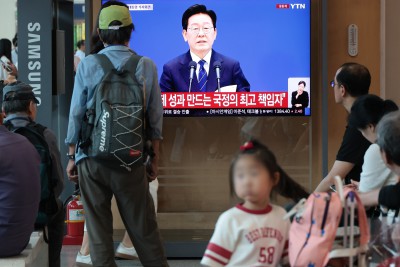
[서울=뉴스핌] 김미경 기자 = 이재명 대통령이 18일 기자회견을 하루 앞둔 17일 공식 일정을 최소화하고 회견 준비에 몰두했다.
이 대통령은 지난 14일부터 3일간 중앙아시아 5개국 정상과 연쇄 회담을 하고 1차 한-중앙아시아 정상회의를 주재하며 외교 일정으로 숨가쁘게 지냈다.
이 대통령이 기자회견 일정을 18일로 정한 것도 외교 일정을 모두 마무리하고 하루 정도 준비하는 시간이 필요하다는 판단을 한 것으로 보인다.
이 대통령은 이날 통상 목요일에 열던 수석보좌관회의도 없이 파티 비롤 국제에너지기구(IEA) 사무총장을 접견하는 일정만 소화한다.
이재명 대통령이 취임 1주녁 기자회견에서 주택공급을 위해 재건축·재개발도 속도를 내야한다고 말했다. [사진=청와대]
◆청와대 "국민이 궁금한 국정 현안, 진솔하게 소통할 것"
이 대통령은 비롤 사무총장 접견 외 나머지 시간은 회견 준비에 쓸 것으로 예상된다. 이 대통령은 참모들에게서 분야별 핵심 쟁점과 추진 방향을 보고받고 예상 질문을 추려 답변을 거듭 다듬는 것으로 알려졌다.
회견은 18일 오전 10시 청와대 영빈관에서 열린다. 모두발언과 질의응답, 마무리 발언을 합쳐 90분가량 진행한다는 계획이다. 기자회견에는 내·외신 기자 150여 명이 참석한다.
질의응답은 정치·외교와 정책·경제 두 분야로 나눠 주제 제한 없이 진행하고 실시간 국민 댓글도 소개한다.
청와대는 회견 제목을 수식어 없이 '이재명 대통령 기자회견'으로 정했다. 회견장 배경막에는 '국민의 뜻, 국민의 삶, 더 살피겠습니다'라는 문구를 건다.
성기홍 청와대 홍보소통수석은 지난 15일 브리핑에서 "대통령의 확고한 개혁 의지와 민생 최우선 국정 기조, 더 단단한 국민 통합의 메시지를 전하는 자리가 될 것"이라고 했다. 이어 "국민이 궁금해하고 듣고 싶어 하는 국정 현안을 진솔하고 충실하게 소통하려 한다"고 설명했다.
[서울=뉴스핌] 이건주 기자 = 8일 오전 서울 중구 하나은행 딜링룸에서 이재명 대통령 취임 1주년 기자회견 '대체불가 대한민국'이 생중계되고 있다. 2026.06.08 kunjoo@newspim.com
◆연임·공소취소·파병 정치 현안에 부동산·증시 민생 현안 산적
회견의 관심은 산적한 현안에 이 대통령이 과연 명확한 입장을 밝힐 것인지다.
특히 공소 취소와 연임 헌법 개정(개헌) 논란은 피할 수 없는 질문이다. 집권 여당인 더불어민주당은 '조작기소 특검법안'을 9월 중 처리하겠다고 예고했다.
특검에 공소취소 권한을 줄지가 핵심 쟁점이다. 이 대통령 사건 공소 취소를 앞장서 주장했던 김승원 의원이 법무부 장관 후보자로 지명됐고 민주당 주도로 국회 인사청문 경과보고서가 채택됨에 따라 야권의 공세는 더 거세졌다.
인사 검증 문제에 대한 언론의 질의도 예상된다. 용혜인 전 성평등가족부 장관 후보자는 자진사퇴했고 김승원 후보자는 '식약처 청탁 의혹'에 휩싸였다.
미국 요청에 따른 호르무즈 해협 파병 검토와 대미 투자 협상 관련 질문도 이 대통령에게는 고난도 문제다.
민생 현안으로는 부동산이 첫손에 꼽힌다. 정부는 취임 후 8·13 대책을 포함해 6차례 부동산 대책을 내놨다.
하지만 한국부동산원 집계에 따르면 서울 아파트 주간 매매 가격이 지난해 2월 첫째 주부터 83주 연속 올랐다.
문재인 정부 시절 세운 최장 기록(85주)에 바짝 다가섰다. 강남 3구 집값은 약세로 돌아섰지만 수도권 중저가 아파트값이 오르고 전세 매물 품귀와 월세 상승이 이어지고 있다. 부동산 정책 효과에 대한 논란이 적지 않다.
이재명 대통령이 8일 청와대 영빈관에서 취임 1주년 기자회견을 하고 있다. 2026.06.08 [사진=청와대]
◆이 대통령 "임기는 헌법상 명확하게 제한"…이번엔 어떤 답 낼까
이 대통령이 앞서 일부 현안에 짧게 입장을 밝히기는 했지만 대체로 원론적 언급에 그친 경우가 많았다.
연임 개헌 논란을 두고는 프랑스 국빈방문 중이던 지난 9일(현지시간) 파리 동포 오찬간담회에서 "(대통령) 임기는 헌법상 명확하게 제한돼 있다"고 했다.
취임 초 해외 순방을 자주 다니는 이유를 설명하는 차원의 언급이었지만 연임 논란을 의식한 우회적 입장 표명이라는 해석이다.
공소 취소와 관련해서는 지난 6월 8일 진행한 취임 1주년 회견에서 "(조작기소 여부의) 진상 규명은 해야 한다"는 원론적 답변을 내놨다.
이 대통령은 당시 공소 취소 특검에 대한 질문을 받고 "결론적으로 법과 상식대로 하면 된다"며 "최소한의 진상규명을 해야 한다"고 했다.
이 대통령은 "뭔가 문제는 있어 보인다. 주관적 판단은 있지만 객관적으로도 문제가 있어 보이는 것이 꽤 많다"며 "잘못된 게 있으면 바로 잡고 없으면 그냥 놔두면 된다. 잘못됐으면 취소하고 잘못된 게 아니면 놔두는 것"이라고 했다.
사실상 공소가 잘못됐으면 바로 잡아야 한다는 취지의 설명이었다.
◆여권에서도 "공소취소·연임 명확한 입장 내야" 목소리 강해
야권뿐 아니라 여권에서도 이 대통령이 민감한 현안에 대해 명확한 입장 표명을 해야 한다는 목소리가 강하다.
장동혁 국민의힘 대표는 이날 최고위원회의에서 "기자회견이 의미가 있으려면 그동안의 오만과 무능부터 국민에게 사과해야 한다"며 "부동산과 이란 파병 문제 등 모든 정책에서 국정 기조 대전환을 선언하고 국민이 납득할 분명한 답을 내놓길 바란다"고 요구했다.
한병도 민주당 원내대표는 정책조정회의에서 "기자회견은 국민 목소리를 경청하고 국정 현안을 두고 진솔한 대화를 나누는 소통의 장이 될 것"이라고 강조했다.
이광재 민주당 의원은 "공소 취소는 정무적이고 정치적인 문제이니 대통령이 언급할 것으로 본다"고 했다.
여권의 한 중진 의원은 "대통령이 연임 개헌이나 공소 취소와 관련해 명확한 입장을 내놓지 않는다면 향후 국정 운영이 쉽지 않을 것"이라고 우려했다.
이재명 대통령이 8일 청와대 영빈관에서 취임 1주년 기자회견을 하고 있다. 2026.06.08 [사진=청와대]
◆9주 연속 지지율 하락…추석 전 기자회견, 반등 할까
이번 기자회견은 추석 연휴를 앞두고 열리는 만큼 지지율 반등의 분수령으로 꼽힌다.
여론조사 전문기관 리얼미터가 14일 공개한 9월 2주차 주간동향(에너지경제신문 의뢰, 7~11일, 무선 자동응답 방식 조사, 표본오차는 95% 신뢰수준에 ±2.0%포인트, 중앙선거여론조사심의위원회 홈페이지 참조)을 살펴보면 이 대통령의 국정수행 긍정평가는 9주 연속 하락해 취임 후 최저치인 33.8%였다. 부정평가는 63.3%로 처음 60%대에 올라섰다.
리얼미터는 외교 행보에도 개각 인선 논란과 호르무즈 파병 검토, 부동산 정책 불확실성이 겹친 데다 진보층과 20대 이탈이 더해진 것을 하락 주요 원인으로 분석했다.
한국갤럽이 17일 발표한 '2026 대한민국 신뢰도 조사'(시사IN 의뢰, 6~8일, 유선전화와 휴대전화 무작위 전화걸기 전화면접조사)에서는 이 대통령이 정치인 중 2위로 내려앉았다. 이 대통령은 2021년 이후 해당 조사에서 줄곧 가장 신뢰하는 정치인 1위였다. 올해 조사에서는 한동훈 무소속 의원에게 1위를 내줬다.
이 대통령에 대한 신뢰도 조사에서는 '신뢰한다' 35.9%, '불신한다' 50.4%였다. 지난해 조사에서는 이 대통령을 신뢰한다는 응답이 51.2%, 불신한다는 응답이 34.1%였다. 신뢰와 불신의 국민 평가가 1년 만에 뒤집어졌다.
the13ook@newspim.com
2026-09-17 14:37