
전체기사 최신뉴스 GAM
KYD 디데이
마켓

속보

더보기

[해외경제] 日 경제 올 3.1%성장, 물가 0.2% 하락 전망 - 日銀 반기전망

기사입력 :

최종수정 :

※ 본문 글자 크기 조정

  • 더 작게
  • 작게
  • 보통
  • 크게
  • 더 크게

※ 번역할 언어 선택


일본은행(BOJ)이 예상했던 대로 이번 회계연도 경제성장률 전망치와 물가예상치를 상향수정했다.日銀은 이번 회계연도 일본 경제 성장률 전망치를 3.1%로 제시하고, 신선식품을 제외한 핵심소비자물가지수가 0.2% 하락할 것으로 예상했다.지난 해 반기전망 보고서에서는 이번 회계연도 성장률 전망치가 2.5%, 소비자물가 예상치는 -0.3%로 제시된 바 있다.이번 전망 보고서에서 日銀은 지난 2003년 하반기 이후 일본경제가 완만한 속도의 회복세를 지속하고 있다고 평가하고, 수출강세로 인해 산업생산 및 기업 실적이 크게 개선됐으며 이 때문에 기업 고정설비 투자가 증가하는 선순환이 나타났다고 설명했다.한편 이번 보고서는 가계소비에 대해서는 다소 견고한 수준을 유지해왔다(somewhat firm)고 평가했다.보고서는 2004 회계연도에도 일본경제는 회복세를 유지할 것이며, 모멘텀이 점차 증가할 것으로 보인다고 예상했다.보고서는 미국과 동아시아 경제가 특히 빠른 속도로 성장할 것으로 보이며, 이 결과 수출 및 생산이 증가세를 나타낼 것이며, 기업실적은 비용절감 및 재무구조 개선으로 인해 증가추세를 나타낼 것이라고 전망하고 있다. 또 보고서는 기업들이 노동비용을 억제하기 위해 노력할 것이지만, 생산량 증가와 기업순익 회복으로 인해 가계 소비는 완만하게나마 증가할 것이라고 덧붙였다.특히 보고서는 이번 회계연도에 국내 기업제품물가가 소폭 상승세로 전환할 것으로 기대되지만, 소비자물가지수의 경우 그 동안 강세를 보였던 의료비용이나 쌀 가격이 둔화되고 상품가격 강세의 효과가 높은 생산성으로 인해 상쇄될 것이기 때문에 소폭 하락추세를 나타낼 것으로 보인다고 지적했다.결과적으로 보고서는 일본 경제가 성장세를 지속하고 디플레 압력을 극복할 수 있도록 양적 완화정책을 굳건하게 유지해 나갈 것이라고 강조했다.▷日銀 2003회계연도 전망치(2003년10월)와 실제결과실질GDP (전망치)2.3%~2.6% (실제치) 2.8%국내기업물가 (전망치) -0.9%~-0.5% (실제치) -0.5%소비자물가(신선식품제외) (전망치) -0.3%~-0.1% (실제치) -0.2%▷日銀 2004회계연도 전망치([ ]안은 중앙값)실질GDP (이번 전망치) 3.0~3.2%[3.1%] (지난해 10월) 2.3%~2.6%[2.5%]국내기업물가 (이번 전망치) 0.1%~0.3%[0.2%] (지난해 10월) -0.8%~-0.4%[-0.6%]소비자물가(신선식품제외) (이번 전망치) -0.2%~-0.1%[-0.2%] (지난해 10월) -0.5%~-0.2%[-0.3%]▷日銀 정책이사들이 제출한 2004회계연도 전망치(최상단과 최하단 수치는 제외, 괄호안은 이전 전망치)실질GDP 2.9%~3.5%(2.0%~2.8%)국내기업물가 0.1%~0.5%(-0.9%~0.0%)소비자물가(신선식품제외) -0.2%~+0.5%(-0.5%~+0.5%)다음은 일본은행의 반기전망 보고서 전문이다.

Outlook for Economic Activity and Prices
(April 2004)
April 28, 2004Bank of Japan--------------------------------------------------------------------------------[ The Bank's View ] (Outlook for Fiscal 2004) Japan's economy has continued to recover at a moderate pace since the second half of 2003. The stimulus from exports has contributed to the rise in production and corporate profits. This, in turn, has generated an uptrend in business fixed investment. Household consumption has been somewhat firm. In fiscal 2004, the economy is expected to continue its recovery as momentum increases gradually. Economic activity in general is deviating above the "Standard Scenario" described in the "Outlook and Risk Assessment of the Economy and Prices" (October 2003). Overseas economies, the U.S. and East Asian economies in particular, are expected to grow relatively fast. As a result, exports and production are likely to increase, and corporate profits will be on an uptrend thanks to cost reductions and the strengthening of the financial position. Although firms continue to cut their interest-bearing debts, the overall pace of debt reduction is likely to ease off. Under these circumstances, business fixed investment is expected to increase mainly in the manufacturing sector. While firms continue to restrain labor costs, the increases in production and corporate profits are expected to exert positive effects gradually on the household sector through changes in employment and income as well as in asset prices. As a result, household consumption is anticipated to recover at a moderate pace. The year-on-year rate of change in domestic corporate goods prices in fiscal 2004 is likely to be slightly above zero percent, reflecting the increase in commodity prices at home and abroad as well as the improvement in domestic supply and demand conditions. Looking into the background of consumer price developments, the output gap, which affects the underlying trend of prices, is likely to narrow steadily with the economic recovery. However, such factors as the rise in medical costs and rice prices, which contributed to a temporary slowdown of the fall in consumer prices in fiscal 2003, will dissipate, and the impact of the rise in commodity prices on the prices of intermediate and finished products will be largely absorbed by higher productivity. Against such a background, consumer prices in fiscal 2004 are projected to be on a slight downtrend on a year-on-year basis. (Positive and Negative Deviations) The following factors could make the economy deviate either above or below the "Outlook for Fiscal 2004" (the Outlook). The first factor is the developments in overseas economies. The economic outlook for the U.S. and Asia, China in particular, could make the global economy deviate either above or below the Outlook. Geopolitical risks as well as the twin deficits of the U.S. and its ramification in financial and foreign exchange markets could adversely affect not only the U.S. economy but also the global economy.The second factor is the developments in domestic financial and foreign exchange markets. Markets reflect the developments in real economic activity in the medium to long term, but they may fluctuate due to various factors in the short run. The changes in stock prices, long-term interest rates and foreign exchange rates, depending on their extent and direction, could make the economy deviate either above or below the Outlook. The third factor is the developments in domestic private demand. On one hand, if prospects for growth improve and the confidence in the corporate and household sectors rises, business fixed investment and household consumption could make the economy deviate above the Outlook. In this regard, the current lean level of inventory is considered to set the stage for production to expand quickly as final demand increases. On the other hand, if firms continue to restrain labor costs, the spillover effect of the recovery from the corporate sector to the household sector could delay, which is likely to make the economy deviate below the Outlook. The fourth factor is the progress in the disposal of nonperforming loans (NPLs) and financial system developments. The outstanding amount of NPLs is declining, particularly at large banks, and the disposal of NPLs is making some progress at regional banks as well. Concerns over the financial system are subsiding partly due to the rise in stock prices, and this is evidenced in the recent reduction in demand for banknotes among the public. While concerns that the financial system problem could adversely affect corporate finance and economic activity are receding, it should be recognized that these concerns would make the economy deviate below the Outlook, if they materialize. (Overcoming Deflation and Conduct of Monetary Policy) In order to put Japan's economy on a sustainable growth path and to extricate Japan from deflation, it is a prerequisite that private demand increases and prospects for long-term growth improve. In this regard, the initiatives of the private sector are as important as the efforts of the government and the Bank of Japan. Firms have been striving to increase profitability by redesigning their business strategy, reducing costs, and strengthening their financial position. Banks have been making progress in disposing of their NPLs. The government has been backing the initiatives of the private sector for economic revitalization by accelerating deregulation as well as implementing structural reforms in the areas of finance, tax system, and public expenditures. The Bank of Japan has been pursuing aggressive monetary easing. With these initiatives, the economy has been gathering momentum. The year-on-year rate of decline in prices has been decelerating, as the output gap narrows steadily. If various economic agents persist in their initiatives and momentum for the recovery builds up further, the output gap will narrow, which leads to a higher possibility of overcoming deflation. The Bank of Japan has been providing ample liquidity under the quantitative easing policy, and short-term interest rates have been at almost zero percent. Furthermore, the Bank has made a firm commitment to continuing the current policy until the year-on-year rate of change in consumer price index (excluding fresh food, on a nationwide basis) registers zero percent or higher on a sustainable basis. Such a framework of monetary easing has been giving strong support for economic activity of the private sector through the following channels. First, the provision of ample liquidity contributes to ensuring financial market stability and maintaining the accommodative environment for corporate finance. Second, the expectations about interest rates in the near future will be stable with the above-described commitment, and thus the returns on investment will rise as the economy recovers. The positive effect of this channel will be greater as the recovery accelerates and corporate profits increase. The Bank of Japan aims at putting Japan's economy on a sustainable growth path and overcoming deflation by firmly maintaining the quantitative easing policy. Moreover, the Bank will continue to back the initiatives of market participants to improve credit markets, including loan trading and securitization markets. This is intended to make the credit intermediation in the market more diversified and efficient, and to strengthen the transmission mechanism of monetary easing. [뉴스핌 Newspim 취재본부] newspim@newspim.com

[관련키워드]

[뉴스핌 베스트 기사]

사진
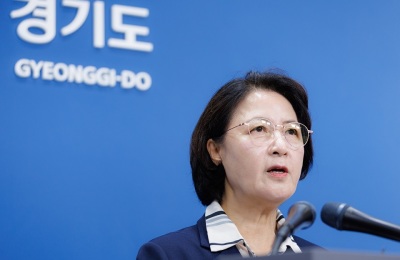
경기도, 재정 '비상 상황' [수원=뉴스핌] 박승봉 기자 = 추미애 경기도지사가 5일 경기도의 재정 여건에 대해 공식적으로 '비상 상황'을 선언하고 강도 높은 세출 구조조정과 세입 구조 개선을 골자로 한 비상조치 추친 방안을 제시했다고 밝혔다. 추미애 경기도지사가 5일 경기도의 재정 여건에 대해 공식적으로 '비상 상황'을 선언하고 강도 높은 세출 구조조정과 세입 구조 개선을 골자로 한 비상조치 방안을 발표했다. [사진=경기도] 추 지사는 이날 경기도청 브리핑룸에서 기자회견을 열고 "경기도는 지금 새로운 공약사업을 추진하기는커녕 이미 진행 중인 민생 사업조차 온전히 유지하기 어려운 지경에 이르렀다"며 "지금 결단하지 않으면 2~3년 뒤 채무를 갚기 위해 또다시 지방채를 발행하는 악순환에 빠질 수 있어 '경기도 재정 비상 상황'을 선언한다"고 밝혔다. 도에 따르면 민선 8기 당시 경기도는 재정 부족을 이유로 노인장기요양, 소아응급 책임의료기관 육성, 유·초·중·고교 급식비, 시내버스 공공관리제 등 상당수 주요 민생·필수 사업의 올해 예산을 12개월분이 아닌 9개월분만 편성한 것으로 나타났다. 이에 따라 올해에만 약 7700억 원 규모의 감액추경이 필요한 실정이다. 경기도는 지난해 한도액의 99.6%에 달하는 9430억 원 상당의 지방채를 20년 만에 발행한 데 이어 통합재정안정화기금 조례를 개정해 남북협력기금 등 각종 기금 재원 5588억 원을 일반회계로 예탁·끌어다 쓰며 위기를 버텨왔다. 그러나 도 전체 예산 약 41조 7000억 원 중 도가 자체 활용할 수 있는 재원은 3조 5000억 원에 불과한 데다 세원의 절반 이상을 차지하는 취득세 수입이 2022년 11조 원에서 올해 8조 원 수준으로 급감했다. 아울러 3기 신도시 개발 세수 효과 감소, 반도체 등 인프라 투자 대비 법인지방소득세의 시·군 귀속 구조, 전체 예산의 49%에 달하는 복지 예산 증대 등이 맞물리며 구조적 재정 위기가 심화했다. 추 지사는 구조적 재정 위기 극복을 위해 ▲도지사 및 고위공직자 업무경비 감액 등 강도 높은 세출 구조조정 ▲일회성·선심성 행사 및 불요불급한 사업 전면 중단▲참모조직 및 공공기관 인력 효율적 재배치 ▲지방소비세 확충 및 국고보조사업 지방비 부담 개선 등 세입구조 정상화를 위한 4대 방안을 제시했다. 추미애 경기도지사가 5일 경기도의 재정 여건에 대해 공식적으로 '비상 상황'을 선언하고 강도 높은 세출 구조조정과 세입 구조 개선을 골자로 한 비상조치 방안을 발표했다. [사진=경기도] 다만 도민의 생명과 안전, 취약계층 보호를 위한 핵심 민생 예산은 끝까지 지켜내겠다고 약속했다. 추미애 지사는 "재정위기의 고통을 사회적 약자와 서민의 삶에 떠넘기지 않고 불필요한 지출부터 선제적으로 줄여나가겠다"며 "지금의 어려움을 다음 세대의 빚으로 넘기지 않고 경기도의 미래를 위한 전환점으로 만들기 위해 도의회 및 31개 시·군과 적극 협력하겠다"고 강조했다. 1141world@newspim.com 2026-08-05 11:21

사진
프로야구 전 경기 폭염 취소 [서울=뉴스핌] 남정훈 기자 = 극한 폭염이 프로야구까지 멈춰 세웠다. 경기장 곳곳에서 온열질환 의심 환자가 발생하고 관중이 의식을 잃고 쓰러지는 응급 상황까지 벌어지자 한국야구위원회(KBO)가 결국 리그를 일시 중단하고 긴급 대책 마련에 나섰다. KBO는 5일과 6일 예정됐던 2026 신한 SOL KBO리그 1군 전 경기와 퓨처스리그 전 경기를 모두 취소한다고 발표했다. 취소된 경기는 잠실(NC-두산), 인천(LG-SSG), 대구(한화-삼성), 부산(키움-롯데), 광주(KT-KIA)에서 열릴 예정이던 5경기다. [서울=뉴스핌] 폭염 속 응원을 하고 있는 삼성 팬들. [사진 = 삼성 라이온즈] 2026.08.05 wcn05002@newspim.com KBO는 "최근 전국적인 폭염으로 관람객과 선수단의 안전을 위협하는 상황이 발생하고 있어 이를 엄중하게 인식하고 있다"라며 "6일 긴급 실행위원회를 열어 폭염 관련 리그 운영 방침과 안전 대책을 원점에서 논의할 예정"이라고 밝혔다. 이번 회의에는 KBO 사무국을 비롯해 10개 구단 단장과 한국프로야구선수협회 관계자들이 참석해 폭염 상황에서의 경기 운영 기준과 안전 대책을 전면 재검토할 계획이다. 당초 KBO는 전날 폭염 단계별 경기 운영 세칙을 새롭게 발표했다. 폭염주의보가 발효되면 경기를 정상 개최하고, 폭염경보가 내려질 경우 홈 구단 의견을 반영해 경기 시작 시간을 최대 1시간까지 늦출 수 있도록 했다. 또한 기상청이 올해 신설한 최고 단계인 '폭염중대경보'가 발효되면 경기 당일 오후 1시 이전 취소를 결정할 수 있도록 했다. 폭염중대경보는 하루 최고 체감온도 38도 이상 또는 최고기온 39도 이상이 예상될 때 발효된다. 이에 따라 전날 잠실 NC-두산전과 광주 KT-KIA전이 해당 기준이 적용된 첫 사례로 취소됐다. [인천=뉴스핌] 유다연 기자= 4일 인천 SSG랜더스필드에서 열린 SSG와 LG 경기 8회를 마친 후 한 관객이 온열질환으로 쓰러졌다. 해당 관객을 이송하기 위해 대기 중인 구급차의 모습. 2026.08.05 willowdy@newspim.com 그러나 다른 경기장에서는 더 심각한 상황이 발생했다. 인천 SSG랜더스필드에서 열린 LG와 SSG 경기에서는 총 25명의 관중이 온열질환 의심 증세를 호소하며 현장 치료를 받았다. 이 가운데 2명은 의식 저하 등 중증 증상을 보여 구급차로 병원에 이송됐다. 8회말에는 25세 남성 관중이 계단에서 의식을 잃고 쓰러져 경기가 약 9분간 중단됐고, 경기 종료 직전에도 26세 남성 관중이 응원석에서 쓰러지는 응급 상황이 발생했다. 다행히 두 번째 환자는 현장 안전요원의 응급조치 후 의식을 회복한 것으로 전해졌다. 경기장 안팎에서 온열질환 환자가 잇따라 발생하자 KBO는 기존 운영 방침만으로는 안전을 담보하기 어렵다고 판단했고, 결국 5일과 6일 예정된 1군과 퓨처스리그 전 경기를 모두 취소하는 초유의 결정을 내렸다. 이로써 올 시즌 폭염으로 취소된 KBO리그 경기는 15경기로 늘었고, 우천 등을 포함한 전체 취소 경기는 40경기가 됐다. wcn05002@newspim.com 2026-08-05 13:32

기사 번역
결과물 출력을 준비하고 있어요.
종목 추적기

S&P 500 기업 중 기사 내용이 영향을 줄 종목 추적

결과물 출력을 준비하고 있어요.

긍정 영향 종목

  • Lockheed Martin Corp. Industrials
    우크라이나 안보 지원 강화 기대감으로 방산 수요 증가 직접적. 미·러 긴장 완화 불확실성 속에서도 방위산업 매출 안정성 강화 예상됨.

부정 영향 종목

  • Caterpillar Inc. Industrials
    우크라이나 전쟁 장기화 시 건설 및 중장비 수요 불확실성 직접적. 글로벌 인프라 투자 지연으로 매출 성장 둔화 가능성 있음.
이 내용에 포함된 데이터와 의견은 뉴스핌 AI가 분석한 결과입니다. 정보 제공 목적으로만 작성되었으며, 특정 종목 매매를 권유하지 않습니다. 투자 판단 및 결과에 대한 책임은 투자자 본인에게 있습니다. 주식 투자는 원금 손실 가능성이 있으므로, 투자 전 충분한 조사와 전문가 상담을 권장합니다.
안다쇼핑
Top으로 이동