
President Bush Delivers State of the Economy Report
Federal Hall
New York, New York
11:12 A.M. EST
THE PRESIDENT: Thanks for coming. Please be seated. Thanks for being here. I'm pleased to be back in Federal Hall. You know, I drove in, and there stood George Washington. I like to call him George W. (Laughter.) It's nice to be back here.
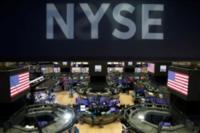
Last week, I delivered my State of the Union. This morning, I've come to deliver a State of the Economy speech -- and there's no better place to do it than in America's financial capital. More than two centuries ago, Alexander Hamilton led the U.S. Treasury Department from this building. Today, New York City is headquarters of global corporations, it's a center for capital markets, it's the home of three of the world's greatest stock exchanges. You have a Mayor whose name is a fixture on trading floors across the world. And until I took him to Washington, you had Hank Paulson -- who, by the way, is doing a fabulous job.
As we begin this New Year, America's businesses and entrepreneurs are creating new jobs every day. Workers are making more money -- their paychecks are going further. Consumers are confident, investors are optimistic. Just today, we learned that America's economy grew at an annual rate of 3.5 percent in the fourth quarter of 2006. That means our economy grew at 3.4 percent last year, which is up from 3.1 percent in 2005. Ladies and gentlemen: The state of our economy is strong. (Applause.) And with the hard work of the American people and the right policies in Washington, we're going to make it even stronger.
Mr. Mayor, thanks for being here. I appreciate you coming. You're doing what people want you to do, and that is to lead this city.
I appreciate Bill Rudin -- thanks for having me, Bill. Good to see you again. I want to thank members of the Congress who have joined us -- Pete King, Vito Fossella, Carolyn Maloney, and Tom Reynolds. Thanks for flying down with me today. Do you want a ride back? (Laughter.)
Mr. Mayor -- David Dinkins, thank you for being here. Proud you're here. And it's good to see my buddy, Mayor Ed Koch. Mr. Mayor, thank you for coming. Appreciate you being here. (Applause.)
I thank the members of the Association of a Better New York who have joined us. I appreciate all the state and local officials who are here.
Bill mentioned that I was here in October 2001. I recognized then our economy had been hit hard and there was great uncertainty about the future. It was a tough time for the country. Many people were out of work. By mid-December, nearly a million jobs had been lost. The collapse of the Twin Towers had left dangerous cracks in this building's foundations.
I said that day that I was optimistic that our economy would recover from these attacks. But if I'd have told you that we would also make the recession one of the shortest on record, that we'd have confronted corporate scandals, absorb a tripling in the price of oil, fight a global war, and help a whole region of our country recover from a hurricane, you might have been a little skeptical.
Yet America's economy has overcome all these things. Federal Hall has been fully restored. It's on solid ground. And so is the New York City economy -- as the Mayor mentioned, it's booming -- with a bond rating at an all-time high, and unemployment near an all-time low. Across our nation, small businesses and entrepreneurs are creating millions of new jobs. Retail sales are up, consumer spending is strong, exports of goods and services have jumped by nearly 35 percent. The Dow Jones has set new records 26 times in the last four months. Productivity is strong, and that's translating into higher wages.
When people across the world look at America's economy what they see is low inflation, low unemployment, and the fastest growth of any major industrialized nation. The entrepreneurial spirit is alive and well in the United States. There is one undisputed leader in the world in terms of economy, and that's the United States of America. (Applause.)
On Wall Street, you know that America's economic leadership rests on strong and flexible capital markets. Capital markets connect entrepreneurs with the investment they need to turn their ideas into new businesses. America's capital markets are the deepest, the broadest, and the most efficient in the world. Yet excessive litigation and over-regulation threaten to make our financial markets less attractive to investors, especially in the face of rising competition from capital markets abroad. To keep America's economic leadership, America must be the best place in the world to invest capital and to do business.
One important step we've taken in Washington is to pass litigation reform like the Class Action Fairness Act. It's important for people in Congress to understand that excessive lawsuits will make it hard for America to remain the economic leader that we want to be. Another important step we've taken is to strengthen our business institutions by passing the Sarbanes-Oxley Act in 2002. This law helped boost investor confidence by establishing high standards for transparency and corporate governance. The principles of Sarbanes-Oxley are as important today as when they were passed. Yet complying with certain aspects of the law, such as Section 404, has been costly for businesses and may be discouraging companies from listing on our stock exchanges.
We don't need to change the law. We need to change the way the law is implemented. America needs a regulatory environment that promotes high standards of integrity in our capital markets, and encourages growth and innovation. And I'm pleased of the progress that Hank Paulson and Chairman Chris Cox are making to make sure the regulatory burden is not oppressive, and fair, and helps us meet a great national objective to keep the United States the economic leader in the world.
Our economic leadership also depends on sensible, pro-growth tax policies. To help bring our economy out of a recession and recover from September the 11th, we cut taxes on the American people. We cut taxes on everybody who pays income taxes. We doubled the child tax credit. We reduced the marriage penalty. We cut taxes on small businesses. And we cut taxes on dividends and capital gains.
There's a lot of political debate about these tax cuts. But here are some of the facts: Since we enacted major tax relief into law in 2003, our economy has created nearly 7.2 million new jobs. Our economy has expanded by more than 13 percent. That expansion is roughly the size of the entire Canadian economy. This economic growth has led to record tax revenues, which has helped us cut the deficit in half three years ahead of schedule. One fact should be clear when you look at the statistics: The fastest way to kill a recovery would be to raise taxes on the people who created it. Now is not the time for the federal government to be raising taxes on the American people. (Applause.)
We must ensure that the money you send to Washington is spent wisely. Next Monday, I'm going to submit to Congress a budget that will eliminate the deficit by 2012. In order to do so, we need to set priorities in Washington. You can't try to be all things to all people when it comes to spending your money if you want to keep taxes low, keep the economy growing, and balance the budget. And my number one priority is to protect this country. And we're going to make sure our troops have all the equipment they need to do the job we've sent them to do -- (applause) -- and make sure our citizens have what it takes to defend this homeland.
That means we've got to be careful about how we spend money in other areas. One thing we can do to show the American people that we're going to be smart about how we spend their money is to do something about earmarks -- it's that system of appropriations where things end up being spent even though nobody has voted on them. And I'm going to work with Congress to reduce the amount of earmarks and the number of dollars spent by earmarks in a significant way to earn the trust of the taxpayers of this country, and at the same time, be wise about how we spend their money.
I believe I need a line-item veto to help Congress spend money wisely. And so I put forth a plan that says the legislative branch and the executive branch will work together to eliminate wasteful and unnecessary spending.
We're about to pass a farm bill that provides a strong safety net, while tightening spending and cutting subsidies. We can manage this short-term deficit -- and I look forward to working with Congress to do so. But it's important for Congress to understand there are unfunded liabilities inherent in Social Security and Medicare that we need to do something about now.
And I understand it's tough work that requires political will from both the President and the Congress to come together and solve this problem. I'm hopeful that we can set aside needless politics and address the issues with entitlements in a constructive way. That way people will say, they came to Washington and they did the job we expect them to do.
Our growing economy is also a changing economy. The rise of new technologies, new competition, and new markets abroad is bringing changes -- and these changes are coming faster than ever. There was a time when most people expected they'd keep a job for life. Now the average American has 10 jobs before the age of 40. It used to be that a company's name would stay the same for decades. New companies are now -- now companies are merging and splitting, and creating new names and new stock symbols. Some of us can still remember when cell phones were the size of bricks and considered a luxury. Now they fit in your pocket, they take photos, they play music, and every teenager in America has one, it seems like.
By and large, our dynamic and innovative economy has helped Americans live better and more comfortable lives. Yet the same dynamism that is driving economic growth is also -- can be unsettling for people. For many Americans, change means having to find a new job, or to deal with a new boss after a merger, or to go back to school to learn new skills for a new career. And the question for America is whether we treat the changes in our economy as opportunity to help improve people's lives, or as an excuse to retreat into protectionism.
I believe that the changes present us with historic opportunities -- America's growing economy allows us to approach them from a position of strength. And so today, I'm going to discuss actions we should take to make America's economy more flexible and dynamic in four areas -- trade, health, energy and education.
First, we can make our economy more flexible and dynamic by expanding trade. America has about 5 percent of the world's population. That means 95 percent of our potential customers are abroad. Every time we break down barriers to trade and investment, we open up new markets for our businesses and our farmers. As we improve free trade, consumers get lower prices. There are better American jobs. You see increased productivity. Jobs supported by exports of goods pay wages that are 13 to 18 percent higher than the average. So one of our top priorities has been to remove obstacles to trade everywhere we can.
When I took office, America had free trade agreements with three countries. We have free trade agreements in force now with 13 countries -- and we have more on the way. These agreements are leading to direct benefits for America's businesses and, equally importantly, America's workers. Yesterday, I went to the Caterpillar plant in Peoria, Illinois
-- that's where they make big bulldozers. The folks there told me that Caterpillar now exports more than one-half of the products they make. They see immediate results when we have broken down barriers to trade. Within two years of implementing our free trade agreement with Chile, Caterpillar's exports to that country have nearly doubled. The opening of this and other export markets has led Cat to add thousands of new jobs here in America.
Manufacturers, farmers, and service providers all across our country have similar stories. So we need to continue to level the playing field for our goods and services. I strongly believe this: When people around the world have a choice, they choose goods that say "Made in the USA."
In this global economy, new competition means that American businesses must constantly approve [sic]*. Global competition can also lead to hardships for our workers and their families. Government has a responsibility to help displaced workers find new jobs, or even a new career. So my administration has reformed job training programs and expanded Trade Adjustment Assistance to help more displaced workers learn the new skills they need to succeed. I'm going to work with Congress to reauthorize and to improve the Trade Adjustment Assistance this year, so we can help Americans take advantage of this growing, dynamic economy.
At this moment, the most promising opportunity to expand free and fair trade is by concluding the Doha Round at the World Trade Organization. Global trade talks like Doha have the potential to lower trade barriers all around the world. They come around only once every decade or so. Successful trade talks will have an enormous impact on people around the world. Since World War II, the opening of global trade and investment has resulted in income gains of about $9,000 a year for the average American household.
The Doha Round is a chance to level the playing field for our goods and services -- in other words, so we can be treated fairly in foreign markets -- but it also is a great opportunity to lift millions of people out of poverty around the world. And so we're going to work hard to complete it. We are dedicated to making sure we have a successful Doha Round.
The only way America can complete Doha and make headway on other trade agreements is to extent Trade Promotion Authority. This authority allows the President to negotiate complicated trade deals for our country, and then send them to Congress for an up or down vote on the whole agreement. Presidents of both parties have considered this authority essential to completing good trade agreements. Our trading partners consider it essential for our success at the negotiating table. The authority is set to expire on July 1st -- and I ask Congress to renew it. I know there's going to be a vigorous debate on trade, and bashing trade can make for good sound bites on the evening news. But walling off America from world trade would be a disaster for our economy. Congress needs to reject protectionism, and to keep this economy open to the tremendous opportunities that the world has to offer.
Second, we can make our economy more flexible and dynamic by reforming our health care system. Across the country, business owners tell me that the cost of health care is their biggest problem, and it's becoming harder to provide coverage for their workers. American workers and their families also find that the health care system is rigid and confusing. They end up with medical bills that are impossible to understand, and spend hours filling out complicated insurance forms. They feel locked into jobs because they're worried about losing the health insurance if they leave their job. They have no way to measure the quality of their doctors and hospitals. They see good doctors being driven out of practice because of frivolous lawsuits. All this leads to higher medical costs, and higher insurance premiums for businesses and their families.
Listen, federal government has an important role to play when it comes to health care, and that is to help the poor and the disabled and the elderly. And we're keeping those obligations. But for all other Americans, I believe that private health insurance is the best way for them to meet their needs. Many Americans cannot afford private health insurance. So we're taking steps to make it more affordable and to give patients more choices and more control over their health care decisions.
We created health savings accounts, which put patients in charge of their medical decisions and helps reduce the cost of their coverage. And I ask Congress to strengthen health savings accounts. We need to pass Association Health Plans, so that small businesses can insure their workers by pooling risk at the same discount that big companies are able to get.
We're using information technology. Listen, we're a giant consumer of health care at the federal level. And we're insisting upon new technologies to make health care more efficient, and thereby reducing costs inherent in an inefficient system, and reducing medical errors. We believe that the health care industry needs to post price and quality, so as consumers have more choice, they're able to make better decisions about the health care they get. We understand that a non-transparent system where somebody else pays the bills is likely to cause costs to continue to rise. Congress needs to pass medical liability reform. If you're interested in available and affordable health care, we should not have a legal system that's running good doctors out of practice and running up the cost of your medicine. (Applause.)
And one of the most promising ways to make private health insurance more affordable is to reform the tax code. Under current law, workers who get health insurance from their companies get a tax benefit. If you buy insurance on your own, you do not get the tax benefit. The tax code is not fair. So in my State of the Union address I proposed to end this unfair bias in the tax code by creating a standard deduction for every American who has health insurance, no matter where you get it from.
This deduction would also apply to payroll taxes, so those who do not pay income taxes would still get a benefit. With this reform, more than 100 million men, women, and children who are now covered by employer-provided insurance will benefit from lower tax bills. Those who now purchase health insurance on their own would save money on their taxes. Millions of others who have now no health insurance at all would find basic private coverage within their reach.
As well, we need to do more to help the states and localities deal with the uninsured. I think the most innovative programs are developed at the state level. And I think it's in our interest to support states that make basic private health insurance available to all their citizens to have help from the federal government, to help them with the poor, to help them with the uninsured. So we're asking Congress to join us in setting up "affordable choices" grants to make sure that the poor and the sick have private health insurance available to them, as well.
All these steps will bring America closer to a health care system where patients are in charge of their medical decisions. In a reformed system, there will be a vibrant individual market, in which health insurance companies actually compete for your business. When you leave your job for a better opportunity elsewhere, you will be able to take your health care plan with you. If people change jobs 10 times before they're 40, we need a health care system that is flexible and consumer-oriented. Health care providers will have an incentive to improve their service. Your medical records would fit on a CD, so you would not have to fill out multiple forms every time you visit your doctor. In the end, you would have a more flexible health care system that responds to your needs, and at the same time helps us keep our economy flexible and dynamic.
Third, we can make our economy more flexible and dynamic by diversifying our energy supply. Energy is vital to businesses and farmers and families all across our nation. Yet, we have a fundamental problem: We're too dependent on oil. That creates vulnerabilities. When demand for oil goes up in China or India, it affects the price of gasoline here in America. If a terrorist were to attack oil infrastructure, it affects the supply of energy here in America.
Dependency on oil means we're not being as good a steward of the environment as we should be. The way to overcome these challenges is through innovation and technology. I believe it is a good use of your money to spend at the federal level on new technologies to make us less dependent on oil -- and that's exactly what we've done. We're spending money on cellulosic ethanol -- that's a fancy word for saying some day we're going to be able to convert switch grass into energy that powers your cars. We're spending money on biodiesel fuels. We're spending money on advanced batteries, so some day you'll be able to plug in your automobile and drive the first 40 miles on electricity, and your car is not going to look like a golfcart. We're spending money on solar and wind energy, and clean coal and nuclear power.
Since 2001, my administration, working with Congress, has invested up to more than $10 billion to develop cleaner energy alternatives. And this federal funding has helped America's scientists and engineers make tremendous progress toward a goal of becoming less dependent on oil. As well, the private sector is responding. You know it better than I do, but a lot of people are seeing interesting opportunities available in alternative energies. And private money is flowing into these new alternatives.
So we're on the threshold of dramatic technological breakthroughs. And now the challenge is to move the technologies from research lab into the marketplace. In my State of the Union I set an ambitious goal of reducing gasoline usage in the United States by 20 percent over the next 10 years. If you want to become less dependent on oil, the quickest way to do so is to use less gasoline. Meeting this goal will require significant changes in supply and demand. On the demand side, we have got to reform our economy -- fuel economy standards, that will reduce the amount of gasoline that cars and SUVs consume. And on the supply side, I have proposed a new mandatory fuel standard that is nearly a fivefold increase over the current target for renewable and alternative fuels.
We'll leave it to the market to decide the mix of fuels that most effectively and efficiently meet this goal. But that goal can be achieved, and that's why I put it out there. It's a necessary goal for our national security and economic security. It's an important goal to deal with the issue of climate change. Imagine what these technologies will mean for somebody living in New York -- the fuel in your car is going to come from a cornfield in Iowa, or perhaps switch grass out of Texas. Hybrid electric taxicabs will be running on new generation lithium ion batteries. The financial pages will be filled with new stock symbols for dynamic American companies in the growing field of alternative fuels.
This day is coming, but it's not going to happen overnight. If you want to be less dependent on foreign oil, we ought to be drilling for oil and gas in environmentally friendly ways here in the United States. And if you're concerned about a terrorist attack which could disrupt oil supplies, it makes sense for Congress to double the Strategic Petroleum Reserve.
So I hope Congress moves forward on these initiatives, and I'm looking forward to working with them. The idea is to diversify our energy supply, keep our air clean and help create new jobs through new industries that will meet the demand for alternative sources of energy.
Fourth, we can make our economy more flexible and dynamic by strengthening public education. A strong and vibrant education system is vital to maintaining America's competitive edge in the world. A strong and vibrant education system will ensure that every citizen can share in this nation's prosperity.
I know some of our citizens worry about the fact that our dynamic economy is leaving working people behind. We have an obligation to help ensure that every citizen shares in this country's future. The fact is that income inequality is real; it's been rising for more than 25 years. The reason is clear: We have an economy that increasingly rewards education, and skills because of that education. One recent study of male earnings showed that someone with a college degree earns about 72 percent more than someone with a high school diploma. The earnings gap is now twice as wide as it was in 1980 -- and it continues to grow. And the question is whether we respond to the income inequality we see with policies that help lift people up, or tear others down. The key to rising in this economy is skills -- and the government's job is to make sure we have an education system that delivers them.
And that's why I think one of the most important economic initiatives of my presidency has been the No Child Left Behind Act. The philosophy behind No Child Left Behind says: We're going to spend federal money, but we expect you, at the local level to deliver results. In other words, we've insisted upon accountability. I understand some people don't like accountability, but how can you make sure if our kids are getting the foundation for the skills necessary to compete in the 21st century unless you measure? And when you measure and find failure, correct problems early before it's too late.
The No Child Left Behind Act is working. There's an achievement gap in America that's not fair and it's not right, and it's beginning to close. You know how I know? Because we're measuring. This good law is working, and the Congress needs to reauthorize it. (Applause.)
The agenda to strengthen education and make America more competitive extends beyond the primary grades. And that's why I proposed -- and I'm working with the Congress to pass -- the American Competitiveness Initiative. That means we're going to improve math and science education in the middle schools and high schools. You can't compete in the 21st century unless we're educating young engineers and physicists and chemists -- unless our kids have the skills necessary to fill the jobs of the 21st century.
I also believe it's a vital role for the federal government to spend money on basic scientific research. So I've called upon Congress to double the funding for basic scientific research at the National Institute of Standards and Technology labs, or the Department of Energy's Office of Science, or the National Science Foundation. In other words, there's things we can do in Washington to put good policies in place to make sure that we stay on the cutting edge of change, and at the same time, educate our kids so they can take advantage of the world we're in.
I believe -- and I appreciate Congress's expanding Pell Grants. It's a strong initiative I support. Pell Grants are a good way to help our poor students go to college. And I'm a big believer in the community college system here in America. Community colleges work. They're available and they're affordable, and they have the capacity to change curriculum to meet the needs of the local work force. And it makes sense for the federal government to support community colleges -- for this reason: It doesn't take much additional education to gain a new skill set so you can find jobs in this 21st century.
Let me give you an example. I went to Anne Arundel Community College in Maryland and I met Jeannetta Smith. She used to work in the textile industry. She left to study nursing. She recognized that in nursing she could make a better living for her family and herself. And so she went to a community college and she got some low-interest loans to help her, and she became a registered nurse. With a little bit of extra education and some help, she went to the community college and she's now making three times what she did in her old job. Education enables one to gain new skills necessary to fill the jobs that are coming in the 21st century. She said about her new career, "It's been very, very good. The opportunities are boundless." And that's what we want people saying in America: I have got the skill set to be able to say, the opportunities are boundless.
America's businesses have responsibilities here in America. I know you know that. A free and vibrant economy depends on public trust. Shareholders should know what executive compensation packages look like. I appreciate the fact that the SEC has issued new rules to ensure that there is transparency when it comes to executive pay packages. The print ought to be big and understandable. When people analyze their investment, they ought to see loud and clear -- they ought to be able to see with certainty the nature of the compensation packages for the people entrusted to run the companies in which they've got an investment.
Government should not decide the compensation for America's corporate executives, but the salaries and bonuses of CEOs should be based on their success at improving their companies and bringing value to their shareholders. America's corporate boardrooms must step up to their responsibilities. You need to pay attention to the executive compensation packages that you approve. You need to show the world that American businesses are a model of transparency and good corporate governance.
One New Yorker who understands corporate responsibility is a fellow named John Duffy. John Duffy grew up in the Bronx. He became CEO of a Manhattan investment and research firm called Keefe, Bruyette and Woods. On September the 11th, KBW had its offices in the South Tower of the World Trade Center. That day the firm lost 67 people, including John's 23-year-old son. Many thought KBW was finished. But not John Duffy. He moved his company to temporary offices. He paid out $40 million to the families of the employees the firm lost. He set up a charitable trust to help them with medical bills and college expenses. And he rebuilt his business. Last year, KBW went public, and now the firm has twice as many employees as it did on September the 11th.
I want the people to listen to what John Duffy said: "If that day was our final day, it would have meant that the bad guys had won. Our way to fight back was to keep going." It says something about John Duffy that the terrorist attacks only made him more determined to succeed. It says something about New York that there are countless stories like KBW's, of hardworking men and women who picked themselves up and rebuilt bigger and better than before. It says something about America that we continue to produce citizens who come back from adversity and create new opportunity for themselves and for others.
And this is the true strength of our economy. That's what makes us the economic leader of the world. And that's why I'm confident that we can remain that economic leader, because we're a nation of dreamers and doers and believers -- God-fearing, decent, honorable people. And I'm proud to be the President of such a nation. God bless. (Applause.)
END 11:50 A.M. EST
※출처: The White House
Federal Hall
New York, New York
11:12 A.M. EST
THE PRESIDENT: Thanks for coming. Please be seated. Thanks for being here. I'm pleased to be back in Federal Hall. You know, I drove in, and there stood George Washington. I like to call him George W. (Laughter.) It's nice to be back here.
Last week, I delivered my State of the Union. This morning, I've come to deliver a State of the Economy speech -- and there's no better place to do it than in America's financial capital. More than two centuries ago, Alexander Hamilton led the U.S. Treasury Department from this building. Today, New York City is headquarters of global corporations, it's a center for capital markets, it's the home of three of the world's greatest stock exchanges. You have a Mayor whose name is a fixture on trading floors across the world. And until I took him to Washington, you had Hank Paulson -- who, by the way, is doing a fabulous job.
As we begin this New Year, America's businesses and entrepreneurs are creating new jobs every day. Workers are making more money -- their paychecks are going further. Consumers are confident, investors are optimistic. Just today, we learned that America's economy grew at an annual rate of 3.5 percent in the fourth quarter of 2006. That means our economy grew at 3.4 percent last year, which is up from 3.1 percent in 2005. Ladies and gentlemen: The state of our economy is strong. (Applause.) And with the hard work of the American people and the right policies in Washington, we're going to make it even stronger.
Mr. Mayor, thanks for being here. I appreciate you coming. You're doing what people want you to do, and that is to lead this city.
I appreciate Bill Rudin -- thanks for having me, Bill. Good to see you again. I want to thank members of the Congress who have joined us -- Pete King, Vito Fossella, Carolyn Maloney, and Tom Reynolds. Thanks for flying down with me today. Do you want a ride back? (Laughter.)
Mr. Mayor -- David Dinkins, thank you for being here. Proud you're here. And it's good to see my buddy, Mayor Ed Koch. Mr. Mayor, thank you for coming. Appreciate you being here. (Applause.)
I thank the members of the Association of a Better New York who have joined us. I appreciate all the state and local officials who are here.
Bill mentioned that I was here in October 2001. I recognized then our economy had been hit hard and there was great uncertainty about the future. It was a tough time for the country. Many people were out of work. By mid-December, nearly a million jobs had been lost. The collapse of the Twin Towers had left dangerous cracks in this building's foundations.
I said that day that I was optimistic that our economy would recover from these attacks. But if I'd have told you that we would also make the recession one of the shortest on record, that we'd have confronted corporate scandals, absorb a tripling in the price of oil, fight a global war, and help a whole region of our country recover from a hurricane, you might have been a little skeptical.
Yet America's economy has overcome all these things. Federal Hall has been fully restored. It's on solid ground. And so is the New York City economy -- as the Mayor mentioned, it's booming -- with a bond rating at an all-time high, and unemployment near an all-time low. Across our nation, small businesses and entrepreneurs are creating millions of new jobs. Retail sales are up, consumer spending is strong, exports of goods and services have jumped by nearly 35 percent. The Dow Jones has set new records 26 times in the last four months. Productivity is strong, and that's translating into higher wages.
When people across the world look at America's economy what they see is low inflation, low unemployment, and the fastest growth of any major industrialized nation. The entrepreneurial spirit is alive and well in the United States. There is one undisputed leader in the world in terms of economy, and that's the United States of America. (Applause.)
On Wall Street, you know that America's economic leadership rests on strong and flexible capital markets. Capital markets connect entrepreneurs with the investment they need to turn their ideas into new businesses. America's capital markets are the deepest, the broadest, and the most efficient in the world. Yet excessive litigation and over-regulation threaten to make our financial markets less attractive to investors, especially in the face of rising competition from capital markets abroad. To keep America's economic leadership, America must be the best place in the world to invest capital and to do business.
One important step we've taken in Washington is to pass litigation reform like the Class Action Fairness Act. It's important for people in Congress to understand that excessive lawsuits will make it hard for America to remain the economic leader that we want to be. Another important step we've taken is to strengthen our business institutions by passing the Sarbanes-Oxley Act in 2002. This law helped boost investor confidence by establishing high standards for transparency and corporate governance. The principles of Sarbanes-Oxley are as important today as when they were passed. Yet complying with certain aspects of the law, such as Section 404, has been costly for businesses and may be discouraging companies from listing on our stock exchanges.
We don't need to change the law. We need to change the way the law is implemented. America needs a regulatory environment that promotes high standards of integrity in our capital markets, and encourages growth and innovation. And I'm pleased of the progress that Hank Paulson and Chairman Chris Cox are making to make sure the regulatory burden is not oppressive, and fair, and helps us meet a great national objective to keep the United States the economic leader in the world.
Our economic leadership also depends on sensible, pro-growth tax policies. To help bring our economy out of a recession and recover from September the 11th, we cut taxes on the American people. We cut taxes on everybody who pays income taxes. We doubled the child tax credit. We reduced the marriage penalty. We cut taxes on small businesses. And we cut taxes on dividends and capital gains.
There's a lot of political debate about these tax cuts. But here are some of the facts: Since we enacted major tax relief into law in 2003, our economy has created nearly 7.2 million new jobs. Our economy has expanded by more than 13 percent. That expansion is roughly the size of the entire Canadian economy. This economic growth has led to record tax revenues, which has helped us cut the deficit in half three years ahead of schedule. One fact should be clear when you look at the statistics: The fastest way to kill a recovery would be to raise taxes on the people who created it. Now is not the time for the federal government to be raising taxes on the American people. (Applause.)
We must ensure that the money you send to Washington is spent wisely. Next Monday, I'm going to submit to Congress a budget that will eliminate the deficit by 2012. In order to do so, we need to set priorities in Washington. You can't try to be all things to all people when it comes to spending your money if you want to keep taxes low, keep the economy growing, and balance the budget. And my number one priority is to protect this country. And we're going to make sure our troops have all the equipment they need to do the job we've sent them to do -- (applause) -- and make sure our citizens have what it takes to defend this homeland.
That means we've got to be careful about how we spend money in other areas. One thing we can do to show the American people that we're going to be smart about how we spend their money is to do something about earmarks -- it's that system of appropriations where things end up being spent even though nobody has voted on them. And I'm going to work with Congress to reduce the amount of earmarks and the number of dollars spent by earmarks in a significant way to earn the trust of the taxpayers of this country, and at the same time, be wise about how we spend their money.
I believe I need a line-item veto to help Congress spend money wisely. And so I put forth a plan that says the legislative branch and the executive branch will work together to eliminate wasteful and unnecessary spending.
We're about to pass a farm bill that provides a strong safety net, while tightening spending and cutting subsidies. We can manage this short-term deficit -- and I look forward to working with Congress to do so. But it's important for Congress to understand there are unfunded liabilities inherent in Social Security and Medicare that we need to do something about now.
And I understand it's tough work that requires political will from both the President and the Congress to come together and solve this problem. I'm hopeful that we can set aside needless politics and address the issues with entitlements in a constructive way. That way people will say, they came to Washington and they did the job we expect them to do.
Our growing economy is also a changing economy. The rise of new technologies, new competition, and new markets abroad is bringing changes -- and these changes are coming faster than ever. There was a time when most people expected they'd keep a job for life. Now the average American has 10 jobs before the age of 40. It used to be that a company's name would stay the same for decades. New companies are now -- now companies are merging and splitting, and creating new names and new stock symbols. Some of us can still remember when cell phones were the size of bricks and considered a luxury. Now they fit in your pocket, they take photos, they play music, and every teenager in America has one, it seems like.
By and large, our dynamic and innovative economy has helped Americans live better and more comfortable lives. Yet the same dynamism that is driving economic growth is also -- can be unsettling for people. For many Americans, change means having to find a new job, or to deal with a new boss after a merger, or to go back to school to learn new skills for a new career. And the question for America is whether we treat the changes in our economy as opportunity to help improve people's lives, or as an excuse to retreat into protectionism.
I believe that the changes present us with historic opportunities -- America's growing economy allows us to approach them from a position of strength. And so today, I'm going to discuss actions we should take to make America's economy more flexible and dynamic in four areas -- trade, health, energy and education.
First, we can make our economy more flexible and dynamic by expanding trade. America has about 5 percent of the world's population. That means 95 percent of our potential customers are abroad. Every time we break down barriers to trade and investment, we open up new markets for our businesses and our farmers. As we improve free trade, consumers get lower prices. There are better American jobs. You see increased productivity. Jobs supported by exports of goods pay wages that are 13 to 18 percent higher than the average. So one of our top priorities has been to remove obstacles to trade everywhere we can.
When I took office, America had free trade agreements with three countries. We have free trade agreements in force now with 13 countries -- and we have more on the way. These agreements are leading to direct benefits for America's businesses and, equally importantly, America's workers. Yesterday, I went to the Caterpillar plant in Peoria, Illinois
-- that's where they make big bulldozers. The folks there told me that Caterpillar now exports more than one-half of the products they make. They see immediate results when we have broken down barriers to trade. Within two years of implementing our free trade agreement with Chile, Caterpillar's exports to that country have nearly doubled. The opening of this and other export markets has led Cat to add thousands of new jobs here in America.
Manufacturers, farmers, and service providers all across our country have similar stories. So we need to continue to level the playing field for our goods and services. I strongly believe this: When people around the world have a choice, they choose goods that say "Made in the USA."
In this global economy, new competition means that American businesses must constantly approve [sic]*. Global competition can also lead to hardships for our workers and their families. Government has a responsibility to help displaced workers find new jobs, or even a new career. So my administration has reformed job training programs and expanded Trade Adjustment Assistance to help more displaced workers learn the new skills they need to succeed. I'm going to work with Congress to reauthorize and to improve the Trade Adjustment Assistance this year, so we can help Americans take advantage of this growing, dynamic economy.
At this moment, the most promising opportunity to expand free and fair trade is by concluding the Doha Round at the World Trade Organization. Global trade talks like Doha have the potential to lower trade barriers all around the world. They come around only once every decade or so. Successful trade talks will have an enormous impact on people around the world. Since World War II, the opening of global trade and investment has resulted in income gains of about $9,000 a year for the average American household.
The Doha Round is a chance to level the playing field for our goods and services -- in other words, so we can be treated fairly in foreign markets -- but it also is a great opportunity to lift millions of people out of poverty around the world. And so we're going to work hard to complete it. We are dedicated to making sure we have a successful Doha Round.
The only way America can complete Doha and make headway on other trade agreements is to extent Trade Promotion Authority. This authority allows the President to negotiate complicated trade deals for our country, and then send them to Congress for an up or down vote on the whole agreement. Presidents of both parties have considered this authority essential to completing good trade agreements. Our trading partners consider it essential for our success at the negotiating table. The authority is set to expire on July 1st -- and I ask Congress to renew it. I know there's going to be a vigorous debate on trade, and bashing trade can make for good sound bites on the evening news. But walling off America from world trade would be a disaster for our economy. Congress needs to reject protectionism, and to keep this economy open to the tremendous opportunities that the world has to offer.
Second, we can make our economy more flexible and dynamic by reforming our health care system. Across the country, business owners tell me that the cost of health care is their biggest problem, and it's becoming harder to provide coverage for their workers. American workers and their families also find that the health care system is rigid and confusing. They end up with medical bills that are impossible to understand, and spend hours filling out complicated insurance forms. They feel locked into jobs because they're worried about losing the health insurance if they leave their job. They have no way to measure the quality of their doctors and hospitals. They see good doctors being driven out of practice because of frivolous lawsuits. All this leads to higher medical costs, and higher insurance premiums for businesses and their families.
Listen, federal government has an important role to play when it comes to health care, and that is to help the poor and the disabled and the elderly. And we're keeping those obligations. But for all other Americans, I believe that private health insurance is the best way for them to meet their needs. Many Americans cannot afford private health insurance. So we're taking steps to make it more affordable and to give patients more choices and more control over their health care decisions.
We created health savings accounts, which put patients in charge of their medical decisions and helps reduce the cost of their coverage. And I ask Congress to strengthen health savings accounts. We need to pass Association Health Plans, so that small businesses can insure their workers by pooling risk at the same discount that big companies are able to get.
We're using information technology. Listen, we're a giant consumer of health care at the federal level. And we're insisting upon new technologies to make health care more efficient, and thereby reducing costs inherent in an inefficient system, and reducing medical errors. We believe that the health care industry needs to post price and quality, so as consumers have more choice, they're able to make better decisions about the health care they get. We understand that a non-transparent system where somebody else pays the bills is likely to cause costs to continue to rise. Congress needs to pass medical liability reform. If you're interested in available and affordable health care, we should not have a legal system that's running good doctors out of practice and running up the cost of your medicine. (Applause.)
And one of the most promising ways to make private health insurance more affordable is to reform the tax code. Under current law, workers who get health insurance from their companies get a tax benefit. If you buy insurance on your own, you do not get the tax benefit. The tax code is not fair. So in my State of the Union address I proposed to end this unfair bias in the tax code by creating a standard deduction for every American who has health insurance, no matter where you get it from.
This deduction would also apply to payroll taxes, so those who do not pay income taxes would still get a benefit. With this reform, more than 100 million men, women, and children who are now covered by employer-provided insurance will benefit from lower tax bills. Those who now purchase health insurance on their own would save money on their taxes. Millions of others who have now no health insurance at all would find basic private coverage within their reach.
As well, we need to do more to help the states and localities deal with the uninsured. I think the most innovative programs are developed at the state level. And I think it's in our interest to support states that make basic private health insurance available to all their citizens to have help from the federal government, to help them with the poor, to help them with the uninsured. So we're asking Congress to join us in setting up "affordable choices" grants to make sure that the poor and the sick have private health insurance available to them, as well.
All these steps will bring America closer to a health care system where patients are in charge of their medical decisions. In a reformed system, there will be a vibrant individual market, in which health insurance companies actually compete for your business. When you leave your job for a better opportunity elsewhere, you will be able to take your health care plan with you. If people change jobs 10 times before they're 40, we need a health care system that is flexible and consumer-oriented. Health care providers will have an incentive to improve their service. Your medical records would fit on a CD, so you would not have to fill out multiple forms every time you visit your doctor. In the end, you would have a more flexible health care system that responds to your needs, and at the same time helps us keep our economy flexible and dynamic.
Third, we can make our economy more flexible and dynamic by diversifying our energy supply. Energy is vital to businesses and farmers and families all across our nation. Yet, we have a fundamental problem: We're too dependent on oil. That creates vulnerabilities. When demand for oil goes up in China or India, it affects the price of gasoline here in America. If a terrorist were to attack oil infrastructure, it affects the supply of energy here in America.
Dependency on oil means we're not being as good a steward of the environment as we should be. The way to overcome these challenges is through innovation and technology. I believe it is a good use of your money to spend at the federal level on new technologies to make us less dependent on oil -- and that's exactly what we've done. We're spending money on cellulosic ethanol -- that's a fancy word for saying some day we're going to be able to convert switch grass into energy that powers your cars. We're spending money on biodiesel fuels. We're spending money on advanced batteries, so some day you'll be able to plug in your automobile and drive the first 40 miles on electricity, and your car is not going to look like a golfcart. We're spending money on solar and wind energy, and clean coal and nuclear power.
Since 2001, my administration, working with Congress, has invested up to more than $10 billion to develop cleaner energy alternatives. And this federal funding has helped America's scientists and engineers make tremendous progress toward a goal of becoming less dependent on oil. As well, the private sector is responding. You know it better than I do, but a lot of people are seeing interesting opportunities available in alternative energies. And private money is flowing into these new alternatives.
So we're on the threshold of dramatic technological breakthroughs. And now the challenge is to move the technologies from research lab into the marketplace. In my State of the Union I set an ambitious goal of reducing gasoline usage in the United States by 20 percent over the next 10 years. If you want to become less dependent on oil, the quickest way to do so is to use less gasoline. Meeting this goal will require significant changes in supply and demand. On the demand side, we have got to reform our economy -- fuel economy standards, that will reduce the amount of gasoline that cars and SUVs consume. And on the supply side, I have proposed a new mandatory fuel standard that is nearly a fivefold increase over the current target for renewable and alternative fuels.
We'll leave it to the market to decide the mix of fuels that most effectively and efficiently meet this goal. But that goal can be achieved, and that's why I put it out there. It's a necessary goal for our national security and economic security. It's an important goal to deal with the issue of climate change. Imagine what these technologies will mean for somebody living in New York -- the fuel in your car is going to come from a cornfield in Iowa, or perhaps switch grass out of Texas. Hybrid electric taxicabs will be running on new generation lithium ion batteries. The financial pages will be filled with new stock symbols for dynamic American companies in the growing field of alternative fuels.
This day is coming, but it's not going to happen overnight. If you want to be less dependent on foreign oil, we ought to be drilling for oil and gas in environmentally friendly ways here in the United States. And if you're concerned about a terrorist attack which could disrupt oil supplies, it makes sense for Congress to double the Strategic Petroleum Reserve.
So I hope Congress moves forward on these initiatives, and I'm looking forward to working with them. The idea is to diversify our energy supply, keep our air clean and help create new jobs through new industries that will meet the demand for alternative sources of energy.
Fourth, we can make our economy more flexible and dynamic by strengthening public education. A strong and vibrant education system is vital to maintaining America's competitive edge in the world. A strong and vibrant education system will ensure that every citizen can share in this nation's prosperity.
I know some of our citizens worry about the fact that our dynamic economy is leaving working people behind. We have an obligation to help ensure that every citizen shares in this country's future. The fact is that income inequality is real; it's been rising for more than 25 years. The reason is clear: We have an economy that increasingly rewards education, and skills because of that education. One recent study of male earnings showed that someone with a college degree earns about 72 percent more than someone with a high school diploma. The earnings gap is now twice as wide as it was in 1980 -- and it continues to grow. And the question is whether we respond to the income inequality we see with policies that help lift people up, or tear others down. The key to rising in this economy is skills -- and the government's job is to make sure we have an education system that delivers them.
And that's why I think one of the most important economic initiatives of my presidency has been the No Child Left Behind Act. The philosophy behind No Child Left Behind says: We're going to spend federal money, but we expect you, at the local level to deliver results. In other words, we've insisted upon accountability. I understand some people don't like accountability, but how can you make sure if our kids are getting the foundation for the skills necessary to compete in the 21st century unless you measure? And when you measure and find failure, correct problems early before it's too late.
The No Child Left Behind Act is working. There's an achievement gap in America that's not fair and it's not right, and it's beginning to close. You know how I know? Because we're measuring. This good law is working, and the Congress needs to reauthorize it. (Applause.)
The agenda to strengthen education and make America more competitive extends beyond the primary grades. And that's why I proposed -- and I'm working with the Congress to pass -- the American Competitiveness Initiative. That means we're going to improve math and science education in the middle schools and high schools. You can't compete in the 21st century unless we're educating young engineers and physicists and chemists -- unless our kids have the skills necessary to fill the jobs of the 21st century.
I also believe it's a vital role for the federal government to spend money on basic scientific research. So I've called upon Congress to double the funding for basic scientific research at the National Institute of Standards and Technology labs, or the Department of Energy's Office of Science, or the National Science Foundation. In other words, there's things we can do in Washington to put good policies in place to make sure that we stay on the cutting edge of change, and at the same time, educate our kids so they can take advantage of the world we're in.
I believe -- and I appreciate Congress's expanding Pell Grants. It's a strong initiative I support. Pell Grants are a good way to help our poor students go to college. And I'm a big believer in the community college system here in America. Community colleges work. They're available and they're affordable, and they have the capacity to change curriculum to meet the needs of the local work force. And it makes sense for the federal government to support community colleges -- for this reason: It doesn't take much additional education to gain a new skill set so you can find jobs in this 21st century.
Let me give you an example. I went to Anne Arundel Community College in Maryland and I met Jeannetta Smith. She used to work in the textile industry. She left to study nursing. She recognized that in nursing she could make a better living for her family and herself. And so she went to a community college and she got some low-interest loans to help her, and she became a registered nurse. With a little bit of extra education and some help, she went to the community college and she's now making three times what she did in her old job. Education enables one to gain new skills necessary to fill the jobs that are coming in the 21st century. She said about her new career, "It's been very, very good. The opportunities are boundless." And that's what we want people saying in America: I have got the skill set to be able to say, the opportunities are boundless.
America's businesses have responsibilities here in America. I know you know that. A free and vibrant economy depends on public trust. Shareholders should know what executive compensation packages look like. I appreciate the fact that the SEC has issued new rules to ensure that there is transparency when it comes to executive pay packages. The print ought to be big and understandable. When people analyze their investment, they ought to see loud and clear -- they ought to be able to see with certainty the nature of the compensation packages for the people entrusted to run the companies in which they've got an investment.
Government should not decide the compensation for America's corporate executives, but the salaries and bonuses of CEOs should be based on their success at improving their companies and bringing value to their shareholders. America's corporate boardrooms must step up to their responsibilities. You need to pay attention to the executive compensation packages that you approve. You need to show the world that American businesses are a model of transparency and good corporate governance.
One New Yorker who understands corporate responsibility is a fellow named John Duffy. John Duffy grew up in the Bronx. He became CEO of a Manhattan investment and research firm called Keefe, Bruyette and Woods. On September the 11th, KBW had its offices in the South Tower of the World Trade Center. That day the firm lost 67 people, including John's 23-year-old son. Many thought KBW was finished. But not John Duffy. He moved his company to temporary offices. He paid out $40 million to the families of the employees the firm lost. He set up a charitable trust to help them with medical bills and college expenses. And he rebuilt his business. Last year, KBW went public, and now the firm has twice as many employees as it did on September the 11th.
I want the people to listen to what John Duffy said: "If that day was our final day, it would have meant that the bad guys had won. Our way to fight back was to keep going." It says something about John Duffy that the terrorist attacks only made him more determined to succeed. It says something about New York that there are countless stories like KBW's, of hardworking men and women who picked themselves up and rebuilt bigger and better than before. It says something about America that we continue to produce citizens who come back from adversity and create new opportunity for themselves and for others.
And this is the true strength of our economy. That's what makes us the economic leader of the world. And that's why I'm confident that we can remain that economic leader, because we're a nation of dreamers and doers and believers -- God-fearing, decent, honorable people. And I'm proud to be the President of such a nation. God bless. (Applause.)
END 11:50 A.M. EST
※출처: The White House