

The Economy, Inflation, and Monetary PolicyPresented by Charles I. Plosser, PresidentSpeech to CFA Society of PhiladelphiaOctober 5, 2006Good afternoon, I’m pleased to be here today. I am also delighted to be in Philadelphia. While I have been on the job for only two months and am still dealing with moving and other transition issues, I am quickly discovering the charm and friendly environment of the city. I am looking forward to uncovering even more when my life becomes somewhat more stable, and I can enjoy the city of “brotherly love” in earnest.Perhaps of more immediate interest to this audience is that I have acquired a personal interest in chartered financial analysts in recent months. My younger son passed the level one exam this past summer. While he was studying for the exam he would occasionally call me for help. I must confess that on some questions I was really not much help at all. What I did learn was that I was very glad I didn’t have to take the exam.As some of you may know this is my first public speech since I became president of the Federal Reserve Bank of Philadelphia in August. I am a long-time student of macroeconomics and monetary policy. I have had the luxury of being on the outside looking in on monetary policy. But now, having participated in my first two FOMC (Federal Open Market Committee) meetings, I have a new appreciation of the tasks facing policymakers. This is a particularly interesting, not to mention challenging, time to have entered the monetary policymaking arena. As one of the “new kids on the block,” I thought that I would try to give you a sense of how I approach the challenge of determining appropriate monetary policy.I’d like to suggest three principles that I believe are important for thinking about monetary policy in the current environment. Then I will briefly discuss the current state of the economy as I see it, and what the principles say about challenges facing monetary policy.To begin, the Federal Reserve is charged by Congress with conducting monetary policy “so as to promote effectively the goals of maximum employment, stable prices, and moderate long-term interest rates.” Lofty and desirable goals all, yet most economists, myself included, agree that focusing on achieving one of them — stable prices — is the most effective way monetary policy can support the other two.This leads me to my first principle: price stability is and should be the primary focus of monetary policy. I think almost every economist would agree that sustained inflation is ultimately a monetary phenomenon, and, of course, the Fed is the monetary authority in the United States. Thus achieving and maintaining a stable price level is uniquely the Fed’s responsibility. There is no other agency or policy-arm of the government that can deliver on this goal.And maintaining a stable price level is important. It allows the economy to function in a more efficient and thus more productive fashion. If people and businesses don’t have to worry that the purchasing power of their money will erode away because of inflation, they won’t have to divert resources from productive activities to conserve their money holdings or to hedge the risks of inflation (or deflation). Stable prices also make it easier for households and businesses to make long-term plans and long-term commitments since they will know what the long-term value of their money will be. Indeed, former Fed Chairman Alan Greenspan suggested that an operational definition of price stability is “an environment in which inflation is so low and stable over time that it does not materially enter into the decisions of households and firms.”1Price stability also promotes efficiency in product markets. In a market economy, prices give signals about the relative supplies and demands of goods and services. With a stable price level, changes in prices can easily be recognized as changes in relative prices. With price signals undistorted by inflation, individuals and businesses are able to make better decisions about where to allocate their resources. Thus, price stability helps a market economy allocate resources efficiently and operate at its peak level of productivity. Price stability also works to promote moderate long-term interest rates. First, it reduces the level of compensation built into long-term interest rates to make up for the loss of the purchasing power due to inflation. Second, it reduces the need for an additional risk premium bearing inflation risk that arises from inflation volatility. In short, as I said a few moments ago, price stability is not only a worthwhile objective in its own right. It is also the most effective way monetary policy can contribute to economic conditions that foster our other two objectives: maximum employment and moderate long-term interest rates.In that context, I must add that while price stability enhances the ability of the economy to achieve its maximum potential growth rate, monetary policy plays no role in determining what that growth rate is. In the long run, the economy’s potential growth rate largely reflects two factors. The first is the growth rate of the labor force, which is determined by demographic factors like the birth rate, age distribution, and immigration. The second is the growth in the productivity of the labor force, which depends on both physical and human capital and incentives for research and innovation. Monetary policy cannot be used to achieve a long-run growth rate that is inconsistent with these economic fundamentals. A second principle of sound monetary policy particularly relevant to today’s discussion is that a credible commitment to price stability is an essential part of effective monetary policy. Suppose the central bank allows heightened inflation to persist and the public begins to question the monetary authority’s commitment to price stability. At some point, expectations of future inflation begin to rise. This increase in expectations puts upward pressure on nominal interest rates and also contributes additional upward pressure on inflation. Once this happens it becomes difficult and costly to the economy to return to price stability. The central bank may have to take strong steps to restore its credibility. This poses substantial risk for disrupting the real economy. That is one of the lessons we learned from the high-inflation period of the 1970s — we were able to bring entrenched inflation down, but not without the recessions of the early 1980s. Thus it is in the best interest of the economy for the FOMC to take actions to maintain its hard-won credibility regarding its commitment to price stability. Credibility can also make monetary policy more effective. To the extent that the public believes the FOMC will take actions to maintain price stability, inflation expectations will not react to short-lived changes in measured inflation or to false signals given by changes in relative prices. Stable inflation expectations give policymakers more flexibility to set policy appropriately and reduce the cost of bringing inflation back down should it move up. The FOMC has been able to anchor expectations in a relatively narrow range in recent years by taking actions to keep inflation relatively low and by communicating the rationale for its policy decisions. Indeed, the FOMC continues to seek ways to further enhance its credibility by improving its communications and the transparency of its goals and policymaking process. But it is also important that we continue to take action when appropriate. If we were to allow inflation to gradually creep higher and higher, we would run a real risk of gradually eroding our credibility. Consequently it is important for the Fed to remain vigilant against inflation.While there is wide consensus among economists that price stability should be the FOMC’s primary goal, there is less agreement about whether monetary policy can or should attempt to play a role in stabilizing the real economy against short-run fluctuations. This leads to my third principle of sound monetary policy, and it is this: monetary policy cannot control output or employment in the short-run, but it should respond to changing economic conditions.A few minutes ago I made the point that monetary policy cannot influence the economy’s growth or employment potential over the long run. The fact is that economists have had a very difficult time identifying any reliable and exploitable link between monetary policy actions and real output or employment in the short run either. Policymakers have neither the knowledge nor the tools to manage aggregate demand with the timing and precision necessary to neutralize the impact of unexpected shocks on output or employment.Nonetheless, it is the economy’s best interest for policy to respond to conditions in a manner that is consistent with the goal of price stability. So, for example, if stronger productivity growth enables the economy to sustain higher output growth, then the market will demand a higher level of interest rates. Therefore, as long as the inflation rate is already on target, the Fed would want to accommodate this adjustment by raising the overnight funds rate. This would allow growth to increase and preserve essential price stability. Failing to do so would result in a misallocation of resources and ultimately higher inflation. Similarly, if a negative productivity shock causes potential economic growth to slow, then market interest rates will tend to fall. So, again, as long as inflation is at an acceptable level, the Fed would want to reduce the federal funds rate as well, to facilitate this adjustment of output growth to a rate consistent with the new economic fundamentals and, maintain price stability. Failing to do so would again result in a misallocation of resources and possibly deflation. Now, I recognize that the policy approach I am advocating here is difficult to implement. We often don’t observe economic shocks in a timely way, nor are we able to precisely measure the level of interest rates the economy is seeking in response to such shocks. Consequently, monetary policy should not be overly sensitive to short-run fluctuations. Thus, keen judgment is called for, and a little luck doesn’t hurt either. But I believe the principle behind the approach is sound. Indeed, it is simply an elaboration of my first principle: the central bank should always set interest rates consistent with the goal of maintaining long-run price stability so as to foster maximum economic growth and employment. Moreover, trying to use monetary policy to stabilize output and employment in the short run — can actually do more harm than good. A look back at the 1970s underscores the point quite dramatically. When the economy was hit with a series of oil price shocks, the Fed responded with stimulative policies intended to maintain output and employment growth. These policies largely failed, generating excessive inflation even as the unemployment rate rose and the economy weakened. The Fed was relying on a short-run relationship between economic activity and inflation that is simply not reliable. In short, we should never ask monetary policy to do more than it can do. Monetary policy can and should deliver essential price stability, and thereby help provide an environment in which the economy can reach its full growth potential.Each of the three principles that I have just outlined is relevant to my thinking about appropriate monetary policy in our current economic situation. So let’s take each principle in turn and ask what it implies about appropriate monetary policy.The first principle of sound monetary policy is maintaining a stable price level. In this regard, there is some cause for concern. Despite recent hopeful news on the inflation front, the inflation outlook remains uncertain. Core PCE inflation on a year-over-year basis has risen from about 1½ percent in mid 2003 to about 2½ percent in 2006, and it has been above 2 percent for two and half years. If current forecasts are accurate, core inflation will remain above 2 percent for at least another year. This rate of inflation is higher than the level consistent with most people’s view of price stability. In my view, the outlook for inflation depends on why you think inflation has trended up in the last two years. I see two inflation scenarios as being plausible and each has different implications for monetary policy. In the first scenario, inflation is elevated mainly due to transitory factors – like the pass-through of higher oil prices. If oil prices stabilize, we’d expect to see core inflation fall. This is an appealing scenario, but it is based on the idea that the recent rise in inflation is strictly temporary due to the rise in oil prices and on a forecast that oil prices will stabilize and will not rise again. If this scenario is true, some of the forecasts of inflation remaining high for a sustained period may be too pessimistic.In the other scenario, stimulative monetary policy during the last five years has been a major contributor to the rise in core inflation. In this case, we would not expect to see a deceleration in core inflation until monetary policy has firmed enough to take out the cumulative effects of the accommodation. The FOMC has now moved rates up considerably from historically low levels, so it is possible that the higher inflation we have witnessed could dissipate without further policy actions. On the other hand, despite the increases in the nominal federal funds rate since mid-2004, the fed funds rate adjusted for inflation remains relatively low. Thus, to my mind, there remains some risk that policy is not yet firm enough to ensure a return to price stability over a reasonable time horizon.I hope that the first scenario, in which the primary driver of inflation is transitory, is the correct one, but the truth is that we just don’t know. But regardless of which of these two inflation scenarios one thinks is more likely, I am concerned about the possible consequences for our credibility. Recall my second principle of sound monetary policy: public confidence in the Fed’s commitment to price stability is essential to effective monetary policy. The longer a deviation from price stability is tolerated, the more that confidence will erode, and the greater the cost to the economy when we finally seek to regain it. So, if unacceptably high rates of inflation persist or public confidence in long-run price stability seems to diminish, then additional monetary policy tightening may be necessary. Of course, as my third principle of monetary policy recognizes, policy must also be responsive to changing economic conditions. Recent developments in the real economy may be suggesting that lower interest rates are called for, but I do not believe that is the case.Economic growth has moderated as expected, from the rapid pace we saw in the first half of the year. I expect growth to remain modest in the second half of the year and accelerate to trend in 2007.Housing markets have cooled from their record-breaking pace of the past two years and auto production is expected to be weak over the rest of the year. Given the strength in the housing market in recent years, the slowdown is not unexpected, nor is it in my view unwelcome. (By the way I have certainly done my bit to support the market since I have personally bought and sold houses in the last 2 months.) Outside of housing and autos, other sectors of the economy are performing well. Business investment and corporate profits remain firm and employment continues to rise at a moderate pace. Consumer spending is advancing and is expected to continue to advance at a moderate pace, albeit somewhat slower than the 3 to 4 percent pace we’ve seen in the past two years. Consumer spending may have been buoyed by the build-up in home equity over the past few years. But the magnitude of this effect is hard to measure. While the deceleration in house-price appreciation means less funding from this source, the magnitude of the impact, again, is subject to a great deal of uncertainty. On the positive side, continued growth in incomes, a higher stock market, and perhaps lower gas prices, will help offset this potential negative effect. In short, my sense is that the housing sector is going through a painful, but necessary, adjustment and this has slowed overall growth somewhat of late. But the expansion is still on firm footing, and growth is likely to accelerate in 2007. So market interest rates are probably under relatively little downward pressure over that horizon. Assessing our current circumstance against my three principles of sound monetary policy, I find three things to be true. First, there is a significant possibility that inflation rates will remain above those consistent with price stability for some time. Second, this prolonged period of relatively high inflation runs the risk of undermining public confidence in our commitment to price stability, thereby raising the cost to the economy of restoring price stability. Third, sectoral adjustments not withstanding, the overall economy is likely to return to its potential growth rate in 2007.All of this suggests to me that while the Fed must keep a careful eye on the pace of economic activity and be prepared to adjust its policy in either direction, the predominant risks — and the attendant economic costs — are on the inflation side. So we need to remain vigilant and recognize that maintaining the current stance of policy, or even firming further, may be in the best interests of the economy’s long run performance. The views expressed today are my own and not necessarily those of the Federal Reserve System or the FOMC.1. Alan Greenspan,“Transparency in Monetary Policy,” Federal Reserve Bank of St. Louis Review, July/August 2002.

[관련키워드]




[뉴스핌 베스트 기사]
 사진
사진
경기도, 재정 '비상 상황'
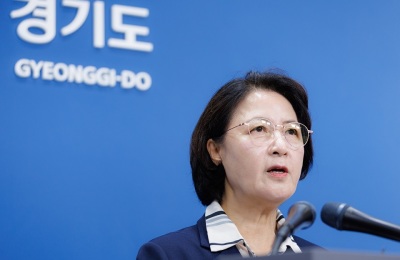
[수원=뉴스핌] 박승봉 기자 = 추미애 경기도지사가 5일 경기도의 재정 여건에 대해 공식적으로 '비상 상황'을 선언하고 강도 높은 세출 구조조정과 세입 구조 개선을 골자로 한 비상조치 추친 방안을 제시했다고 밝혔다.
추미애 경기도지사가 5일 경기도의 재정 여건에 대해 공식적으로 '비상 상황'을 선언하고 강도 높은 세출 구조조정과 세입 구조 개선을 골자로 한 비상조치 방안을 발표했다. [사진=경기도]
추 지사는 이날 경기도청 브리핑룸에서 기자회견을 열고 "경기도는 지금 새로운 공약사업을 추진하기는커녕 이미 진행 중인 민생 사업조차 온전히 유지하기 어려운 지경에 이르렀다"며 "지금 결단하지 않으면 2~3년 뒤 채무를 갚기 위해 또다시 지방채를 발행하는 악순환에 빠질 수 있어 '경기도 재정 비상 상황'을 선언한다"고 밝혔다.
도에 따르면 민선 8기 당시 경기도는 재정 부족을 이유로 노인장기요양, 소아응급 책임의료기관 육성, 유·초·중·고교 급식비, 시내버스 공공관리제 등 상당수 주요 민생·필수 사업의 올해 예산을 12개월분이 아닌 9개월분만 편성한 것으로 나타났다. 이에 따라 올해에만 약 7700억 원 규모의 감액추경이 필요한 실정이다.
경기도는 지난해 한도액의 99.6%에 달하는 9430억 원 상당의 지방채를 20년 만에 발행한 데 이어 통합재정안정화기금 조례를 개정해 남북협력기금 등 각종 기금 재원 5588억 원을 일반회계로 예탁·끌어다 쓰며 위기를 버텨왔다.
그러나 도 전체 예산 약 41조 7000억 원 중 도가 자체 활용할 수 있는 재원은 3조 5000억 원에 불과한 데다 세원의 절반 이상을 차지하는 취득세 수입이 2022년 11조 원에서 올해 8조 원 수준으로 급감했다.
아울러 3기 신도시 개발 세수 효과 감소, 반도체 등 인프라 투자 대비 법인지방소득세의 시·군 귀속 구조, 전체 예산의 49%에 달하는 복지 예산 증대 등이 맞물리며 구조적 재정 위기가 심화했다.
추 지사는 구조적 재정 위기 극복을 위해 ▲도지사 및 고위공직자 업무경비 감액 등 강도 높은 세출 구조조정 ▲일회성·선심성 행사 및 불요불급한 사업 전면 중단▲참모조직 및 공공기관 인력 효율적 재배치 ▲지방소비세 확충 및 국고보조사업 지방비 부담 개선 등 세입구조 정상화를 위한 4대 방안을 제시했다.
추미애 경기도지사가 5일 경기도의 재정 여건에 대해 공식적으로 '비상 상황'을 선언하고 강도 높은 세출 구조조정과 세입 구조 개선을 골자로 한 비상조치 방안을 발표했다. [사진=경기도]
다만 도민의 생명과 안전, 취약계층 보호를 위한 핵심 민생 예산은 끝까지 지켜내겠다고 약속했다.
추미애 지사는 "재정위기의 고통을 사회적 약자와 서민의 삶에 떠넘기지 않고 불필요한 지출부터 선제적으로 줄여나가겠다"며 "지금의 어려움을 다음 세대의 빚으로 넘기지 않고 경기도의 미래를 위한 전환점으로 만들기 위해 도의회 및 31개 시·군과 적극 협력하겠다"고 강조했다.
1141world@newspim.com
2026-08-05 11:21
 사진
사진
프로야구 전 경기 폭염 취소
[서울=뉴스핌] 남정훈 기자 = 극한 폭염이 프로야구까지 멈춰 세웠다. 경기장 곳곳에서 온열질환 의심 환자가 발생하고 관중이 의식을 잃고 쓰러지는 응급 상황까지 벌어지자 한국야구위원회(KBO)가 결국 리그를 일시 중단하고 긴급 대책 마련에 나섰다.
KBO는 5일과 6일 예정됐던 2026 신한 SOL KBO리그 1군 전 경기와 퓨처스리그 전 경기를 모두 취소한다고 발표했다. 취소된 경기는 잠실(NC-두산), 인천(LG-SSG), 대구(한화-삼성), 부산(키움-롯데), 광주(KT-KIA)에서 열릴 예정이던 5경기다.
[서울=뉴스핌] 폭염 속 응원을 하고 있는 삼성 팬들. [사진 = 삼성 라이온즈] 2026.08.05 wcn05002@newspim.com
KBO는 "최근 전국적인 폭염으로 관람객과 선수단의 안전을 위협하는 상황이 발생하고 있어 이를 엄중하게 인식하고 있다"라며 "6일 긴급 실행위원회를 열어 폭염 관련 리그 운영 방침과 안전 대책을 원점에서 논의할 예정"이라고 밝혔다.
이번 회의에는 KBO 사무국을 비롯해 10개 구단 단장과 한국프로야구선수협회 관계자들이 참석해 폭염 상황에서의 경기 운영 기준과 안전 대책을 전면 재검토할 계획이다.
당초 KBO는 전날 폭염 단계별 경기 운영 세칙을 새롭게 발표했다. 폭염주의보가 발효되면 경기를 정상 개최하고, 폭염경보가 내려질 경우 홈 구단 의견을 반영해 경기 시작 시간을 최대 1시간까지 늦출 수 있도록 했다. 또한 기상청이 올해 신설한 최고 단계인 '폭염중대경보'가 발효되면 경기 당일 오후 1시 이전 취소를 결정할 수 있도록 했다.
폭염중대경보는 하루 최고 체감온도 38도 이상 또는 최고기온 39도 이상이 예상될 때 발효된다. 이에 따라 전날 잠실 NC-두산전과 광주 KT-KIA전이 해당 기준이 적용된 첫 사례로 취소됐다.
[인천=뉴스핌] 유다연 기자= 4일 인천 SSG랜더스필드에서 열린 SSG와 LG 경기 8회를 마친 후 한 관객이 온열질환으로 쓰러졌다. 해당 관객을 이송하기 위해 대기 중인 구급차의 모습. 2026.08.05 willowdy@newspim.com
그러나 다른 경기장에서는 더 심각한 상황이 발생했다. 인천 SSG랜더스필드에서 열린 LG와 SSG 경기에서는 총 25명의 관중이 온열질환 의심 증세를 호소하며 현장 치료를 받았다.
이 가운데 2명은 의식 저하 등 중증 증상을 보여 구급차로 병원에 이송됐다. 8회말에는 25세 남성 관중이 계단에서 의식을 잃고 쓰러져 경기가 약 9분간 중단됐고, 경기 종료 직전에도 26세 남성 관중이 응원석에서 쓰러지는 응급 상황이 발생했다. 다행히 두 번째 환자는 현장 안전요원의 응급조치 후 의식을 회복한 것으로 전해졌다.
경기장 안팎에서 온열질환 환자가 잇따라 발생하자 KBO는 기존 운영 방침만으로는 안전을 담보하기 어렵다고 판단했고, 결국 5일과 6일 예정된 1군과 퓨처스리그 전 경기를 모두 취소하는 초유의 결정을 내렸다.
이로써 올 시즌 폭염으로 취소된 KBO리그 경기는 15경기로 늘었고, 우천 등을 포함한 전체 취소 경기는 40경기가 됐다.
wcn05002@newspim.com
2026-08-05 13:32