

Recent Economic and Financial Developments and the Conduct of Monetary Policy Summary of a Speech Given by Toshihiko Fukui, Governor of the Bank of Japan, to the Japan National Press Club in Tokyo on June 20, 2006June 20, 2006Bank of JapanContents Introduction I. Outlook for Economic Activity and Prices II. Developments in Overseas Economies III. Developments in Financial Markets IV. Developments in Inventory Investment V. Developments in Business Fixed Investment VI. Conduct of Monetary Policy in a Low-Inflation Environment VII. A Stable Economic and Price Environment VIII. Conduct of Monetary Policy Conclusion IntroductionJapan's economy continues to grow, with domestic and external demand and also the corporate and household sectors well in balance. The economy is likely to achieve sustainable growth under price stability.Today, I will explain the background of the economic outlook and assess several risk factors influencing the outlook. Moreover, based on the review, I will talk about how the Bank will conduct monetary policy with a view to achieving sustainable growth under price stability.I. Outlook for Economic Activity and PricesI will first summarize the outlook for economic activity and prices. The Bank presented the projection of economic activity and prices for two years ahead through fiscal 2007 in its Outlook for Economic Activity and Prices (hereafter the Outlook Report) released on April 28, 2006: Japan's economy is likely to experience a sustained period of expansion, with domestic and external demand and also the corporate and household sectors well in balance, and the year-on-year rate of increase in the consumer price index (CPI; excluding fresh food, on a nationwide basis) is likely to rise gradually.The Outlook Report pointed to the following four factors as the mechanism behind the projection. First, exports are likely to continue to increase reflecting global economic expansion. Second, corporate performance is likely to continue to be strong. Third, the positive influence of corporate sector strength on the household sector is likely to become stronger. And fourth, financial conditions are likely to remain extremely accommodative.Examining data available after the publication of the Outlook Report, developments in economic activity and prices so far seem to be in line with the projection in the Outlook Report.As for economic activity in fiscal 2005, which is the basis of the projection for fiscal 2006 and 2007, it was confirmed that the economy had continued to grow with balanced external demand and domestic demand particularly in the private sector. Real GDP registered an annualized growth rate of 3.1 percent for the January-March quarter of 2006 and 3.2 percent for fiscal 2005. Corporate performance continued to be strong, as is evident from increases in profits both in the manufacturing and nonmanufacturing sectors at the book closing for fiscal 2005, following the large gains in the previous fiscal year. In this situation, business fixed investment both in the manufacturing and nonmanufacturing sectors showed robust growth during the January-March quarter of 2006, as shown in the quarterly Financial Statements Statistics of Corporations by Industry.As for future developments in economic activity, the corporate sector is likely to remain strong. Major firms are expected to enjoy continued profit growth in fiscal 2006, which in the manufacturing sector is likely to be particularly strong in the processing industries, such as electrical machinery, general machinery, and automobiles, and in the nonmanufacturing sector in industries related to private consumption, such as retailing and services. Various surveys indicate that firms' business fixed investment plans are also relatively strong. We expect that the strength in the corporate sector will continue, but the growth in business fixed investment will gradually slow. I will elaborate on this later.The positive influence of the strength in the corporate sector on the household sector is becoming more evident. As for employment and wages, labor market conditions have been improving on the whole. The unemployment rate has recently declined to around 4 percent from the 5-6 percent level in 2003, and the ratio of job offers to applicants has been exceeding 1.00 for the first time since 1992. In addition to the increase in the number of part-time workers, the number of full-time workers has been increasing recently due to the shortage of labor felt among firms. As for wages, regular payments have started to rise in addition to the increases in overtime and bonus payments. Although the pace of increase in wages is moderate partly due to firms' efforts to restrain labor costs, the increase is likely to continue. With the increase not only in temporary income but also in the more permanent part of income, private consumption is likely to remain strong.Turning to prices, domestic corporate goods prices are rising, due to the surge in the prices of international commodities such as crude oil and nonferrous metals. Recently released statistics show that the year-on-year rate of increase in domestic corporate goods prices was 3.3 percent in May, faster than the 2.5 percent increase in April. It is likely to remain high for the time being.The year-on-year rate of increase in the CPI was 0.5 percent in April and continued to be on an uptrend. Looking at individual prices for items in the CPI basket, the number of items showing price rises is gradually increasing, and the trend toward price increases is becoming more robust. For example, prices for services, such as those for package tours, golf fees, and educational costs, have been revised upward with the start of the new fiscal year. Services prices are important indicators to confirm the general trend in prices, because their movements are largely influenced by changes in wages. Prices of items other than services, such as personal effects and clothing, are also increasing gradually.II. Developments in Overseas EconomiesAs I explained, Japan's economy is likely to achieve sustainable growth under price stability. Domestic private demand seems to be standing on a firm foundation given that structural adjustment pressures in the corporate sector and the financial system have dissipated. This directs our attention to developments in overseas economies as one major risk factor determining the outlook for Japan's economy.In the U.S. economy, business fixed investment and production have been increasing steadily, but signs of deceleration in housing construction have finally been observed and the pace of increase in household spending and employment has been slowing. This trend suggests that interest rate raises by the Federal Reserve to date have been gradually taking effect. The increase in the core CPI has been accelerating slightly, reflecting the rise in utilization of labor and production capacity in addition to high crude oil prices. In this situation, inflationary concerns seem to be mounting. As for developments in the near future, important issues are whether economic deceleration in the United States will result in a soft landing, and whether inflationary concerns will be contained.In Europe, the momentum for economic recovery has been increasing gradually, as is evident from increases in exports and production and the recovery in household spending. Under these circumstances, the European Central Bank has been carefully raising its policy interest rate since 2005 in order to stave off the upward pressure on general prices from high crude oil prices and to sustain the economic expansion.The Chinese economy has continued to show extremely high growth. Monetary policy has been tightened recently so as to deal with the expansion in the money stock and bank lending as well as high growth in business fixed investment. Whether overheating of economic activity can be contained through appropriate policy conduct is an important factor when monitoring developments not only in the Chinese economy but also the world economy, and global price developments including developments in international commodity prices.In 2005, the world economy grew by nearly 5 percent. This expansion has been supported by the fact that a stable financial environment has been maintained by containing upward pressure on prices. A key factor in maintaining a stable financial environment is whether global inflationary concerns continue to be contained in the future.III. Developments in Financial MarketsI would next like to briefly touch on recent developments in global financial markets. Stock prices have been declining in emerging economies as well as in major industrial countries. Financial markets in many emerging economies have been weak, as is evident from the falls in bond prices and foreign exchange rates in addition to stock prices. Prices of some international commodities, including those of nonferrous metals, have declined recently, after exhibiting large increases.Market participants point to various factors behind these developments. One is the adjustment of stock and commodity prices, which had risen substantially in the prolonged accommodative financial environment around the world, in response to changes in the degree of this financial accommodation. Another factor is uncertainty as to whether inflationary risks will be contained, and whether a considerable deceleration of economic activity will be staved off even when inflationary risks are contained.The fundamentals of economies worldwide, including Japan's, do not seem to have changed significantly so far. Under the current economic circumstances, financial markets are evolving in pursuit of a new equilibrium by digesting new information while interacting with each other. Financial market developments continue to warrant careful monitoring, since they influence economic activity through their impact on business and household sentiment.IV. Developments in Inventory InvestmentAs I mentioned earlier, domestic private demand is standing on a firm foundation, but in the corporate sector, it is necessary to pay attention to the possibility of a stock adjustment. Such adjustment involves both downside and upside risks to the outlook for economic activity in the short term: inventory adjustment, for example in IT-related sectors, is a downside risk while a further acceleration of business fixed investment is an upside risk. Given that the output gap has already closed, a further acceleration of business fixed investment should be regarded not only as an upside risk in the short term but also a factor leading to larger economic swings in the longer term as a result of a subsequent downturn.Looking first at inventory investment, levels of inventories are still relatively low. The inventory cycle in the manufacturing sector as a whole suggests that the growth in shipments and inventories is more or less in balance. Focusing on individual industries, excess inventories, particularly of general-purpose products, had built up in the iron and steel, and chemical industries, but recently, adjustments in these industries have been coming to an end. In IT-related sectors, the level of inventories has been somewhat high, but this is basically in line with the increase in shipments, and thus unintended and excessive inventories have not been built up at the moment.There are some factors, however, that may trigger inventory adjustments. For example, although the demand for IT-related goods is expected to continue increasing, there is a possibility of inventory adjustments for such goods occurring depending on developments in demand. This is because the supply of these goods is increasing at a rapid pace, including in the high-value-added products sector where Japanese firms have a competitive edge.V. Developments in Business Fixed InvestmentAs mentioned earlier, a further acceleration in business fixed investment, as another possible avenue of stock adjustments, entails not only an upside risk in the short term but also a factor leading to larger economic swings in the longer term as a result of a subsequent downturn. From a business-cycle point of view, the economic recovery appears to be reaching the mature stage and growth is projected to gradually decelerate to the potential growth rate. Although corporate performance is likely to remain strong, the growth in business fixed investment is expected to slow as the level of capital stock becomes higher with the accumulation of past investment. As a result, the driving force of economic activity will shift gradually from the corporate sector to the household sector.The deceleration in business fixed investment is expected to stave off a build-up of capital stock and contribute to achieving a sustained period of growth. Especially given that the output gap has closed, excessive investment and stronger economic growth are likely to increase the risk of an eventual swingback.So far, no signs of excessive investment have been observed. In the face of intense global competition, firms seem to be selective in allocating their business resources.It is true, however, that the financial environment is extremely accommodative and gives incentives to firms to accelerate business fixed investment. Real short-term interest rates in Japan are currently negative and extremely low compared with real GDP growth currently exceeding 3 percent and an estimated growth rate of the potential output ranging from 1.5 to 2.0 percent. Moreover, the functioning of the financial system has been enhanced and private financial institutions have been maintaining a proactive lending posture. The year-on-year growth in lending by private banks turned positive in the summer of 2005 and has been on a gradual upward trend since.VI. Conduct of Monetary Policy in a Low-Inflation EnvironmentTurning to a slightly theoretical issue, until recently, the main difficulty in conducting monetary policy in a low-inflation environment has been focused on how to deal with the risk of a deflationary spiral.In a low-inflation environment, nominal interest rates are typically low and are thus more probable to be constrained by the zero bound. Because nominal interest rates cannot be lowered below zero, real interest rates are likely to become higher than the optimal level for the economy when prices fall. That increases the risk of the economy falling into a vicious cycle of declining prices and deteriorating economic activity. In Japan, such a risk has been a matter of strong concern since the end of the 1990s. At present, this risk has become low, since the Japanese financial system has restored its stability and firms have now resolved excesses in production capacity, employment, and debt.On the other hand, when economic activity is picking up as a result of an unprecedented monetary easing against severe economic conditions with low inflation, a central bank is required to carry out monetary policy adroitly to adjust monetary accommodation by assessing upside risks.For example, since the inflation rate tends to exhibit strong inertia, even if the supply-demand conditions in the economy become tighter, the observed rate of inflation and inflation expectations are likely to remain anchored at a low level. In such a situation, maintaining an excessively accommodative monetary condition entails a risk of causing temporary overheating of the economy and a subsequent downturn, thereby resulting in larger swings in economic activity.The sensitivity of the rate of inflation to changes in the output gap has tended to become weaker not only in Japan but also abroad in recent years, reflecting structural changes such as deregulation, advances in information and telecommunication technology, and the deepening of economic globalization. Since prices are becoming less sensitive in the short term, central banks are required to take appropriate measures by examining medium- to long-term risks to the economy. This suggests the need to take a forward-looking approach in the conduct of monetary policy.VII. A Stable Economic and Price EnvironmentA stable economic and price environment, once achieved by the appropriate conduct of monetary policy with a view to medium- to long-term risks, allows firms and households to make decisions more smoothly. As a result, the allocation of resources in the economy as a whole will be more efficient, and not only will short-term economic fluctuations be reduced but also the medium- to long-term growth path will be pushed up.Looking back at real GDP trends in Japan and the United States over the past 25 years or so, we see that economies often achieve higher growth when they move in a less volatile manner. As a result of smooth economic adjustments in the early 1980s after the Second Oil Crisis, Japan's economy followed a higher trend growth path than the U.S. economy while it moved in a less volatile manner thereafter. This situation, however, was reversed after the bursting of the asset price bubble in the early 1990s, and Japan's economy experienced a decline in the trend growth path while moving in a volatile manner.Japan's economy is now emerging from the prolonged stagnation that was an aftermath of the bursting of the asset price bubble, and is heading toward a sustainable growth path under price stability. In order to ensure this development, it is important, through the appropriate conduct of monetary policy, to minimize the volatility of business cycles and maintain a stable economic environment.VIII. Conduct of Monetary PolicyBefore concluding my speech today, I will talk about the Bank's conduct of monetary policy based on the assessment of economic activity and prices mentioned so far.The Bank has been reducing the outstanding balance of current accounts at the Bank by paying due attention to the stability of the money market under the guideline for money market operations that encourages the uncollateralized overnight call rate to remain at effectively zero percent. Through this process, the uncollateralized overnight call rate has been stable at around zero percent, despite small temporary increases. In the call market, interest rates have shown some fluctuations reflecting market conditions and the volume of transactions has been gradually increasing. Under these circumstances, the Bank no longer finds it difficult to control the uncollateralized overnight call rate in its day-to-day operations. In this sense, the reduction of the outstanding balance of current accounts has virtually been completed.With regard to the future course of monetary policy, the Bank will conduct monetary policy in line with the thinking described in the Outlook Report as long as developments in economic activity and prices follow the Bank's projection presented also in the Outlook Report. In other words, it seems probable that the accommodative financial conditions ensuing from very low interest rates will be maintained for some time following a period in which the uncollateralized overnight call rate is at effectively zero percent. Through and beyond this stage, the Bank will adjust the level of interest rates gradually in the light of developments in economic activity and prices. The timing of a policy change depends on developments in economic activity and prices from this time on, and there is no predetermined view regarding the future path of monetary policy at this point.The projection in the Outlook Report, which appears to be the desirable course of the economy, that is, sustainable growth under price stability, is based on the assumption that market participants and firms have been factoring in future policy changes to some extent when making their decisions. If the economy develops in line with the projection, changing the policy interest rate in the light of developments in economic activity and prices will stave off an excess of economic activity, minimize the volatility of business cycles, and lead the economy onto a sustainable growth path. The projection suggests that economic activity is likely to slow and prices are expected to follow a moderate uptrend. Consequently, the Bank will not have to drastically adjust the policy interest rate, but, as mentioned earlier, will be able to adjust interest rates "gradually."Of course, there is the time lag before a monetary policy action influences economic activity and prices, and it is therefore necessary to not only take the current economic and price situation into account but also look ahead to future developments. In addition, in assessing developments in economic activity and prices, it is important to pay close attention to a variety of indicators and other relevant information in order to carefully judge overall conditions of economic activity and prices rather than concentrate on just one particular indicator, such as the CPI during the period of quantitative easing.ConclusionIn sum, Japan's economy continues to grow, with domestic and external demand and also the corporate and household sectors well in balance. The Bank is determined to contribute to leading Japan's economy to sustainable growth under price stability, through the appropriate conduct of monetary policy.

[관련키워드]




[뉴스핌 베스트 기사]
 사진
사진
경기도, 재정 '비상 상황'
[수원=뉴스핌] 박승봉 기자 = 추미애 경기도지사가 5일 경기도의 재정 여건에 대해 공식적으로 '비상 상황'을 선언하고 강도 높은 세출 구조조정과 세입 구조 개선을 골자로 한 비상조치 추친 방안을 제시했다고 밝혔다.
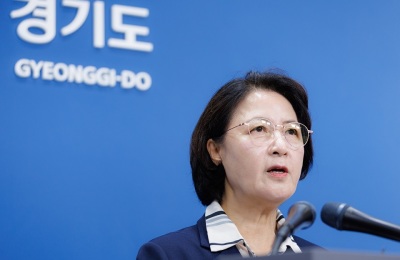
추미애 경기도지사가 5일 경기도의 재정 여건에 대해 공식적으로 '비상 상황'을 선언하고 강도 높은 세출 구조조정과 세입 구조 개선을 골자로 한 비상조치 방안을 발표했다. [사진=경기도]
추 지사는 이날 경기도청 브리핑룸에서 기자회견을 열고 "경기도는 지금 새로운 공약사업을 추진하기는커녕 이미 진행 중인 민생 사업조차 온전히 유지하기 어려운 지경에 이르렀다"며 "지금 결단하지 않으면 2~3년 뒤 채무를 갚기 위해 또다시 지방채를 발행하는 악순환에 빠질 수 있어 '경기도 재정 비상 상황'을 선언한다"고 밝혔다.
도에 따르면 민선 8기 당시 경기도는 재정 부족을 이유로 노인장기요양, 소아응급 책임의료기관 육성, 유·초·중·고교 급식비, 시내버스 공공관리제 등 상당수 주요 민생·필수 사업의 올해 예산을 12개월분이 아닌 9개월분만 편성한 것으로 나타났다. 이에 따라 올해에만 약 7700억 원 규모의 감액추경이 필요한 실정이다.
경기도는 지난해 한도액의 99.6%에 달하는 9430억 원 상당의 지방채를 20년 만에 발행한 데 이어 통합재정안정화기금 조례를 개정해 남북협력기금 등 각종 기금 재원 5588억 원을 일반회계로 예탁·끌어다 쓰며 위기를 버텨왔다.
그러나 도 전체 예산 약 41조 7000억 원 중 도가 자체 활용할 수 있는 재원은 3조 5000억 원에 불과한 데다 세원의 절반 이상을 차지하는 취득세 수입이 2022년 11조 원에서 올해 8조 원 수준으로 급감했다.
아울러 3기 신도시 개발 세수 효과 감소, 반도체 등 인프라 투자 대비 법인지방소득세의 시·군 귀속 구조, 전체 예산의 49%에 달하는 복지 예산 증대 등이 맞물리며 구조적 재정 위기가 심화했다.
추 지사는 구조적 재정 위기 극복을 위해 ▲도지사 및 고위공직자 업무경비 감액 등 강도 높은 세출 구조조정 ▲일회성·선심성 행사 및 불요불급한 사업 전면 중단▲참모조직 및 공공기관 인력 효율적 재배치 ▲지방소비세 확충 및 국고보조사업 지방비 부담 개선 등 세입구조 정상화를 위한 4대 방안을 제시했다.
추미애 경기도지사가 5일 경기도의 재정 여건에 대해 공식적으로 '비상 상황'을 선언하고 강도 높은 세출 구조조정과 세입 구조 개선을 골자로 한 비상조치 방안을 발표했다. [사진=경기도]
다만 도민의 생명과 안전, 취약계층 보호를 위한 핵심 민생 예산은 끝까지 지켜내겠다고 약속했다.
추미애 지사는 "재정위기의 고통을 사회적 약자와 서민의 삶에 떠넘기지 않고 불필요한 지출부터 선제적으로 줄여나가겠다"며 "지금의 어려움을 다음 세대의 빚으로 넘기지 않고 경기도의 미래를 위한 전환점으로 만들기 위해 도의회 및 31개 시·군과 적극 협력하겠다"고 강조했다.
1141world@newspim.com
2026-08-05 11:21
 사진
사진
프로야구 전 경기 폭염 취소
[서울=뉴스핌] 남정훈 기자 = 극한 폭염이 프로야구까지 멈춰 세웠다. 경기장 곳곳에서 온열질환 의심 환자가 발생하고 관중이 의식을 잃고 쓰러지는 응급 상황까지 벌어지자 한국야구위원회(KBO)가 결국 리그를 일시 중단하고 긴급 대책 마련에 나섰다.
KBO는 5일과 6일 예정됐던 2026 신한 SOL KBO리그 1군 전 경기와 퓨처스리그 전 경기를 모두 취소한다고 발표했다. 취소된 경기는 잠실(NC-두산), 인천(LG-SSG), 대구(한화-삼성), 부산(키움-롯데), 광주(KT-KIA)에서 열릴 예정이던 5경기다.
[서울=뉴스핌] 폭염 속 응원을 하고 있는 삼성 팬들. [사진 = 삼성 라이온즈] 2026.08.05 wcn05002@newspim.com
KBO는 "최근 전국적인 폭염으로 관람객과 선수단의 안전을 위협하는 상황이 발생하고 있어 이를 엄중하게 인식하고 있다"라며 "6일 긴급 실행위원회를 열어 폭염 관련 리그 운영 방침과 안전 대책을 원점에서 논의할 예정"이라고 밝혔다.
이번 회의에는 KBO 사무국을 비롯해 10개 구단 단장과 한국프로야구선수협회 관계자들이 참석해 폭염 상황에서의 경기 운영 기준과 안전 대책을 전면 재검토할 계획이다.
당초 KBO는 전날 폭염 단계별 경기 운영 세칙을 새롭게 발표했다. 폭염주의보가 발효되면 경기를 정상 개최하고, 폭염경보가 내려질 경우 홈 구단 의견을 반영해 경기 시작 시간을 최대 1시간까지 늦출 수 있도록 했다. 또한 기상청이 올해 신설한 최고 단계인 '폭염중대경보'가 발효되면 경기 당일 오후 1시 이전 취소를 결정할 수 있도록 했다.
폭염중대경보는 하루 최고 체감온도 38도 이상 또는 최고기온 39도 이상이 예상될 때 발효된다. 이에 따라 전날 잠실 NC-두산전과 광주 KT-KIA전이 해당 기준이 적용된 첫 사례로 취소됐다.
[인천=뉴스핌] 유다연 기자= 4일 인천 SSG랜더스필드에서 열린 SSG와 LG 경기 8회를 마친 후 한 관객이 온열질환으로 쓰러졌다. 해당 관객을 이송하기 위해 대기 중인 구급차의 모습. 2026.08.05 willowdy@newspim.com
그러나 다른 경기장에서는 더 심각한 상황이 발생했다. 인천 SSG랜더스필드에서 열린 LG와 SSG 경기에서는 총 25명의 관중이 온열질환 의심 증세를 호소하며 현장 치료를 받았다.
이 가운데 2명은 의식 저하 등 중증 증상을 보여 구급차로 병원에 이송됐다. 8회말에는 25세 남성 관중이 계단에서 의식을 잃고 쓰러져 경기가 약 9분간 중단됐고, 경기 종료 직전에도 26세 남성 관중이 응원석에서 쓰러지는 응급 상황이 발생했다. 다행히 두 번째 환자는 현장 안전요원의 응급조치 후 의식을 회복한 것으로 전해졌다.
경기장 안팎에서 온열질환 환자가 잇따라 발생하자 KBO는 기존 운영 방침만으로는 안전을 담보하기 어렵다고 판단했고, 결국 5일과 6일 예정된 1군과 퓨처스리그 전 경기를 모두 취소하는 초유의 결정을 내렸다.
이로써 올 시즌 폭염으로 취소된 KBO리그 경기는 15경기로 늘었고, 우천 등을 포함한 전체 취소 경기는 40경기가 됐다.
wcn05002@newspim.com
2026-08-05 13:32