

Remarks by Chairman Ben S. BernankeBefore The Washington Economic Club, Washington, D.C. October 4, 2006 Coming Demographic Transition: Will We Treat Future Generations Fairly?In coming decades, many forces will shape our economy and our society, but in all likelihood no single factor will have as pervasive an effect as the aging of our population. In 2008, as the first members of the baby-boom generation reach the minimum age for receiving Social Security benefits, there will be about five working-age people (between the ages of twenty and sixty-four) in the United States for each person aged sixty-five and older, and those sixty-five and older will make up about 12 percent of the U.S. population. Those statistics are set to change rapidly, at least relative to the speed with which one thinks of demographic changes as usually taking place. For example, according to the intermediate projections of the Social Security Trustees, by 2030--by which time most of the baby boomers will have retired--the ratio of those of working age to those sixty-five and older will have fallen from five to about three. By that time, older Americans will constitute about 19 percent of the U.S. population, a greater share than of the population of Florida today.This coming demographic transition is the result both of the reduction in fertility that followed the post-World War II baby boom and of ongoing increases in life expectancy. Although demographers expect U.S. fertility rates to remain close to current levels for the foreseeable future, life expectancy is projected to continue rising. As a consequence, the anticipated increase in the share of the population aged sixty-five or older is not simply the result of the retirement of the baby boomers; the "pig in a python" image often used to describe the effects of that generation on U.S. demographics is misleading. Instead, over the next few decades the U.S. population is expected to become progressively older and remain so, even as the baby-boom generation passes from the scene. As you may know, population aging is also occurring in many other countries. Indeed, many of these countries are further along than the United States in this process and have already begun to experience more fully some of its social and economic implications.Even a practitioner of the dismal science like me would find it difficult to describe increasing life expectancy as bad news. Longer, healthier lives will provide many benefits for individuals, families, and society as a whole. However, an aging population also creates some important economic challenges. For example, many observers have noted the difficult choices that aging will create for fiscal policy makers in the years to come, and I will briefly note some of those budgetary issues today. But the implications of demographic change can also be viewed from a broader economic perspective. As I will discuss, the broader perspective shows clearly that adequate preparation for the coming demographic transition may well involve significant adjustments in our patterns of consumption, work effort, and saving. Ultimately, the extent of these adjustments depends on how we choose--either explicitly or implicitly--to distribute the economic burdens of the aging of our population across generations. Inherent in that choice are questions of intergenerational equity and economic efficiency, questions that are difficult to answer definitively but are nevertheless among the most critical that we face as a nation.Demographic Change and the Federal BudgetAs I have already mentioned, the coming demographic transition will have a major impact on the federal budget, beginning not so very far in the future and continuing for many decades. Although demographic change will affect many aspects of the government’s budget, the most dramatic effects will be seen in the Social Security and Medicare programs, which provide income support and medical care for retirees and which have until now been funded largely on a pay-as-you-go basis. Under current law, spending on these two programs alone will increase from about 7 percent of the U.S. gross domestic product (GDP) today to almost 13 percent of GDP by 2030 and to more than 15 percent of the nation’s output by 2050. The outlook for Medicare is particularly sobering because it reflects not only an increasing number of retirees but also the expectation that Medicare expenditures per beneficiary will continue to rise faster than per capita GDP. For example, the Medicare trustees’ intermediate projections have Medicare spending growing from about 3 percent of GDP today to about 9 percent in 2050--a larger share of national output than is currently devoted to Social Security and Medicare together. The fiscal consequences of these trends are large and unavoidable. As the population ages, the nation will have to choose among higher taxes, less non-entitlement spending, a reduction in outlays for entitlement programs, a sharply higher budget deficit, or some combination thereof. To get a sense of the magnitudes involved, suppose that we tried to finance projected entitlement spending entirely by revenue increases. In that case, the taxes collected by the federal government would have to rise from about 18 percent of GDP today to about 24 percent of GDP in 2030, an increase of one-third in the tax burden over the next twenty-five years, with more increases to follow. (This calculation ignores the possible effects of higher tax rates on economic activity, an issue to which I will return later.) Alternatively, financing the projected increase in entitlement spending entirely by reducing outlays in other areas would require that spending for programs other than Medicare and Social Security be cut by about half, relative to GDP, from its current value of 12 percent of GDP today to about 6 percent of GDP by 2030. In today’s terms, this action would be equivalent to a budget cut of approximately $700 billion in non-entitlement spending.Besides tax increases, spending cuts, or reform of the major entitlement programs, the fourth possible fiscal response to population aging is to accommodate a portion of rising entitlement obligations through increases in the federal budget deficit. The economic costs and risks posed by large deficits have been frequently discussed and I will not repeat those points today. Instead, I will only observe that, among the possible effects, increases in the deficit (and, as a result, in the national debt) would shift the burden of paying for government spending from the present to the future. Consequently, the choices that fiscal policy makers make with respect to these programs will be a crucial determinant of the way the economic burden of an aging population is distributed between the current generation and the generations that will follow.A Broader Economic and Generational PerspectiveIndeed, framing the issue in generational terms highlights the fact that the economic implications of the coming demographic transition go well beyond standard considerations of fiscal policy and government finance, important as those are. For reasons that I will explain in a moment, the aging of the population is likely to lead to lower average living standards than those that would have been experienced without this demographic change. How that burden of lower living standards is divided between the present and the future has important implications for both intergenerational fairness and economic efficiency. Why will the coming demographic transition carry a cost in terms of long-run living standards? Assuming it unfolds as expected, the projected aging of the population implies a decline over time in the share of the overall population that is of working age and thus, presumably, in the share of the population that is employed. For any given level of output per worker that might be attained at some future date, this decline in the share of people working implies that the level of output per person must be lower than it otherwise would have been. In a sense, each worker’s output will have to be shared among more people. Thus, all else being the same, the expected decline in labor force participation will reduce per capita real GDP and thus per capita consumption relative to what they would have been without population aging. These reductions in output and consumption per person represent an economic burden created by the demographic transition.Although some adverse effect of population aging on future per capita output and consumption is probably inevitable, actions that we take today, in both the public and the private spheres, have the potential to mitigate those effects. One such action would be to find ways to increase our national saving rate. If the extra savings were used to increase the nation’s capital stock--the quantity of plant and equipment available for use by workers--then future workers would be more productive, ameliorating the anticipated effects on per capita output and consumption. Alternatively, using extra saving to acquire financial assets abroad (or to reduce foreign obligations) would also increase the resources available in the future.By saving more today, we can reduce the future burden of demographic change. However, as any economist will tell you, there is no such thing as a free lunch. Saving more requires that we consume less (to free up the needed resources) or work more (to increase the amount of output available to dedicate to such activities). Either case entails some sacrifice on the part of the current generation. Consequently, a tradeoff exists: We can mitigate the adverse effect of the aging population on future generations but only by foregoing consumption or leisure today. This analysis is simple, but it shows why the coming demographic transition has economic implications that go well beyond the effect of aging on the federal budget.In recent work, economists at the Board of Governors have used a stylized model to get a rough estimate of the magnitudes of the intergenerational tradeoffs that we face.1 Their analysis takes as a starting point a baseline scenario in which U.S. demographics remain (hypothetically) the same in the future as they are today. In this counterfactual scenario, the ratio of workers to the overall population is assumed to remain at its current level over time and per capita consumption grows with productivity. Now in reality, as I have noted, an aging population will reduce labor force participation, so the likely future trajectory of per capita consumption over time lies below that implied by the baseline scenario that assumes away the demographic change. The shape of the actual consumption trajectory depends, however, on the saving behavior of the current generation. If today’s saving rate is low, then the current generation can enjoy consumption close to what it would have been if the aging issue did not exist. However, in this case, the burden on future generations will be relatively great. Alternatively, the current generation could consume less and save more, which would allow the consumption of future generations to be closer to what it would have been in the absence of population aging.How big are these effects? To assess magnitudes, the Board economists first examined the case in which the nation saves at its current rate for the next twenty years, thereby largely insulating the baby-boom generation from the effects of the coming demographic transition. After that, they assumed, consumption falls and saving rates rise, with all future generations experiencing the same percentage reduction in consumption relative to the baseline in which no population aging occurs. Their rough calculations suggest that, in this case, the per capita consumption of future generations would be about 14 percent less than what it would have been in the absence of demographic change.For comparison, they next considered the case in which the burden of demographic change is shared more equally among current and future generations. They considered a case in which the national saving rate, instead of staying at its current level for the next twenty years, rises immediately. Further, they asked by how much today’s saving rate would have to increase to lead to equal burden-sharing among current and future generations. ("Equal burden-sharing" is interpreted to mean that the current generation and all future generations experience the same percentage reduction in per capita consumption relative to the baseline scenario without population aging.) They found that equal burden-sharing across generations could be achieved by an immediate reduction in per capita consumption on the order of 4 percent (or, since consumption is about two-thirds of output, by an increase in national saving of about 3 percentage points.) This case obviously involves greater sacrifice by the current generation, but the payoff is that all future generations enjoy per capita consumption that is only 4 percent, rather than 14 percent, below what it would have been in the absence of population aging. The large improvement in the estimated living standards of future generations arises because of the extra capital bequeathed to them by virtue of the current generation’s assumed higher rate of saving.These numbers shouldn’t be taken literally but the basic lesson is surely right--that the decisions that we make over the next few decades will matter greatly for the living standards of our children and grandchildren. If we don’t begin soon to provide for the coming demographic transition, the relative burden on future generations may be significantly greater than it otherwise could have been.2At the heart of the choices our elected representatives will have to make regarding the distribution of these costs across generations will be an issue of fairness: What responsibility do we, who are alive today, have to future generations? What will constitute ethical and fair treatment of those generations, who are not present today to speak for themselves? If current trends continue, the typical U.S. worker will be considerably more productive several decades from now. Thus, one might argue that letting future generations bear the burden of population aging is appropriate, as they will likely be richer than we are even taking that burden into account. On the other hand, I suspect that many people would agree that a fair outcome should involve the current generation shouldering at least some of that burden, especially in light of the sacrifices that previous generations made to give us the prosperity we enjoy today. The choice of which generations should bear the burden of population aging has consequences for economic efficiency as well as for intergenerational equity. If we decide to pass the burden on to future generations--that is, if we neither increase saving now nor reduce the benefits to be paid in the future by Social Security and Medicare--then the children and grandchildren of the baby boomers are likely to face much higher tax rates. A large increase in tax rates would surely have adverse effects on a wide range of economic incentives, including the incentives to work and save, which would hamper economic performance. Alternatively, to avoid large tax increases, the government could decide to sharply reduce non-entitlement spending in the future. However, such actions might also have important social costs that need to be taken into consideration.Sharing the Burden of Population Aging If, as a nation, we were to accept the premise that the baby-boom generation should share at least some of the burden of population aging, what policy steps might be implied? As I have already noted, from a broad economic perspective, the most useful actions are likely to be those that promote national saving. Perhaps the most straightforward way to raise national saving--although not a politically easy one--is to reduce the government’s current and projected budget deficits. To the extent that reduced government borrowing allows more private saving to be used for capital formation or to acquire foreign assets, future U.S. output and income will be enhanced and the future burdens associated with demographic change will be smaller.Increasing private saving, which is the saving of both the corporate sector and the household sector, is likewise desirable. Corporate saving, in the form of retained earnings, is currently at relatively high levels, but household saving rates are exceptionally low.3 A broad-based increase in household saving would benefit both the economy and the millions of American families who currently hold very little wealth. Unfortunately, many years of concentrated attention on this issue by policymakers and economists have failed to uncover a silver bullet for increasing household saving. One promising area that deserves more attention is financial education. The Federal Reserve has actively supported such efforts, which may be useful in helping people understand the importance of saving and to learn about alternative saving vehicles. Psychologists have also studied how the framing of alternatives affects people’s saving decisions. For example, studies suggest that employees are much more likely to participate in 401(k) retirement plans at work if they are enrolled automatically--with a choice to opt out-- rather than being required to actively choose to join. The pension bill recently passed by Congress and signed by the President included provisions to increase employers’ incentives to adopt such opt-out rules; it will be interesting to see whether such rules are adopted and, if so, how effective they are in promoting employee saving.Other steps can also help increase the future productive capacity of the economy and thereby reduce the adverse effects of demographic change. For example, devoting resources to improving our K-12 education system, expanding access to community colleges, increasing on-the-job training, and stimulating basic research could augment the nation’s capital in the broadest sense of the term and might have desirable distributional effects as well.Another response to population aging is to adopt measures that encourage participation in the labor force, particularly among older workers. In the near term, increases in labor force participation would raise income; some of this income would be saved and would thus be available to augment the capital stock. In the long run, higher rates of labor force participation, particularly by those who would otherwise be in retirement, could help to offset the negative effect of population aging on the share of the population that is working.To some extent, increased labor force participation by older workers may happen naturally. Increased longevity and health will encourage greater numbers of older people to remain longer in the workforce. And slower growth in the labor force will motivate employers to retain or attract older workers--for example through higher wages, more flexibility in work schedules, increased training directed toward older workers, and changes in the retirement incentives provided by pension plans.Reform of our unsustainable entitlement programs should also be a priority. The nature and timing of those reforms will be determined, of course, by our elected representatives. However, the intergenerational perspective does provide a few insights that might be helpful to policymakers as they undertake the needed reforms. First, restructuring the finances of our entitlement programs to minimize their reliance on deficit spending will enhance national saving and reduce the burden on future generations. Second, changes in the structure of entitlement programs should preserve or enhance the incentives to work and to save; for example, we should take care that benefits rules do not penalize those who may wish to work part-time after retirement. Finally, the imperative to undertake reform earlier rather than later is great. As illustrated by the simulation I discussed earlier, the longer the delay in putting our entitlement programs on a sound fiscal footing, the heavier the burden that will be passed on to future generations. Moreover, the sooner any restructuring of entitlement programs takes place, the easier it will be for people now in their working years to prepare, for example, by saving more today. However, if reform is delayed and fiscal exigencies ultimately force changes in these programs with little notice to potential retirees, their ability to adjust their behavior appropriately could be much reduced.ConclusionOver the next few decades, the U.S. population will grow significantly older, a development that will affect our society and our economy in many ways. In particular, the coming demographic transition will create severe fiscal challenges, as the cost of entitlement programs rises sharply. I hope to have persuaded you today, however, that the economic implications of this transition go well beyond fiscal policy. From a broader economic perspective, the question is how the burden of an aging population is to be shared between our generation and the generations that will follow us. A failure on our part to prepare for demographic change will have substantial adverse effects on the economic welfare of our children and grandchildren and on the long-run productive potential of the U.S. economy.--------------------------------------------------------------------------------ReferencesAuerbach, Alan J., Jagadeesh Gokhale, and Laurence J. Kotlikoff (1991). "Generational Accounts: A Meaningful Alternative to Deficit Accounting," in David Bradford, ed., Tax Policy and the Economy, vol. 5, National Bureau of Economic Research. Cambridge, Mass.: MIT Press, pp. 55-110.Elmendorf, Douglas, and Louise Sheiner (2000). "Should America Save for Its Old Age? Fiscal Policy, Population Aging, and National Saving" Journal of Economic Perspectives, vol. 14 (Summer), pp. 57-74.Gokhale, Jagadeesh, and Laurence J. Kotlikoff (2001). "Is War Between Generations Inevitable?" Report no. 246, National Center for Policy Analysis. Dallas, November.Sheiner, Louise, Daniel Sichel, and Lawrence Slifman (2006). "A Primer on the Macroeconomic Consequences of Population Aging," unpublished working paper, Board of Governors of the Federal Reserve System, Division of Research and Statistics, September.--------------------------------------------------------------------------------Footnotes1. See Sheiner, Sichel, and Slifman (2006) and Elmendorf and Sheiner (2000) for discussions of the basic approach. 2. Another approach for gauging the potential impact of demographic change on future generations is the generational accounting framework developed by Auerbach, Gokhale, and Kotlikoff (1992). This framework begins with the assumption that, for people living today, tax rates will not be increased and benefits will not be cut. On that assumption, one can calculate the taxes (net of transfers received) that future generations will have to pay to achieve long-term balance in the government budget. According to recent estimates using this approach, to achieve long-term budget balance the net tax rate on future generations will have to be about double the tax rate on current taxpayers (Gokhale and Kotlikoff, 2001). This approach looks at the intergenerational issue through the prism of fiscal policy rather than taking the broader economic perspective I have emphasized today, and its underlying assumptions are somewhat different. However, the basic message--that failure by the current generation to address the economic implications of aging will impose significant costs on future generations--is the same. 3. It is worth noting that a household’s saving need not equal its change in wealth, since the standard definition of saving excludes capital gains. One plausible explanation of the recent low level of household saving rates is that capital gains in stocks and in residential real estate, by increasing wealth, have reduced the motivation of households to save out of current income. If that explanation is correct, then the recent slowdown in the appreciation of house prices should lead ultimately to some increase in household saving rates, all else equal.

[관련키워드]




[뉴스핌 베스트 기사]
 사진
사진
정동영 업무보고 논란
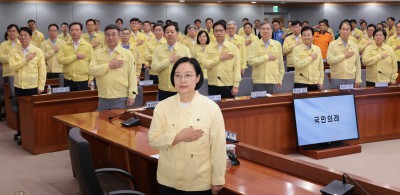
[서울=뉴스핌] 유신모 외교전문기자 = 청와대 영빈관에서 5일 열린 외교·안보 분야 정부 부처의 대통령 업무보고에서 정동영 통일부 장관의 '한반도 평화공존 발전 구상'과 업무보고 발언이 논란을 빚고 있다.
이날 정 장관의 발언 중에는 정부 내 조율을 거치지 않은 사안을 정책으로 추진하겠다고 공언한 것이 있는가 하면 사실 관계에 맞지 않은 설명도 있었다. 이재명 대통령은 공개적으로 신중을 기해 달라고 경고했고, 조현 외교부 장관은 '이상주의적 희망에 근거한 비현실적 구상'이라는 비판을 내놨다.
그동안 정 장관의 대북 정책 관련 발언이 물의를 빚은 적은 여러 번 있지만 대통령과 유관 부처 장관이 공개적으로 부정적 입장을 표명한 것은 이례적이다. 정 장관의 무리한 대북 접근법과 월권을 제어해야 한다는 목소리도 높아지고 있다.
[정동영 통일부 장관이 지난달 23일 오후 서울 종로구 정부서울청사에서 취임 1주년 기자간담회를 하고 있다. [사진=통일부] 2026.07.23
◆통일부 장관 권한 넘어선 주장
정 장관은 이날 업무보고에서 '한반도 평화공존 발전 구상'을 설명하면서 이재명 정부 2년차 핵심 과제로 상호 존중·평화적 갈등 해결·핵 없는 한반도 등 3대 기본 방향을 제시했다.
정 장관은 "대결과 혐오의 언어는 멈춰야 한다"면서 주적 용어 대체를 주장했다. 지난 25년간의 CVID(완전하고 검증가능하며 되돌릴 수 없는 비핵화) 구도는 이미 무너졌다고도 했다. 또 "현 시점에서 흘러간 선(先)비핵화만 되뇌는 것은 현실을 바꾸는 데 힘이 되지 않는다"고 주장했다. 정 장관은 또 "정전 체제를 평화 체제로 바꾸는 논의에 착수하겠다"면서 "북·미 정상회담 견인과 함께 4자 대화의 동력을 확보하기 위해 최선을 다할 것"이라고 말했다.
하지만 이 대통령은 정 장관의 구상에 대부분 제동을 걸었다. 이 대통령은 "평화공존 정책이 정치적으로 악용되는 측면이 있다"며 "많이 조심하셔야 한다"고 지적했다.
북한을 다른 이름으로 불러야 한다는 주장에는 "표현에 꼬투리가 잡혀 정쟁으로 휘몰아 들어가면 원래 하고자 했던 데에서 오히려 나쁜 상황이 초래될 수 있다"고 경고했다.
이 대통령은 남북 신뢰 구축을 위해 9·19 군사합의를 선제적으로 복원해야 한다는 정 장관의 주장에 대해서도 "우리의 선의대로 하는 게 과연 한반도의 평화와 안정에 플러스냐, 결론적으로 약간의 의문이 들 때도 있다"며 부정적으로 반응했다.
조현 외교부 장관은 업무보고 사후 브리핑에서 정 장관이 언급한 '4자 회담'에 대해 "이상주의에 근거한 어떤 희망이라 하더라도 그건 아직 조율되지 않은 방법"이라며 "여러분들께서 디스카운트해 주시면 좋겠다"고 선을 그었다.
정 장관이 9월 러시아 블라디보스토크에서 열리는 '동방경제포럼(EEF)'을 언급하며 "정부 차원에서 (참석을) 검토하고 있다"고 발언한 데 대해서도 조 장관은 "그것은 외교부의 몫"이라며 "아직 거기까지 진도가 나가지 않았다"고 잘랐다.
정 장관이 이날 소개한 대북 구상과 설명은 정부 내 조율을 거치지 않았다는 점에서 문제가 있다. 특히 주적 표현 대체와 국호 사용, 9·19 군사합의 복원, 4자회담 추진 등은 통일부 장관이 결정할 사안이 아니어서 월권이라는 지적이 나오고 있다. 이 대통령은 정 장관의 업무보고를 듣고 난 뒤 "여기 업무보고에 발표했다고 승인난 건 아니다"라고 재차 확인했다.
정부의 한 소식통은 "정 장관의 발언 내용은 대부분 국가안전보장회의(NSC)를 거쳐 결정된 사안이 아닌 정 장관의 개인적 생각에 가깝다"며 "안보 관련 부처 장관이 정부의 공식 정책이 아닌 사안을 추진하겠다고 업무보고를 하고 대통령의 면전에서 '국군통수권자가 나서야 한다'고 주장한 것은 심각한 문제"라고 지적했다.
이재명 대통령이 5일 청와대 영빈관에서 열린 통일 외교 국방 등 외교 안보 부처 업무보고에서 발언하고 있다. [사진=청와대] 2026.08.05
◆시대착오적 접근, 대북 인식 오류
더욱 문제인 것은 정 장관의 이같은 주장이 현 시점에서 이미 참고가 될 수 없는 과거의 경험 또는 사실과 다른 인식에 기반하고 있다는 것이다. 정 장관이 주장하는 구상은 급격히 변화하고 있는 북한의 전략과 한반도 및 국제 정세를 전혀 반영하지 못하고 있다는 비판이 제기되고 있다.
정 장관이 "흘러간 선(先)비핵화만 되뇌는 것은 현실을 바꾸지 못한다"고 언급한 것은 지금까지의 대북 접근법을 호도하고 있다. 북핵 위기 발발 이후 지금까지 모든 핵 협상에서 한국이나 미국은 북한에 선비핵화를 공식적으로 요구한 적이 없기 때문이다.
지금까지의 북핵 협상은 북한의 비핵화 조치에 한·미가 상응하는 대가를 제공하는 방식으로 이뤄졌다. 1994년 북·미 제네바 기본합의는 핵시설 동결과 중유 제공의 교환이었다. 2005년 9.19 공동성명도 북한의 비핵화 조치의 모든 단계에 상응조치를 제공하는 '행동 대 행동' 원칙이 적용됐다.
대북 협상에 관여했던 한 전직 관료는 "모든 북핵 협상은 북한의 비핵화 조치와 한·미가 제공하는 상응조치를 어떻게 정교하게 배열하느냐가 관건이었다"면서 "정 장관의 발언은 지금까지 한·미가 북한에 먼저 핵을 포기해야 대화할 수 있다는 정책을 고수해 현 상황에 이르게 됐다는 잘못된 인식에서 비롯된 것으로 보인다"고 말했다.
정 장관이 "지난 25년간의 CVID 구도가 무너졌다"고 말한 것도 비핵화의 개념에 대한 이해 부족이라는 비판이 제기되고 있다. 북핵 문제에 정통한 외교 소식통은 "어떤 명칭을 붙이든 핵을 제거한 뒤 이를 검증하고 재발 방지 조치를 하는 것은 비핵화에 반드시 포함되어야 하는 기본적 절차"라며 "CVID는 안 된다고 말하는 것은 북한의 비핵화 조치를 검증도 하지 않고 언제든 되돌릴 수 있도록 합의하자는 말과 같다"고 지적했다.
[서울=뉴스핌] 이길동 기자 = 조현 외교부 장관이 5일 오후 서울 종로구 정부서울청사 별관에서 2026년 하반기 업무보고 사후브리핑을 하고 있다. 2026.08.05 gdlee@newspim.com
◆안보 리스크 키우는 통일부 장관
정 장관은 지난해 취임 직후부터 청와대와 외교부를 제치고 통일부가 북한과 관련된 모든 정책을 주도해야 한다는 주장을 펴면서 단독 질주를 거듭해왔다.
북한의 '적대적 두 국가' 주장을 변형한 '평화적 두 국가'를 지향해야 한다고 주장하면서 이에 문제점을 지적하는 목소리를 무시했다. 외교부가 미국과 북한 문제를 논의하는 것에 대해 "한반도 정책과 남북관계는 주권의 영역이며 동맹국과 협의의 주체는 통일부"라고 주장해 물의를 빚었다. 문재인 정부 시절 한·미 워킹그룹이 남북관계 파탄 원인이었다고 사실과 다른 주장을 폈다.
지난해 업무보고에서는 국제정세를 감안하지 않고 남북대화 재개에만 초점을 맞춘 비현실적 내용으로 논란을 빚었다. 정부 내 조율도 거치지 않고 독자 대북제재인 5·24 조치를 해제하고 9·19 군사합의 비행금지구역 복원을 추진하겠다는 방침도 밝혔다.
지난 4월에는 평안북도 구성시에 우라늄 농축 시설이 있다고 말해 파장을 일으켰다. 미국은 이 발언을 계기로 한국과 대북정보 공유를 제한했다. 이 조치는 지금도 계속되고 있는 것으로 알려졌다.
정 장관이 이처럼 정부의 공식 결정을 거치지 않은 사안을 정부 정책인 것처럼 주장하며 좌충우돌하는 배경에 대해 여러가지 해석이 나온다. 북한 문제에서 조기에 성과를 거둬야 한다는 조급증과 자신의 존재감 과시 욕구가 작용하고 있다는 평가가 많다.
일각에서는 정 장관이 2007년 민주당 대선후보였을 때 이재명 대통령이 캠프에서 비서실 부실장으로 활동한 전력이 있다는 것을 들어 "정 장관이 아직도 이 대통령을 아랫사람으로 생각하고 있는 것 아니냐"는 비판을 내놓기도 한다.
한·미 관계와 북한 문제를 오래 다뤘던 전직 관료 출신의 한 전문가는 "정 장관 취임 후 지금까지의 언행은 잘못된 현실 인식에 따른 독단과 앞서 가기, 월권 등으로 점철돼 있다"면서 "통일부 장관이라는 중요한 직책에 있으면서 스스로 안보 리스크를 키우는 역할만 했다"고 비판했다.
opento@newspim.com
2026-08-06 06:10
 사진
사진
6월 경상수지 최대 흑자
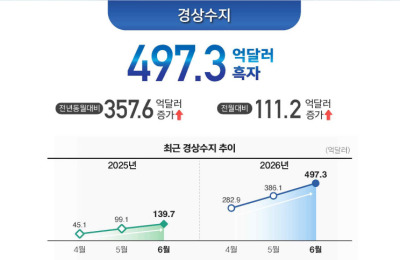
[서울=뉴스핌] 박가연 기자 = 지난 6월 우리나라의 경상수지가 전월에 이어 역대 최대 흑자를 기록했다. 반도체를 중심으로 한 정보기술(IT) 품목 수출 호조로 월간 상품수출이 처음으로 1000억달러를 넘어선 영향이다.
[자료=한국은행]
한국은행이 6일 발표한 '2026년 6월 국제수지(잠정)'에 따르면 지난 6월 경상수지는 497억3000만달러 흑자로 집계됐다. 전월(386억1000만달러)에 이어 두 달 연속 월간 기준 역대 최대 기록을 갈아치웠다. 이에 따라 올해 상반기 누적 경상수지 흑자는 1910억1000만달러를 기록했다.
경상수지 흑자를 견인한 것은 상품수지다. 6월 상품수지는 478억9000만달러 흑자를 기록하며 전월에 이어 역대 최대를 다시 썼다. 국제수지 기준 상품수출은 1123억7000만달러로 전년 동월 대비 84.5% 증가하며 월간 기준 처음으로 1000억달러를 넘어섰다. 상품수입은 644억8000만달러로 38.6% 늘었다.
통관 기준으로는 반도체 수출이 전년 동월 대비 196.9% 급증했고 컴퓨터·주변기기(SSD)는 282.7% 증가했다. IT 품목 수출은 160.4% 늘었으며 비IT 품목도 ▲석유제품(47.5%) ▲화공품(18.6%) ▲철강제품(17.9%) ▲승용차(6.1%) 등을 중심으로 18.6% 증가했다. 통관 기준 수입은 ▲원자재(30.5%) ▲자본재(35.3%) ▲소비재(16.4%)가 모두 늘었다.
서비스수지는 12억9000만달러 적자를 기록해 전월(-10억9000만달러)보다 적자 폭이 확대됐다. 여행수지는 외국인 입국자 증가와 유류할증료 인상 등에 따른 출국자 감소로 4억4000만달러 흑자를 기록했지만 지식재산권사용료수지는 전월 흑자에서 4억4000만달러 적자로 전환됐다.
본원소득수지는 배당소득을 중심으로 32억7000만달러 흑자를 기록해 전월(21억7000만달러)보다 흑자 폭이 확대됐다. 배당소득수지는 배당수입이 늘어난 데다 전월 분기배당에 따른 기저효과로 배당지급이 줄면서 25억6000만달러 흑자를 나타냈다.
금융계정 순자산은 6월 중 467억1000만달러 증가해 월간 기준 역대 최대 증가 폭을 기록했다. 종전 최대였던 올해 3월(369억9000만달러)을 넘어선 것이다. 직접투자에서는 내국인의 해외투자가 80억1000만달러, 외국인의 국내투자가 46억3000만달러 각각 증가했다.
증권투자에서는 외국인의 국내 주식 매도세가 이어졌다. 외국인의 국내 주식 투자는 차익실현 매도 등의 영향으로 316억1000만달러 감소하며 전월(-310억5000만달러)에 이어 역대 최대 순매도 기록을 다시 경신했다.
외국인의 국내 채권투자는 세계국채지수(WGBI) 자금 유입에도 분기 말 만기도래 영향으로 증가 폭이 줄어든 52억9000만달러를 기록했다. 내국인의 해외 증권투자는 주식을 중심으로 35억6000만달러 증가했다.
eoyn2@newspim.com
2026-08-06 08:00